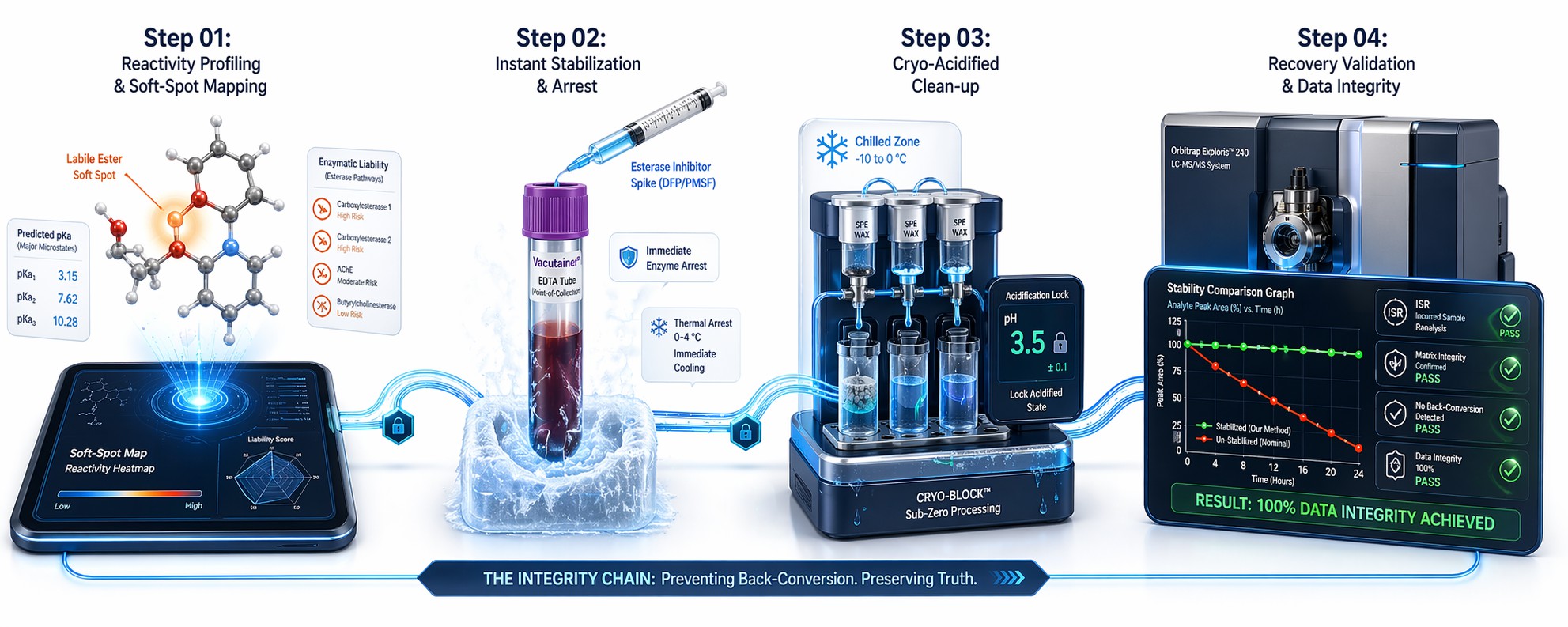
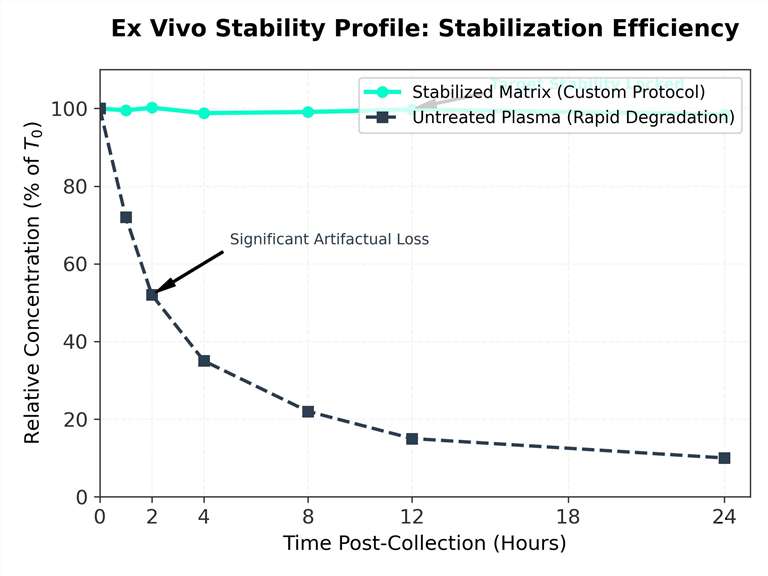
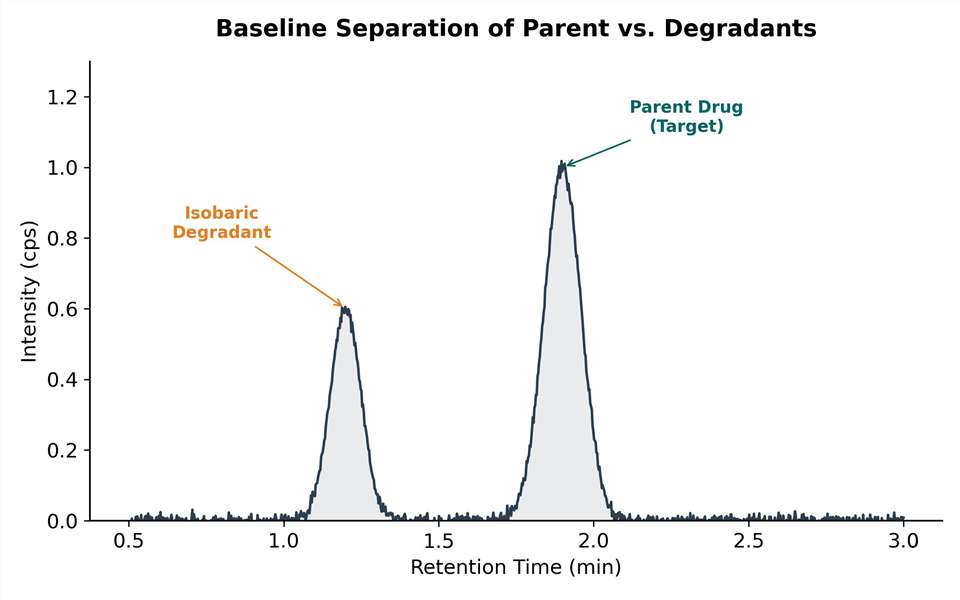
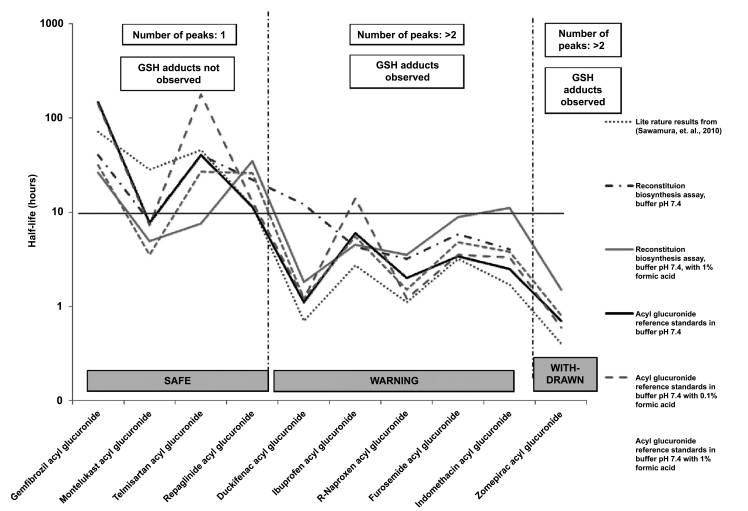
In early-stage pharmacokinetic (PK) screening, chemical instability is often the hidden culprit behind misleading conclusions. Unlike standard Stability & Degradation Studies that evaluate a drug’s natural half-life over time, bioanalytical instability primarily stems from "ex vivo artifactual degradation"—rapid chemical alterations occurring between sample collection and LC-MS/MS injection.
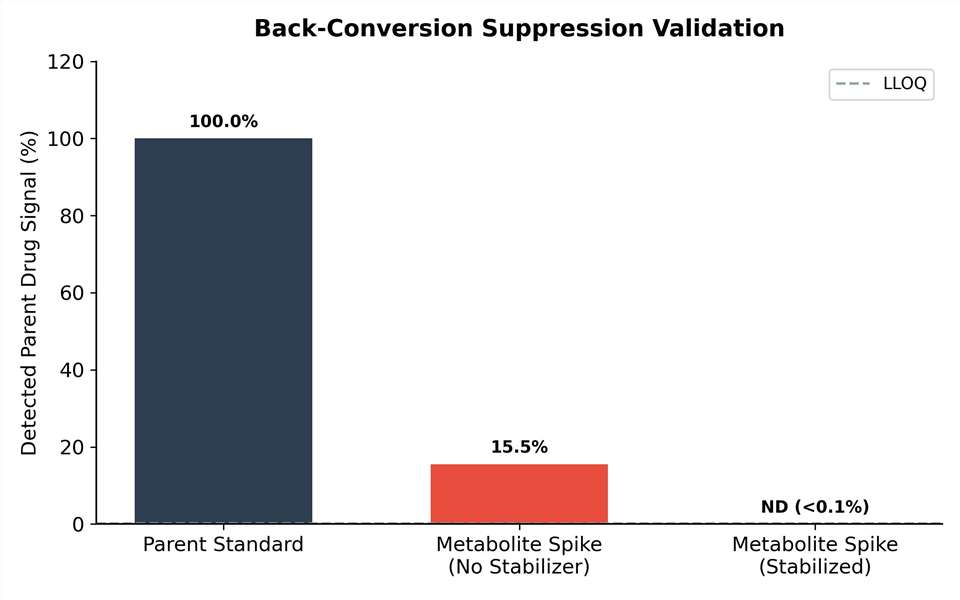
For ester-based prodrugs or photosensitive structures, exposure to plasma enzymes or room temperature triggers rapid decomposition. Another formidable challenge is metabolite back-conversion, where labile Phase II metabolites revert to their parent drug form ex vivo. This artificially inflates parent drug concentrations, leading to misinterpretations of clearance rates. Overcoming these hurdles requires an analytical team capable of executing de novo methodological engineering tailored to the unique reactivity of your molecule.