ISO 17025–ACCREDITED LABORATORY ENVIRONMENT

Multi-Analyte Panel Development Services: High-Throughput LC-MS/MS Multiplexed Bioanalysis

Simultaneous quantification of up to 50+ analytes in a single injection. Precision-engineered for diverse research matrices to fast-track your ADME & PK screening.

100+ Pre-validated Panels

Instant access to optimized methods for 8 major compound categories.

Precision Accuracy (CV < 15%)

Delivering high-resolution quantification that meets stringent discovery standards.

8 Major Compound Libraries

Comprehensive coverage from oncology to immunosuppressive research.

Expert De Novo Development

Bespoke method creation for novel chemical entities and complex metabolites.

Strategic Advantage Scientific Pillars Compound Libraries Workflow Bioinformatics Demo Results Selection Strategy Case Study Sample Requirements FAQ

The Strategic Advantage of Multi-Analyte Panel Analysis in Early Discovery

In the rapidly evolving landscape of drug discovery, the transition from standard LC-MS/MS Single Drug Quantification Services to sophisticated multi-analyte panels has become a necessity for high-throughput PK/PD evaluation. Multi-analyte panel development involves the simultaneous monitoring of multiple parent drugs, their primary and secondary metabolites, or a suite of endogenous biomarkers in a single LC-MS/MS run.

By consolidating diverse chemical entities into a unified analytical framework, researchers can maximize the biological data extracted from limited sample volumes—such as micro-sampling in rodent models or rare biopsies. This approach significantly reduces total run times and solvent consumption while providing a holistic view of the compound’s metabolic fate. Our platform is designed to handle the exponential increase in data complexity that comes with multiplexing, ensuring that each analyte is quantified with the same rigor as a single-analyte assay.
Scientific Pillars: Mastering the Complexity of Multiplexed Bioanalysis

A. Analyte Harmonization & Mobile Phase Engineering

A primary challenge in multi-analyte panels is the "Polarity Gap." For instance, a panel might contain a highly lipophilic parent drug like Cyclosporine A alongside much more polar oxidative metabolites. Using traditional methods often results in the loss of polar species in the solvent front or excessive retention of the parent drug.

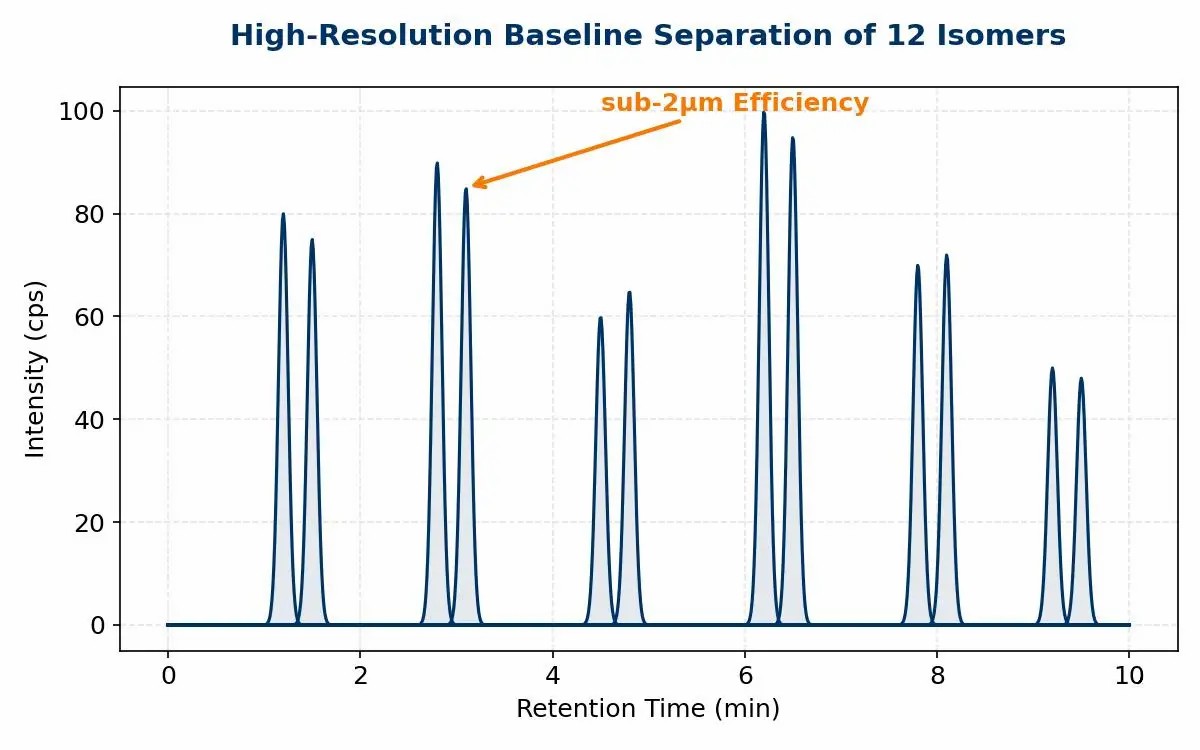
Our solution involves the use of sub-2μm column chemistries and precisely engineered mobile phase modifiers. We implement multi-step linear and non-linear gradients that "harmonize" the retention of disparate species, ensuring baseline separation and sharp peak symmetry for all 50+ potential targets within a single window.

B. Suppression of Inter-Analyte Crosstalk & Matrix Effects

Multiplexed assays are inherently susceptible to crosstalk—where the signal from one analyte "leaks" into the MRM channel of another—and ion suppression caused by co-eluting matrix components.

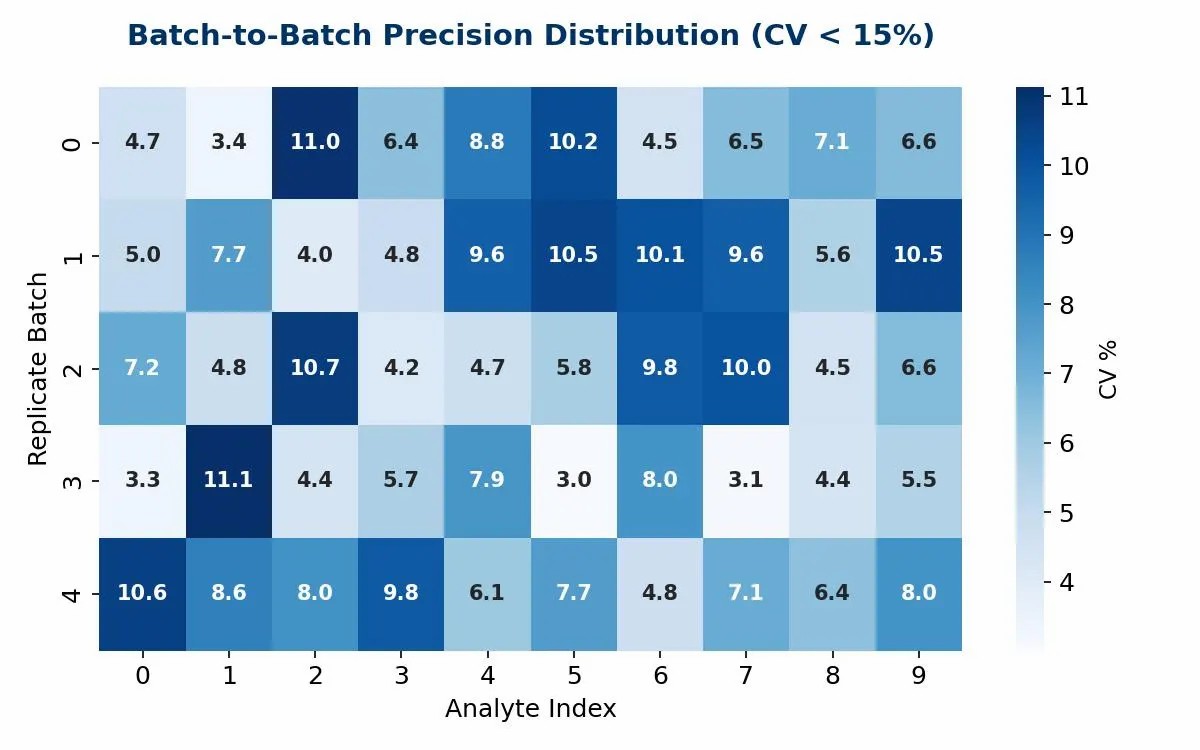
We solve this through Dynamic Transition Selection. By screening multiple precursor-to-product ion transitions for every analyte, we select the most unique and interference-free signatures. Furthermore, we utilize a "Cocktail IS" strategy, ensuring that localized ion suppression is perfectly compensated, maintaining a Precision CV of <15% even in complex Tissue and Cell Lysates.

C. Dynamic Range Management

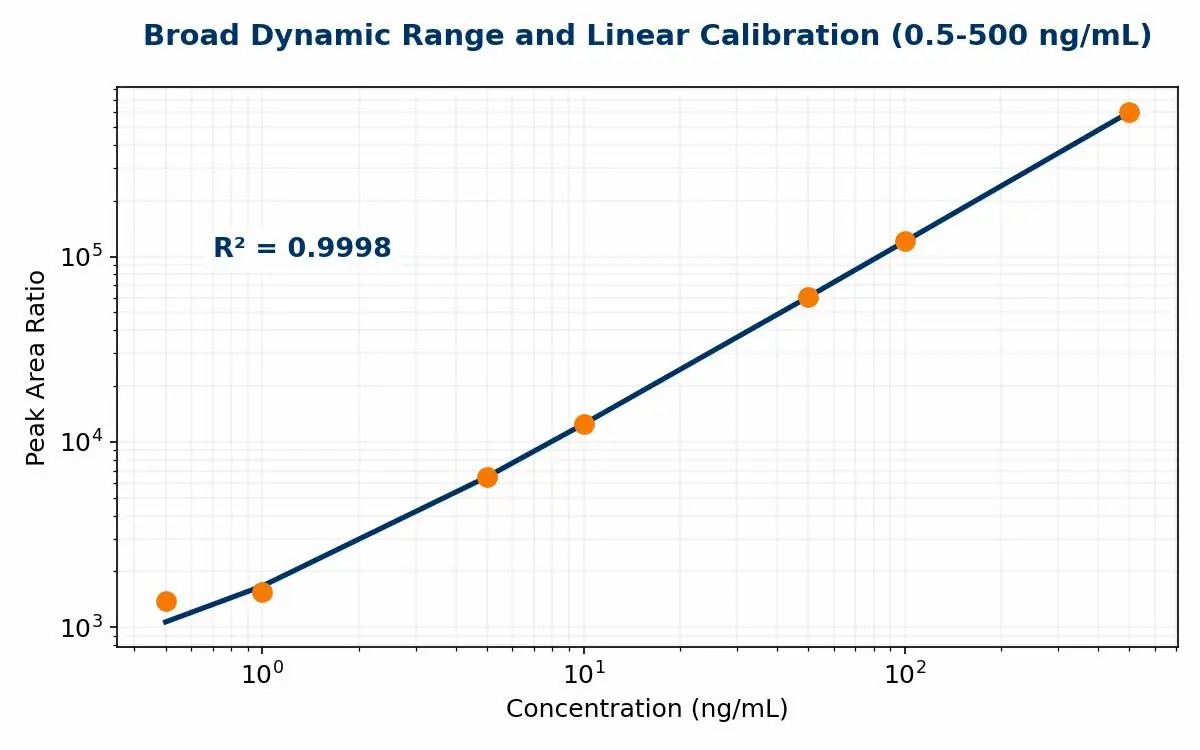
In early discovery, parent drugs may be present at μg/mL concentrations, while reactive or minor metabolites exist at low pg/mL levels. Our platform maintains linearity across a 4-5 order dynamic range, allowing for the simultaneous quantification of high-abundance and trace-level components in a single injection without the need for multiple dilutions.

The \"Big 8\" Pre-validated Research Libraries: Accelerating Timelines

We provide instant access to pre-optimized methods for the following compound classes, supporting rapid ADME/PK screening in common Plasma and Serum matrices:

  • Anti-Infectives: Multi-class antibiotic panels (β-lactams, aminoglycosides).
  • Oncology: Targeted panels for kinase inhibitors (TKIs like Imatinib) and Metabolite Identification (MetID) of cytotoxics.
  • Cardiovascular: Screening of lipid-regulators (Atorvastatin) and anticoagulants.
  • CNS Agents: High-resolution detection for Diazepam and other BBB-permeable compounds.
  • Analgesics: Comprehensive monitoring of parent drugs and metabolic glucuronides.
  • Endocrine & Steroids: Baseline separation of 12+ structural steroid isomers.
  • Immunosuppressants: Synchronized quantification for Tacrolimus and related macrolides.
  • Hepatobiliary Drugs: Focused screening for Omeprazole and Drug–Drug Interaction (DDI) risks.

Standardized Multi-Analyte Workflow

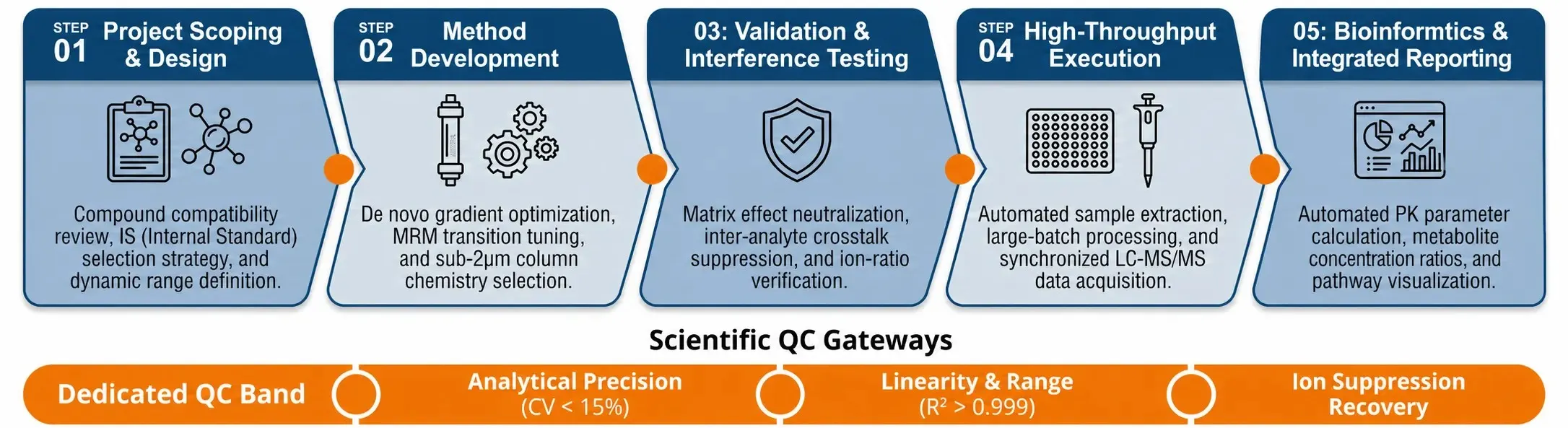
  1. Project Assessment: Reviewing analyte structures, polarities, and required sensitivity ranges.
  2. Method Design: Selecting internal standards and optimizing LC-MS/MS parameters for all components.
  3. Harmonization & Validation: Verifying separation resolution and assessing inter-analyte interference (crosstalk).
  4. High-Throughput Analysis: Executing sample runs using automated preparation to minimize batch-to-batch variability.
  5. Data Consolidation: Delivering raw concentration data and integrated PK parameter packages.

Scientific Workflow for Custom Multi-Analyte Panel Development showing 5 steps and orange QC band.

Research-Grade Bioinformatics & Integrated Analytics

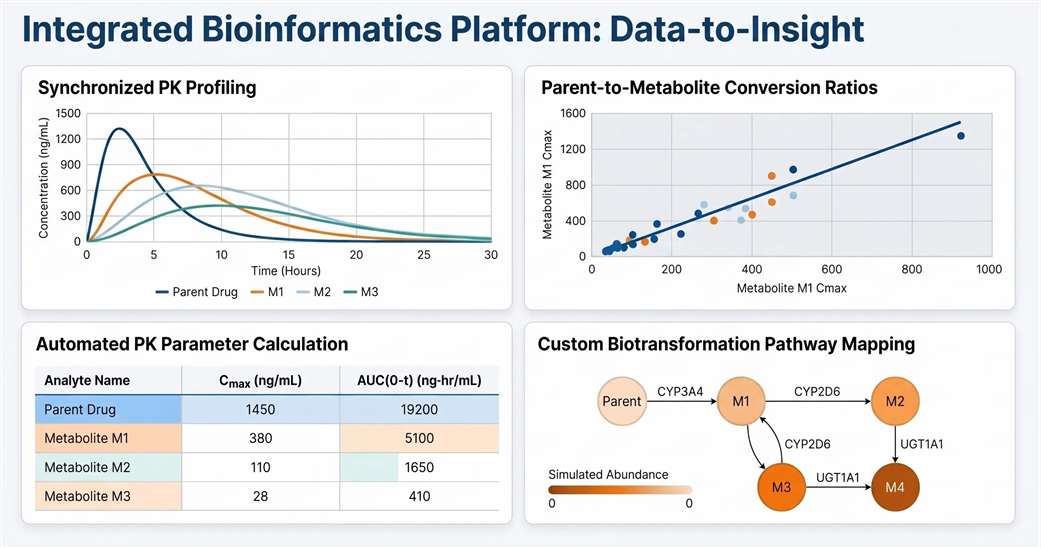
For multi-analyte data, we provide an integrated bioinformatics package to transform raw numbers into biological insights:

  • Synchronized PK Profiling: Simultaneously calculate AUC, Cmax, and half-life for every analyte in the panel.
  • Metabolic Conversion Analysis: Evaluate the efficiency of In Vitro Drug Metabolism pathways by calculating exposure ratios.
  • Pathway Visualization: We transform concentration data into interactive metabolic maps, highlighting active pathways for your compound library.

Integrated Data Analysis Dashboard for PK & Metabolic Mapping showing PK calculation and pathway visualization.

Demo Results: High-Resolution Proof of Performance

The following example demonstrates the baseline separation and high-precision quantification of a 12-component steroid isomer panel, showcasing our ability to resolve molecularly similar compounds.

Analyte Category Range (ng/mL) Linearity ($R^2$) Accuracy (%) Precision (CV %)
Primary Compound 0.5 – 500 >0.999 98.4 3.5
Oxidative Metabolite 1.0 – 1000 >0.998 102.1 4.8
Structural Isomer A 0.1 – 100 >0.999 96.5 5.2
Structural Isomer B 0.1 – 100 >0.999 97.2 5.5
High-Resolution Baseline Separation of 12 Isomers
Broad Dynamic Range and Linear Calibration (0.5-500 ng/mL)
Batch-to-Batch Precision Distribution (CV < 15%)

Selection Strategy: Pre-validated vs. De Novo Custom Panels

Selection Feature Pre-validated Library Panels De Novo Custom Panel Development
Best Application Fast-track screening of known compounds NCEs & specific research metabolites
Analyte Capacity Up to 10-20 standard analytes Fully customizable (up to 50+ targets)
Lead Time 1-2 weeks (Ready-to-use) 4-6 weeks (Comprehensive development)
Matrix Adaptability Standard (Plasma, Serum) Custom (Tissue, Bile, Specialized Lysates)
Analytical Precision Pre-established (CV < 15%) Verified during bespoke Stability Studies

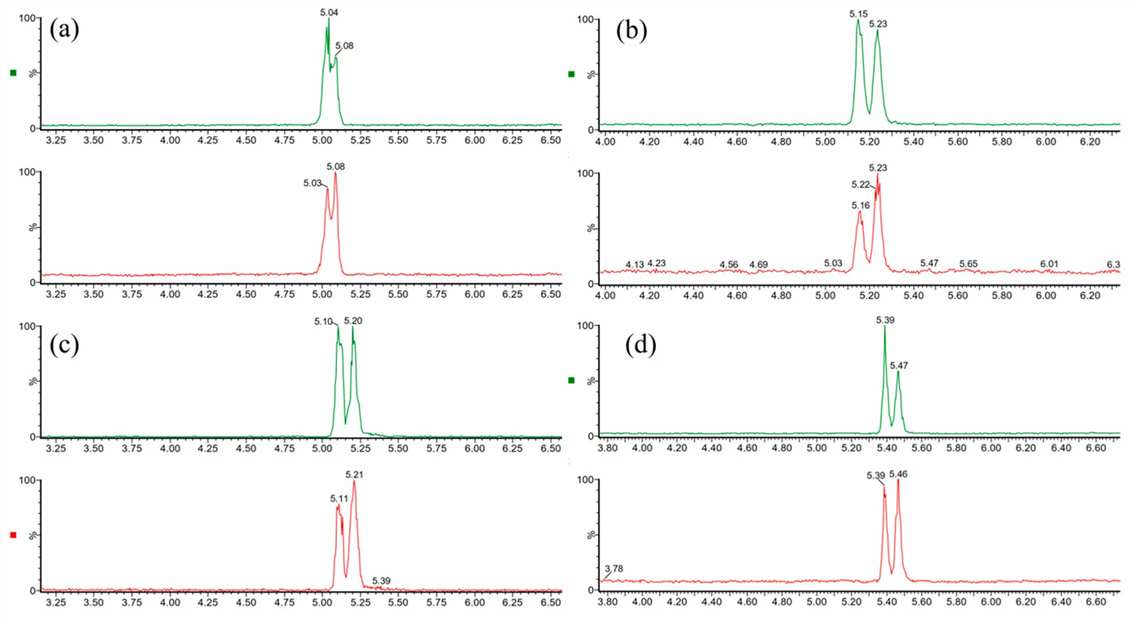
Case Study: Baseline Separation of 12 Glucocorticoid Isomers

Background: A sophisticated research project required the simultaneous quantification of 12 glucocorticoids in complex biological matrices. The primary scientific obstacle was structural isomers which share identical precursor and product ions, leading to crosstalk in standard assays.

The Solution: Utilizing our Analyte Harmonization platform, we optimized a customized mobile phase gradient on a sub-2μm C18 column. By incorporating specific organic modifiers, we successfully achieved baseline separation ($R > 1.5$) for all 12 compounds, including the traditionally co-eluting isomers.

The Impact: The method delivered exceptional accuracy (90-110%) for every component. This allowed the research team to distinguish between the primary drug and its reactive isomers, providing a level of data clarity essential for mechanistic discovery.

Verification: Adapted from the 2026 MDPI study: Simultaneous Determination and Isomer Separation of 12 Glucocorticoid Residues (MDPI, 2026).

Evidence: Refer to Figure 1 in the cited paper for the definitive chromatographic evidence of this 12-component resolution.

Chromatographic Resolution Evidence for Multi-Component Isomers showing 12-analyte panel separation.

Sample Requirements & Submission Guide

Parameter Specification for Multi-Analyte Research
Biological Matrices Plasma, Serum, Whole Blood, Tissue Homogenates, Biliary Samples, Cell Lysates
Minimum Volume 100 μL (Liquid) / 50 mg (Tissue)
Shipping & Handling Samples must be stored at -80°C and shipped on dry ice

Frequently Asked Questions (FAQ)

How do you handle the different stability profiles of 50+ analytes in one panel?

We optimize the extraction buffer and sample handling temperature (kept at 4°C) to protect labile components while ensuring the recovery of the stable parent drug.

Can your platform handle both polar and non-polar analytes in one run?

Yes. Our LC-MS/MS platforms are equipped to handle diverse modalities, capturing a wide range of chemical species in a single analytical run.

What happens if one analyte in the panel fails validation?

Our modular approach allows us to troubleshoot specific analytes—re-optimizing MS transitions or extraction chemistry—without restarting the entire project.

Ready to Quantify Your Lead Compound or Metabolite?

Share your matrix type, sample count, and expected range—feasibility routing will confirm whether direct quantification is fit-for-purpose or method development is recommended.

inquiry
Online Inquiry