ISO 17025–ACCREDITED LABORATORY ENVIRONMENT

Microsampling Bioanalysis Services: DBS, VAMS, and Precision Sampling Solutions

In the demanding landscape of early-stage drug discovery, acquiring high-fidelity pharmacokinetic (PK) data is the definitive factor for screening lead candidates and mapping metabolic pathways. Microsampling technologies, which utilize ultra-low volumes (10–30 µL), enable serial sampling from a single subject without disrupting physiological equilibrium, thereby generating high-resolution exposure curves with minimal inter-subject variability.

Ultra-Low Volume Trace Detection

Achieving sub-pg/mL sensitivity from 10–30 µL samples using high-resolution MS.

Hematocrit (HCT) Independence

Advanced volumetric absorption protocols to eliminate quantitative bias.

Seamless 3Rs Integration

Supporting serial sampling to optimize PK curves while reducing animal usage.

R&D Efficiency Technology Principles Scientific Workflow Demo Results Bioinformatics Sample Submission Case Study Technical FAQ

Overcoming Sample Volume Bottlenecks in Early R&D

A major pain point in non-clinical drug evaluation is the extreme scarcity of biological matrices. Traditional venipuncture often necessitates composite sampling—where PK data is pooled from multiple animals at different time points—which inherently introduces statistical noise and compromises the resolution of the PK model. Furthermore, high-volume sampling in small species can trigger compensatory physiological responses that skew clearance and distribution data.

The Creative Proteomics microsampling platform integrates Dried Blood Spot (DBS), Volumetric Absorptive Microsampling (VAMS), and Capillary Microsampling (CMS) to provide a reliable, cold-chain-free alternative. Operating within an ISO 17025 certified framework, we execute bespoke analytical strategies that prioritize the equilibrium between target analytes and internal standards within micro-matrices.

Our de novo method development ensures every micro-aliquot delivers scientific value equivalent to traditional "gold standard" plasma analysis.

Advanced Microsampling Matrix: Principles and Technical Selection

Our scientific team evaluates the physicochemical properties of your lead compounds—including lipophilicity, protein binding, and chemical stability—to recommend the most robust sampling modality.

1. Polymeric Absorptive Microsampling (VAMS)

This technology utilizes a high-porosity polymeric tip to wick up a precise, fixed volume (10–30 µL) of fluid via capillary action. This fundamentally solves the "spreading bias" encountered in traditional DBS, where blood with high HCT spreads less, leading to inaccurate sub-sampling. We utilize customized desorption protocols to maintain the same precision as our LC-MS/MS Single Drug Quantification Services.

2. Enhanced Dried Blood Spot (DBS) Analysis

DBS remains the most cost-effective solution for high-throughput screening. We employ "whole-spot extraction" to eliminate the "edge effect" where analytes migrate unevenly. This technique is frequently integrated with our Drug Stability & Degradation Studies, as rapid desiccation deactivates endogenous enzymes.

3. Capillary Microsampling (CMS)

For volatile compounds or those that are extremely unstable even in a dried state, we offer liquid-state Capillary Microsampling. Using precision-coated capillaries, we enable immediate liquid quenching to preserve the compound's immediate in vivo metabolic snapshot.

Bespoke Analytical Workflow and Rigorous Quality Control

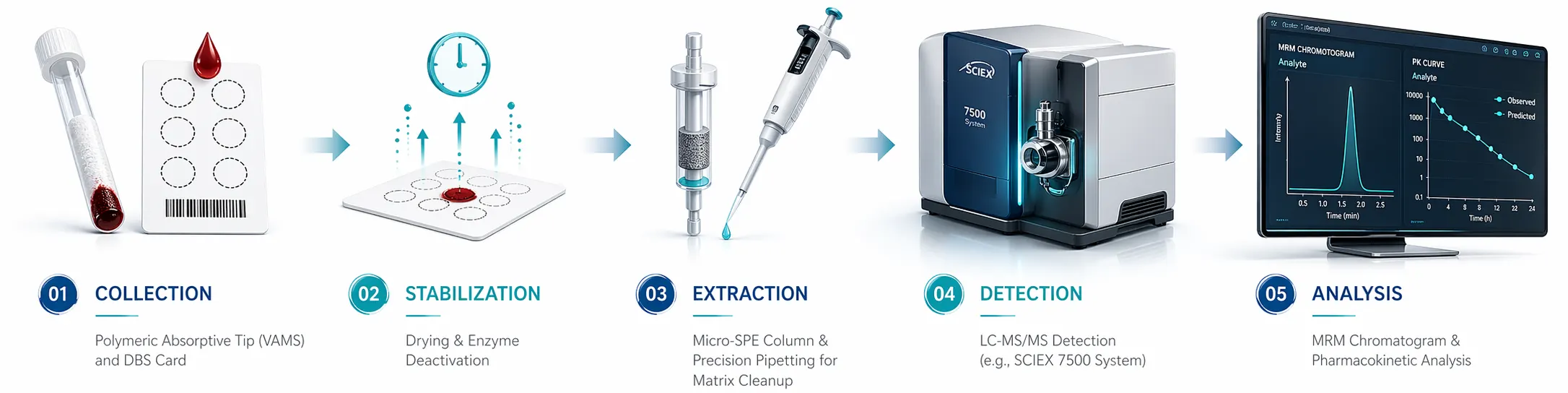
Quantifying trace analytes in microliter volumes is a challenge of maximizing signal-to-noise ratios. Our laboratory follows a rigorous scientific workflow:

5-step scientific workflow for microsampling de novo method development and LC-MS/MS analysis

  • De Novo Method Adaptation: Recalibrating established Single Drug Quantification protocols for micro-matrices.
  • Matrix Interference Mitigation: Utilizing micro-SPE or LLE to ensure the Matrix Factor (MF) remains stable and near 1.0.
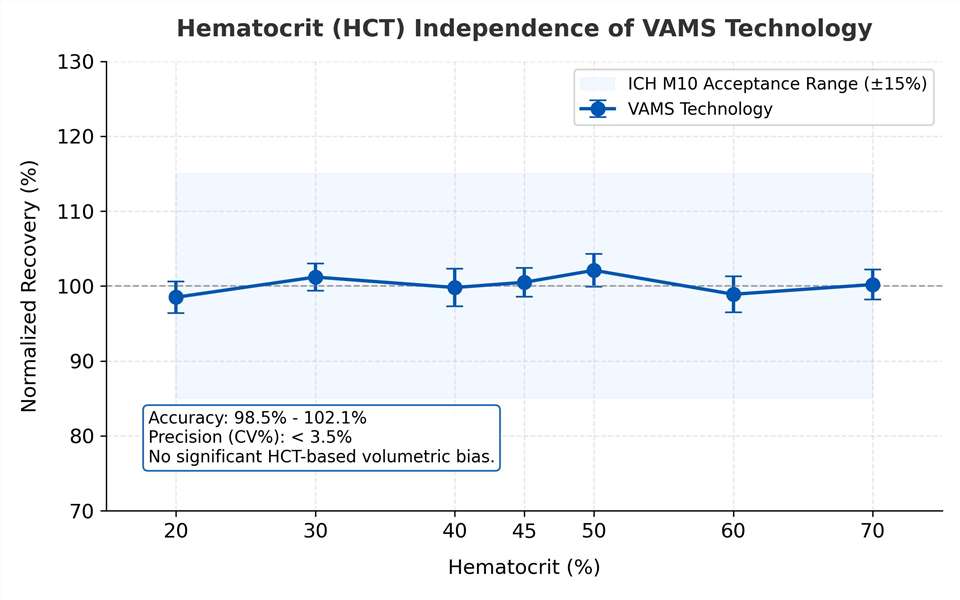
  • HCT Range Validation: Validating assays across an HCT range of 20% to 70% for quantitative reliability.
  • High-Resolution Detection: Capturing trace signals for comprehensive Metabolite Identification (MetID) Services.

Technical Proof: Comprehensive Demo Results and Performance Metrics

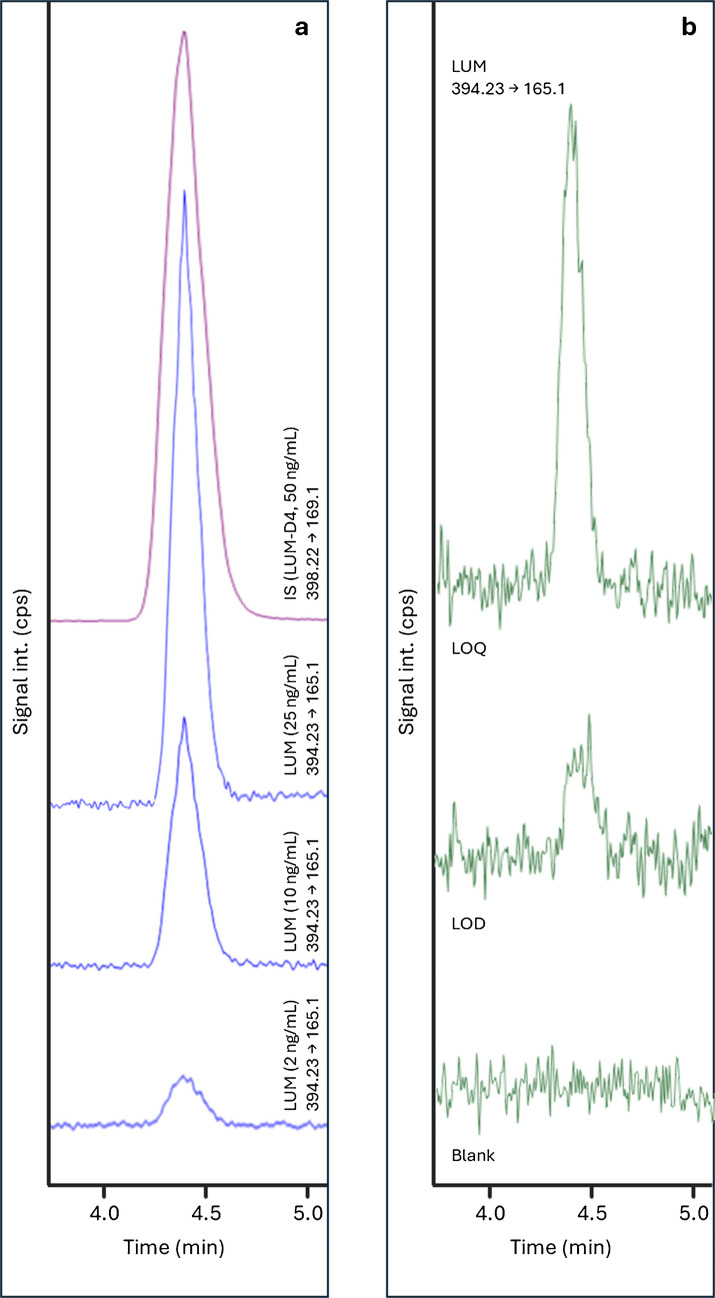
High-Sensitivity MRM Chromatograms: Baseline resolution and symmetrical peak shapes at the LLOQ (50 pg/mL) with S/N strictly above 10.

HCT Independence Verification: Data tables comparing recovery across varying red blood cell percentages, proving independence from subject viscosity.

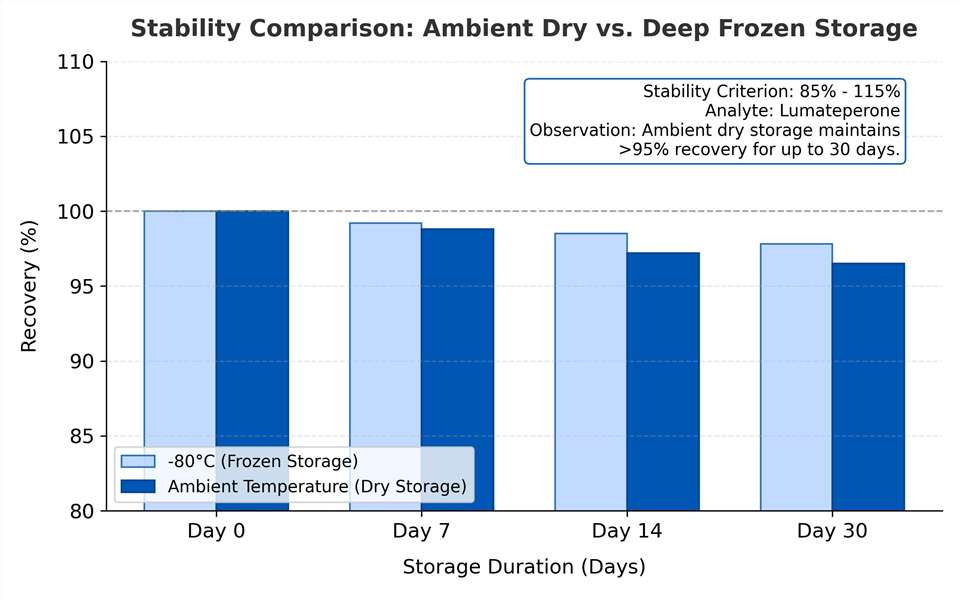
Ambient-Temperature Stability Profiles: Samples stored dry for 30 days benchmarked against -80°C frozen controls to validate ambient shipping.

  • Linear Dynamic Range and Accuracy: R2 ≥ 0.995 with accuracy deviations within ±15% for robust PK model fitting.
  • Quantitative Recovery Analysis: Specialized solvent systems ensuring trace metabolites are captured with high reproducibility.
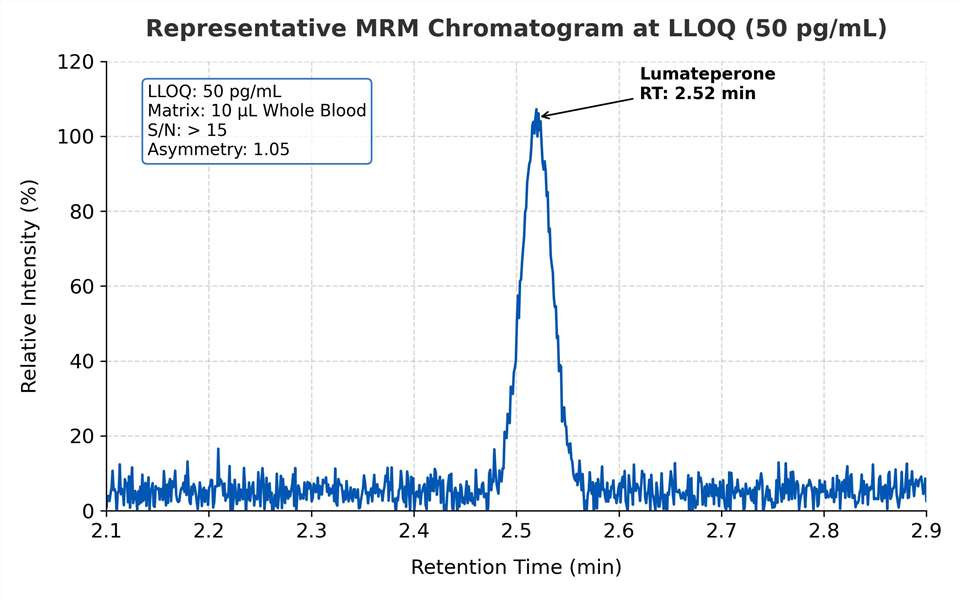
High-Sensitivity MRM Chromatogram
HCT Independence Verification
Ambient-Temperature Stability Profiles

Detailed Bioinformatics: Modeling and Data Normalization

Microsampling generates raw mass spectrometry data that must be carefully normalized to provide actionable PK insights. Our bioinformatics suite includes:

  • Cross-Matrix Correlation Modeling: Establishing the relationship between microsampling data and traditional Plasma and Serum Drug Quantification results.
  • HCT Correction Algorithms: Measuring endogenous markers to back-calculate initial blood volume for secondary calibration.
  • NCA-Ready Data Synthesis: Providing key PK parameters such as AUC, Cmax, and half-life (T1/2) directly for non-compartmental analysis.

Sample Submission Specifications and Global Logistics

Modality Recommended Device Minimum Volume Shipping & Storage
Polymeric Absorption (VAMS) Volumetric Absorptive Tips 10–20 µL Ambient shipping with desiccant; ensure tips are fully dried.
Dried Blood Spot (DBS) DMPK Grade Cards 15–20 µL / spot Allow to dry for ≥2 hours; ship ambient in sealed foil bags.
Liquid Microsampling (CMS) Pre-coated Precision Capillaries 5–50 µL Immediate quenching or freezing; ship on dry ice (-70°C).

Case Study: High-Sensitivity PK Profiling of Lumateperone via VAMS

Background: Lumateperone research often faces challenges due to limited sample volumes in small animal models and the inherent instability of the compound in liquid matrices.

Methods: A VAMS-based LC-MS/MS analytical protocol was established. Samples were collected using 20 µL polymeric tips and analyzed following de novo extraction optimization.

Results:

  • Analytical Fidelity: MRM chromatograms (referencing Figure 3 in source) demonstrate exceptional S/N ratios at the LLOQ from 20 µL micro-samples.
  • Data Validity: Robust statistical alignment with gold-standard venous plasma data (R2 = 0.982) with enhanced ambient stability.

Conclusion: Microsampling via VAMS ensures high data integrity for early-stage discovery and provides a 3Rs-compliant alternative.

Source: PMC12783156: Volumetric absorptive microsampling for lumateperone analysis (2025)

Lumateperone MRM Chromatogram Case Study

Frequently Asked Questions

Does the 10 µL sample size compromise detection sensitivity?

We compensate for lower absolute mass by employing high-efficiency micro-extraction (e.g., Micro-SPE) and high-sensitivity mass spectrometry. While the total volume is reduced, the resulting extract is often cleaner, allowing for LLOQs comparable to large-volume assays.

How is Internal Standard (IS) uniformity ensured in dry matrices?

For DBS, we utilize pre-coated cards to ensure the IS is present at the time of sampling. For VAMS, the IS is added to the desorption solvent, reaching a dynamic equilibrium with the analyte during the sonication/extraction process.

Can you perform microsampling on tissue or cell lysates?

Yes. Beyond whole blood, we frequently apply these micro-scale methodologies to Tissue and Cell Lysate Quantification Services to support localized drug distribution research.

Explore Synergistic Pharmacokinetic Services

To fully characterize a candidate molecule's PK/PD profile and metabolic fate, we recommend integrating microsampling with our broader analytical ecosystem:

Ready to Quantify Your Lead Compound or Metabolite?

Share your matrix type, sample count, and expected range—feasibility routing will confirm whether direct quantification is fit-for-purpose or method development is recommended.

inquiry
Online Inquiry