ISO 17025–ACCREDITED LABORATORY ENVIRONMENT

Custom Preclinical PK Panel Development Services: High-Resolution Multiplexed Bioanalysis

In the critical transition from lead optimization to preclinical development, the ability to simultaneously monitor multiple analytes—parent drugs, active metabolites, and drug-drug interaction (DDI) probes—is a strategic necessity.

Our Preclinical PK Panel Development provides a high-throughput, multiplexed LC-MS/MS platform engineered to quantify up to 50+ analytes in a single analytical run. Consolidation ensures a holistic understanding of a compound’s pharmacokinetic profile in early-stage discovery.

50+ Analytes Synchronized

Concurrent monitoring of parent drugs, metabolites, and probes.

Expert De Novo Development

Tailored assays for novel chemical entities and complex scaffolds.

High-Resolution Separation

Sub-2μm column technology for precise isomer resolution.

Strategic Advantage Scientific Pillars Research Libraries Standard Workflow Demo Results Bioinformatics Selection Strategy Case Study Sample Guide FAQ References

The Strategic Advantage of Preclinical PK Panels

Traditional bioanalysis often relies on single-analyte assays, which can be volume-intensive and time-consuming when studying complex drug combinations or intricate metabolic pathways. Our preclinical panels solve these bottlenecks through simultaneous quantification, allowing for the synchronized calculation of pharmacokinetic parameters for multiple components from a single injection.

  • Sample Volume Conservation: Ideal for micro-sampling in rodent models or rare tissue biopsies where sample availability is the primary constraint.
  • Synchronized Metabolic Insights: Directly evaluate the exposure ratios between parent drugs and metabolites to map metabolic clearance in real-time.
  • High-Throughput Capability: Accelerate ADME/PK screening timelines by processing large compound libraries with standardized precision.

Scientific Pillars: Mastering Multiplexed Complexity

1. Analytical Harmonization & Polarity Gaps

A recurring challenge in panel development is the "Polarity Gap." We utilize sub-2µm column chemistries and precisely engineered mobile phase modifiers to "harmonize" retention, ensuring sharp peak symmetry for all targets.

2. Suppression of Inter-Analyte Crosstalk

In multi-component assays, signal "leakage" between MRM channels can lead to false positives. We employ Dynamic Transition Selection to identify the most unique and interference-free signatures for every analyte in the panel.

3. Matrix Effect Neutralization

Complex biological matrices contain endogenous lipids and proteins that cause severe ion suppression. Our de novo method development includes Matrix Factor Evaluation, specifically optimized for Tissue and Cell Lysate Quantification.

Pre-validated Research Libraries for Rapid Deployment

To accelerate your research timelines, we provide instant access to over 100+ pre-optimized methods across major therapeutic areas.

Research Area Key Analyte Focus Application Scenario
Oncology Multi-class TKIs (e.g., Imatinib, Gefitinib) Combination therapy & resistance monitoring.
CNS Agents Neurotherapeutics & BBB-permeable compounds Brain-to-plasma partition coefficient (Kp) studies.
Anti-Infectives Broad-spectrum antibiotics & antiviral panels Multi-drug PK/PD modeling in infection models.

Standardized Preclinical Workflow

Our workflow is designed for transparency and technical rigor, ensuring each phase meets high-resolution discovery standards.

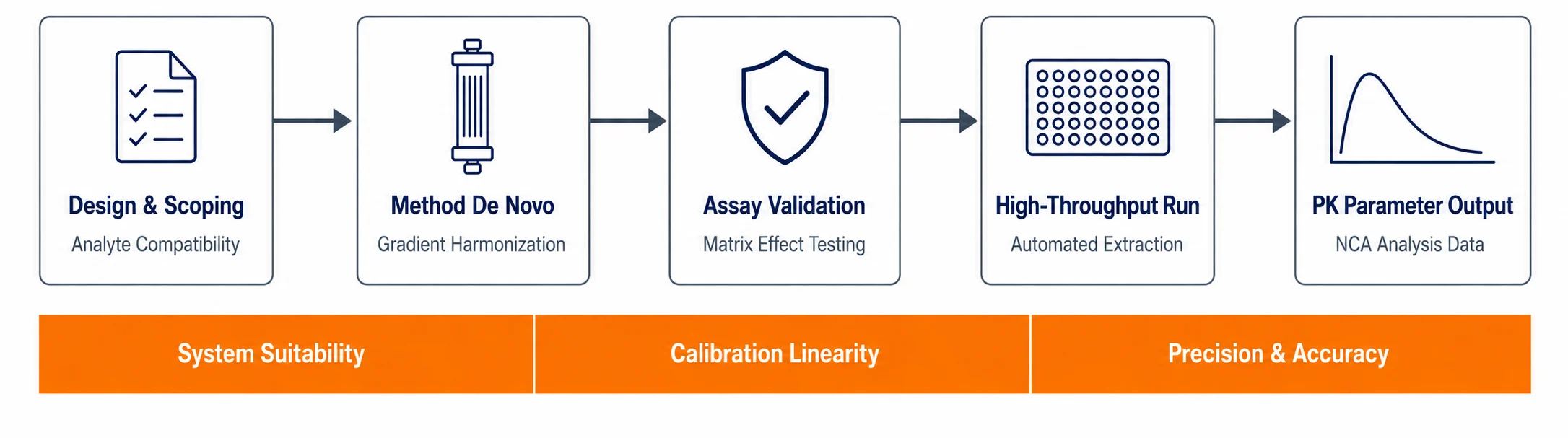
Scientific Workflow for Custom Preclinical PK Panel Development

  1. Project Scoping & Design: Reviewing analyte structures, polarities, and required LLOQs.
  2. De Novo Method Development: Optimizing MRM transitions and LC-gradient profiles using sub-2µm technology.
  3. Validation & Interference Testing: Assessing inter-analyte crosstalk and matrix effects.
  4. High-Throughput Execution: Automated sample extraction and LC-MS/MS analysis.
  5. Data Integration & Reporting: Delivery of PK parameter packages and metabolic conversion ratios.

Demo Results: High-Resolution Proof of Performance

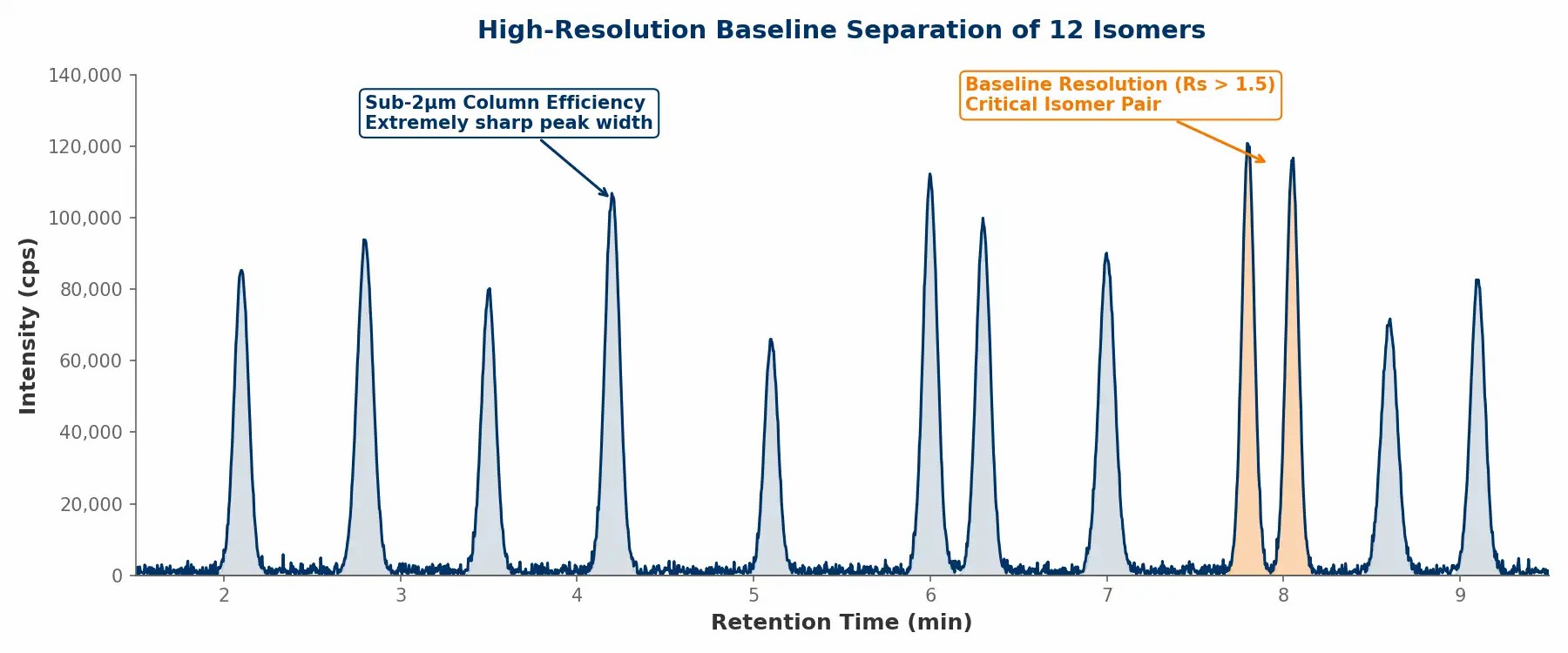
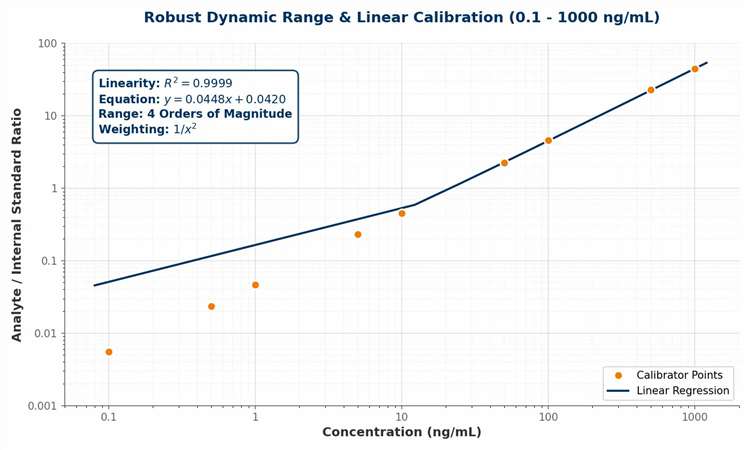
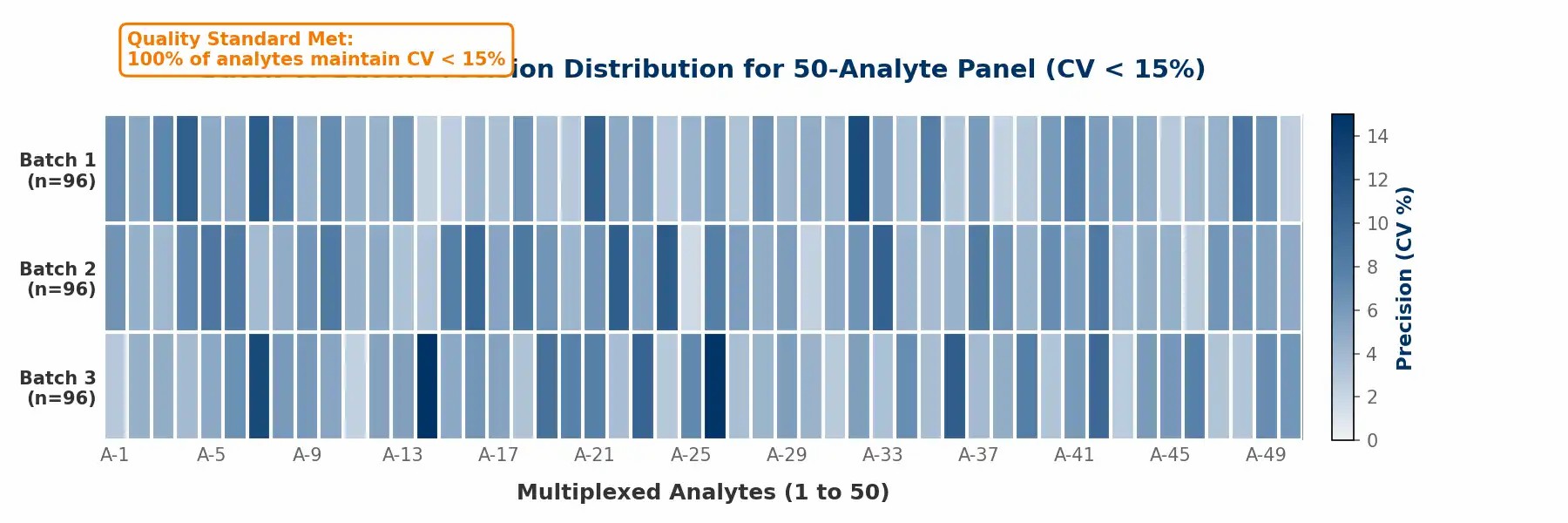
Our multiplexed bioanalytical assays deliver high-resolution chromatographic profiling and robust statistical precision across wide concentration ranges, ensuring complete data traceability for discovery pharmacokinetic evaluation. By employing customized micro-gradients and sub-2μm stationary phase chemistries, our platform achieves baseline resolution (Rs > 1.5) for overlapping structural isomers to completely eliminate cross-channel MRM crosstalk. Simultaneously, utilizing an optimized 1/x2 mathematical weighting system maintains tight analytical linearity (R2 > 0.999) across four full orders of magnitude (0.1 ng/mL to 1000 ng/mL). Furthermore, advanced hybrid extraction workflows effectively suppress matrix-induced ion attenuation across continuous automated sequences (n=96), ensuring that 100% of tracked panel analytes reliably preserve a batch-to-batch precision variance (CV%) well within the strict 15 percent discovery cutoff threshold.

Baseline separation of structural isomers using sub-2μm LC-MS/MS
Linear calibration spanning 4 orders of magnitude with R2 > 0.999
Heatmap showing batch-to-batch precision with CV < 15% for 50 analytes

Integrated Bioinformatics & PK Analysis

We provide an integrated bioinformatics dashboard to transform raw concentrations into actionable insights.

  • Synchronized PK Profiling: Automated calculation of Tmax, Cmax, and AUC for every analyte.
  • Metabolic Flux Analysis: Visualization of conversion ratios between parent molecules and metabolites.
  • Correlation Mapping: Statistical evaluation of Drug-Drug Interactions (DDI).

Selection Strategy: Custom De Novo vs. Standard Panels

Feature Pre-validated Library Panels Custom De Novo Development
Best Application Rapid screening of known scaffolds Novel chemical entities (NCEs)
Matrix Adaptability Optimized for Plasma/Serum Tissue, Bile, CSF, and Cell Lysates
Customization Fixed Analyte Lists Fully Customizable (Up to 50+ targets)

Case Study: Simultaneous Quantification of 12 Structural Isomers

Background: A high-stakes research project required the simultaneous quantification of 12 glucocorticoids in complex biological matrices. The structural isomers shared identical mass signatures, leading to severe crosstalk.

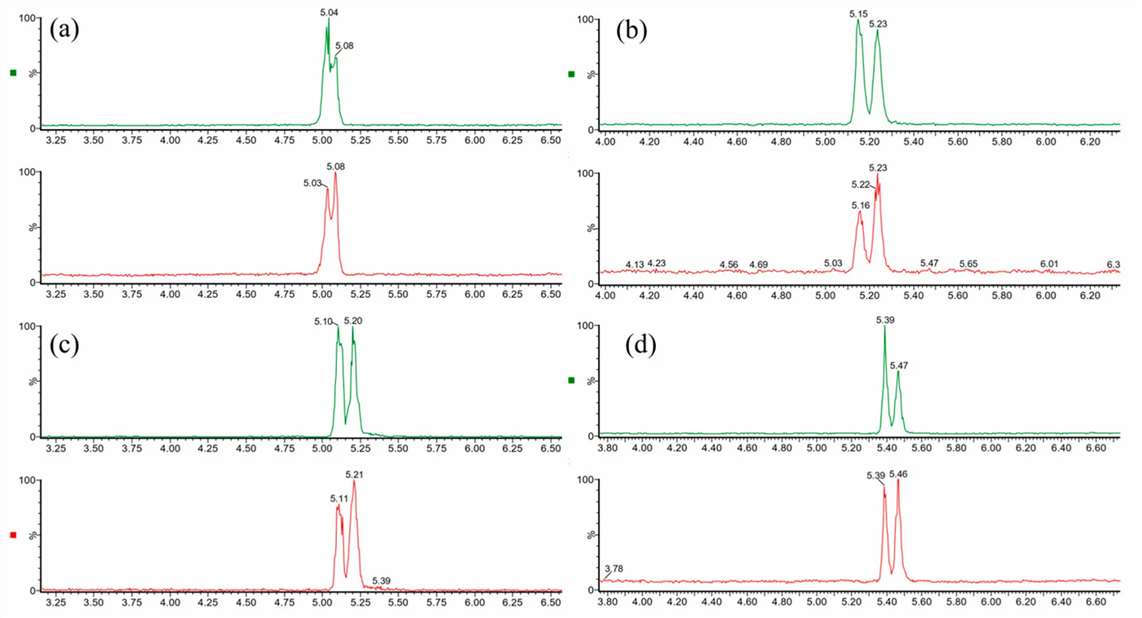
Methods: Utilizing our Analyte Harmonization platform, we optimized a customized mobile phase gradient on a sub-2µm C18 column, achieving baseline separation (R > 1.5) for all 12 compounds.

Results: The method delivered exceptional accuracy (90–110%), allowing the team to distinguish primary drugs from reactive isomers.

Verification: Adapted from the 2026 MDPI study: LC-MS/MS for Simultaneous Determination and Isomer Separation of 12 Glucocorticoid Residues (MDPI, 2026).

Chromatographic evidence of 12 glucocorticoid isomer separation

Sample Requirements & Submission Guide

Matrix Type Minimum Volume/Weight Preparation / Stabilization
Plasma / Serum 100 µL EDTA or Heparin; Ice bath collection. Ship on dry ice.
Tissues 50 mg Snap-freeze in LN2; Dry ice shipping.
Cell Lysates 1 x 10^6 cells Specify lysis buffer; avoid SDS.

Frequently Asked Questions (FAQ)

How do you handle analytes with extremely different polarities in one panel?

We utilize advanced mobile phase chemistry and specialized sub-2µm columns combined with sophisticated gradient ramps to ensure both polar and non-polar analytes are focused and detected in a single run.

Can you develop a panel for proprietary compounds with no existing literature?

Yes. Our "De Novo" service includes MS/MS fragmentation mapping to identify the most stable and sensitive transitions specifically for your proprietary molecules.

Ready to Quantify Your Lead Compound or Metabolite?

Share your matrix type, sample count, and expected range—feasibility routing will confirm whether direct quantification is fit-for-purpose or method development is recommended.

inquiry
Online Inquiry