ISO 17025–ACCREDITED LABORATORY ENVIRONMENT

Bioanalytical Method Development & Validation Services

Customized analytical method development and validation are the cornerstones of accurately quantifying novel chemical entities (NCEs) and deciphering complex biological systems. We offer expert-level technical support across LC-MS/MS and HPLC platforms. Through rigorous de novo engineering and a fit-for-purpose validation framework, we eliminate analytical bottlenecks in your early-stage pharmacokinetic (PK) and DMPK research.

De Novo Engineering

Rejecting "cookie-cutter" templates. We custom-design extraction and chromatographic separation strategies tailored exclusively to your target molecule's unique physicochemical properties (e.g., pKa, LogP).

Seamless Method Transfer & Optimization

Rescue struggling internal assays (e.g., poor sensitivity, lack of reproducibility). We rapidly reconstruct, optimize, and cross-validate your existing protocols on our high-resolution platforms.

Complex Matrix Mastery

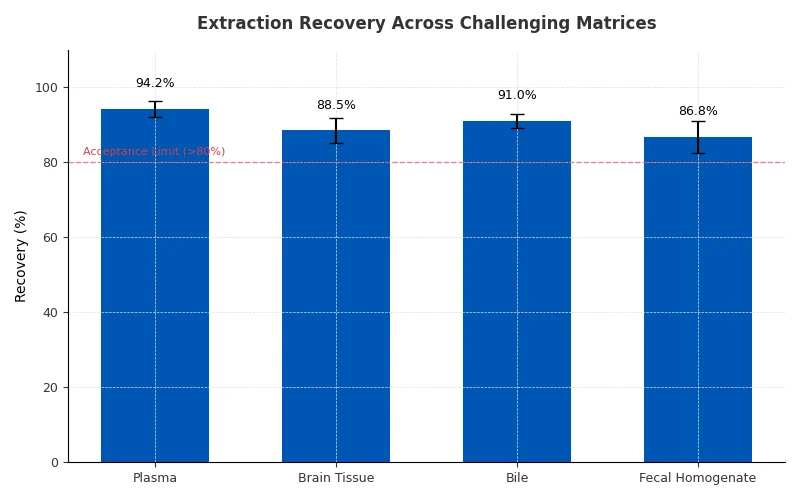
Exceptional capability in eliminating severe ion suppression and intercepting background noise in challenging biological systems, including brain tissue, bile, and fecal homogenates.

De Novo Method Development Validation Strategy Demo Results Core Capabilities Project Requirements Related Services Case Study

Overcoming Bioanalytical Bottlenecks: De Novo Method Development

During early drug discovery, novel candidate molecules often exhibit extreme physicochemical traits—such as a lack of retention due to high polarity, chemical instability, or poor ionization efficiency. When these molecules are introduced into complex biological matrices, co-eluting endogenous proteins and lipids can cause catastrophic ion suppression at the mass spectrometer source.

We resolve these challenges through a systematic physicochemical evaluation. Our scientists deeply analyze the structural features of your target to match it with the most robust sample purification protocol (such as micro-Liquid-Liquid Extraction (LLE) or customized 96-well Solid-Phase Extraction (SPE), ensuring extraction recoveries consistently exceed 80%). Coupled with deep tuning of high-resolution liquid chromatography and MS ion source parameters, our de novo methods effectively penetrate matrix interference. We routinely achieve ultra-low Lower Limits of Quantification (LLOQ) in the 1–10 pg/mL range, while compressing analytical run times to 2–5 minutes per sample, perfectly aligning with high-throughput screening demands.

Fit-for-Purpose Method Validation Strategy

We understand that not all early-stage projects require exhaustive validation protocols. To strike the optimal balance between "development speed" and "data rigor," we leverage international and global regulatory guidelines (ICH M10) to offer a tiered, Fit-for-Purpose validation framework.

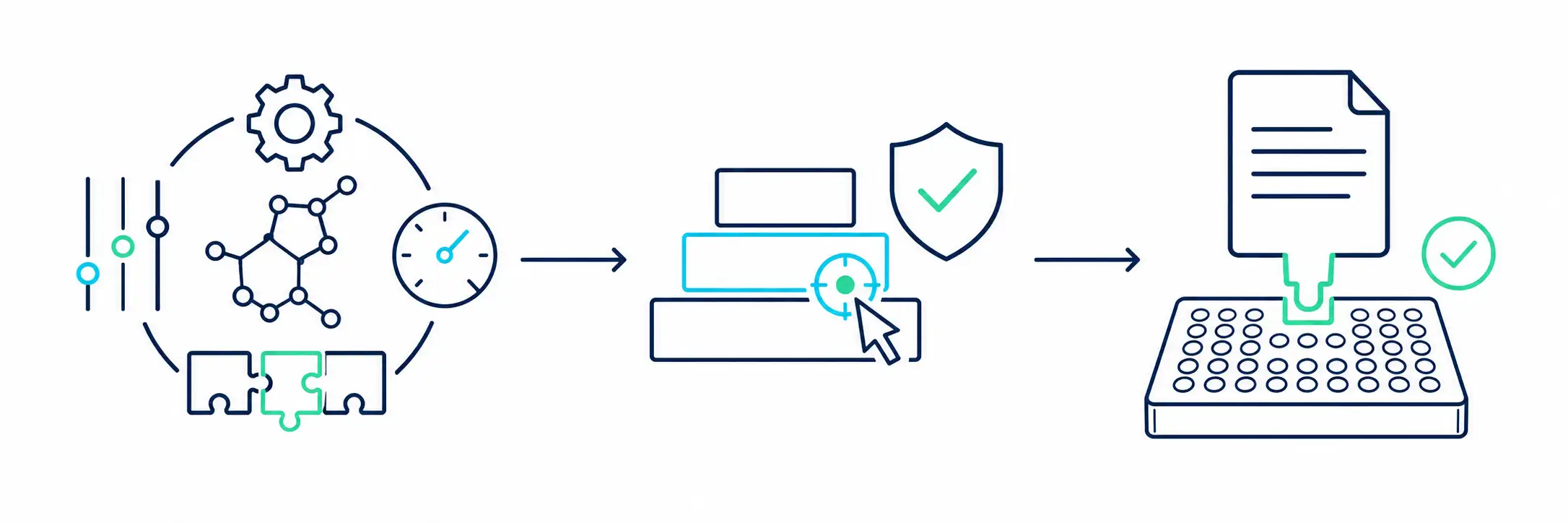
Fit-for-Purpose Bioanalytical Method Validation Strategy Workflow

Tier 1: Exploratory Assessment

  • Application: Ideal for early high-throughput compound screening or lead discovery.
  • Core Deliverables: Rapid establishment of the preliminary linear dynamic range, Limit of Detection (LOD), and baseline intra-batch repeatability. The goal is to deploy the method swiftly to provide directional data support.

Tier 2: Matrix-Specific Validation

  • Application: Quantitative studies involving non-standard biological matrices such as tissue homogenates or cerebrospinal fluid (CSF).
  • Core Deliverables: Deep focus on extraction recovery and matrix effect. By introducing stable isotope-labeled internal standards (SIL-IS) for rigorous normalization, we ensure the Coefficient of Variation (CV) of the IS-normalized Matrix Factor (MF) across 6 different lots of blank matrices is strictly controlled to < 15%, fundamentally eliminating false positives/negatives caused by matrix variability.

Tier 3: Full Comprehensive Validation

  • Application: For core drug candidates entering advanced preclinical evaluation or requiring archived documentation.
  • Core Acceptance Criteria (Strictly adhering to ICH M10):
    • Accuracy: Mean concentration deviation within ±15% of the nominal value (widened to ±20% at the LLOQ).
    • Precision: Intra- and inter-batch Coefficient of Variation (CV) ≤ 15% (≤ 20% at the LLOQ).
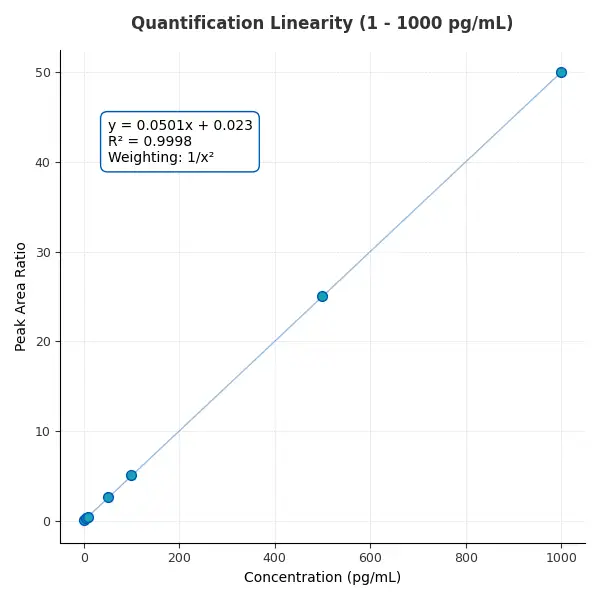
    • Linearity: Calibration curves containing at least 6-8 non-zero concentration points with a correlation coefficient R² > 0.99, and carry-over response in blank samples ≤ 20% of the LLOQ.

Typical Analytical Deliverables (Demo Results)

We provide comprehensive documentation demonstrating the validity and robustness of your custom assay. Our standard method validation report provides the empirical evidence required to support your internal evaluations:

  • Representative Chromatograms: High-resolution MRM traces of blank, LLOQ, and real study samples, demonstrating excellent peak shape and baseline separation.
  • Validation Summary Tables: Detailed statistical parameters covering accuracy, precision, recovery, and matrix effect evaluations across all tested QC levels.
  • Stability Profiles: Experimental data confirming the chemical integrity of the analyte under specified storage and sample processing conditions.
  • Final Standard Operating Procedure (SOP): A fully documented, standardized analytical method ready for immediate deployment in your subsequent large-scale screening batches.
Representative MRM Chromatograms showing baseline separation
Calibration curve linearity demonstrating wide dynamic range
Extraction recovery matrix across challenging biological samples

Core Capabilities: Chromatographic & MS Optimization Strategies

  • High-Resolution Chromatography (UHPLC/HPLC) Screening: Utilization of diverse stationary phases (C18, HILIC, PGC, or chiral columns) to resolve the co-elution of highly similar structural analogs or metabolites.
  • MS Collision & Ionization Tuning: Precise optimization of Electrospray Ionization (ESI) or Atmospheric Pressure Chemical Ionization (APCI) source temperature, voltage, and collision cell energy for hard-to-ionize compounds.
  • Derivatization Interception: Strategic introduction of chemical derivatization steps for "stealth molecules" lacking chromophores, exhibiting extreme polarity, or demonstrating poor volatility, significantly amplifying their MS response signals.

Sample Submission & Project Requirements

To efficiently initiate a custom development project, we require the following supporting information:

  • Target Profile: The complete chemical structure, molecular weight, pKa, LogP, and anticipated biological concentration range of the compound.
  • Reference Standards: High-purity reference material of the target compound and (if available) its stable isotope-labeled internal standard (SIL-IS).
  • Matrix Specifications: Explicit designation of the biological matrix to be tested (e.g., specific plasma species, specific organ tissue) to guide matrix effect mitigation strategies.

Once your method is fully customized and validated, seamlessly transition your analytical protocol into our high-throughput testing platforms:

  • Single Drug Quantification: Leverage the newly developed method for high-sensitivity systemic exposure monitoring and PK modeling of your target molecule.
  • Complex Biological Matrices Analysis: Apply validated extraction protocols for the in-depth profiling of challenging samples like brain tissue, aqueous humor, or bile.
  • Stability and Forced Degradation Profiling: Utilize specific chromatographic separation techniques to accurately track the degradation kinetics of the parent drug under various stress conditions.
  • Drug Metabolite Identification (MetID): Integrate your validated assays with high-resolution MS to characterize metabolic pathways and structural transformations in discovery-phase studies.

Case Study: De Novo Method Development for a Highly Polar Drug Candidate

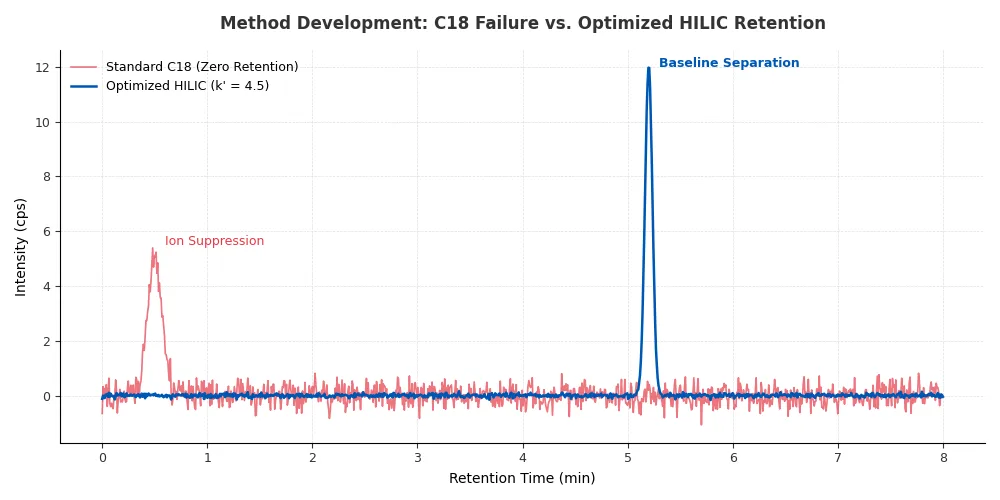
  • Background: A collaborative team required the quantification of a highly polar novel antiviral molecule (Cytisine-like alkaloid) in human serum. Routine reversed-phase chromatography attempted internally resulted in the target eluting at the dead volume, suffering from severe ion suppression and failing to meet the required LLOQ.
  • Approach: Upon taking over the project, our technical team reconstructed the method by replacing the reversed-phase system with Hydrophilic Interaction Liquid Chromatography (HILIC) and developing a customized Solid-Phase Extraction (SPE) enrichment protocol designed to capture polar analytes while removing interfering proteins.
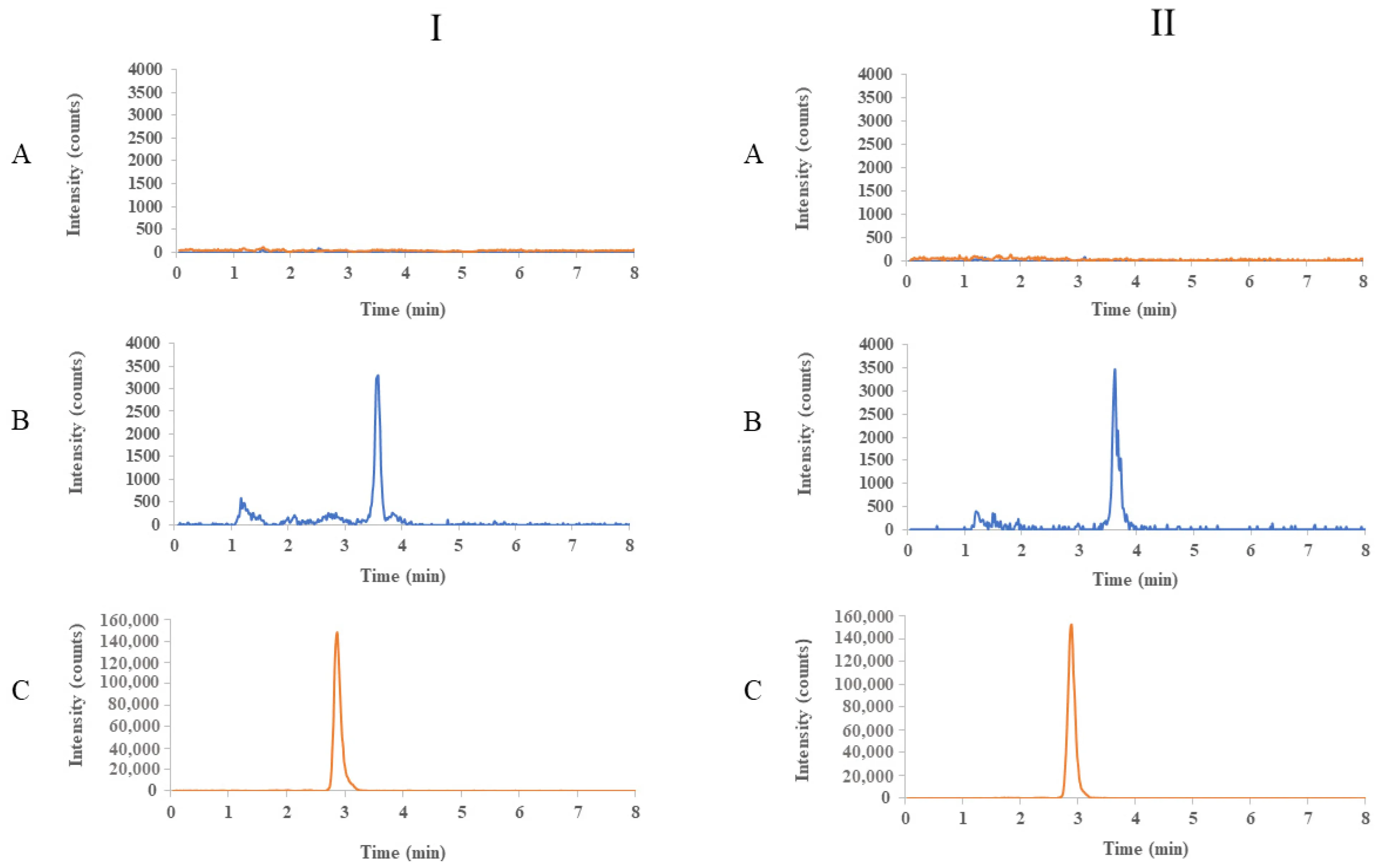
  • Results & Conclusion: The optimized HILIC-SPE-LC-MS/MS method achieved complete baseline separation from matrix interferences. The method successfully passed a full fit-for-purpose validation, with a correlation coefficient R² > 0.999 and both intra-day and inter-day precision (CV) strictly controlled within 15%. This customized approach bypassed the limitations of conventional RP-LC, providing a robust data foundation for pharmacokinetic evaluations.
Representative HILIC-SPE-LC-MS/MS chromatogram showing polar drug separation(Source: Adapted from Wróblewski, M., et al., Int. J. Mol. Sci. 2023, 24(20), 15364. CC BY 4.0)

Frequently Asked Questions (FAQ)

1. How long does it take to transfer and optimize our struggling internal method?

If preliminary baseline conditions exist, method transfer and optimization typically show significant improvement within 1 to 2 weeks. For entirely new de novo development, the process generally requires 2 to 4 weeks.

2. How do you handle method development for molecules with structures that cannot be disclosed due to IP reasons?

We strictly adhere to Non-Disclosure Agreements (NDAs). If the complete structure cannot be provided, you can supply core physicochemical parameters (e.g., approximate molecular weight, pKa, LogP, and functional group types). Our experts can design blinded extraction and chromatographic screening strategies based on this data.

3. What if a suitable stable isotope-labeled internal standard (SIL-IS) cannot be found?

If a SIL-IS is commercially unavailable or cannot be synthesized in the early stages, our team has extensive experience screening and validating structural analogs with the closest physicochemical properties and retention times to serve as surrogate internal standards, effectively compensating for matrix effects.

References

  1. ICH M10 on bioanalytical method validation and study sample analysis
  2. Wróblewski, M., et al. (2023). "Development and Validation of LC-MS/MS Method for Determination of Cytisine in Human Serum and Saliva." International Journal of Molecular Sciences, 24(20), 15364. https://doi.org/10.3390/ijms242015364

Disclaimer: All services and data provided by Creative Proteomics DMPK are strictly for Research Use Only (RUO). Not for use in diagnostic procedures, clinical trials, or direct therapeutic decision-making. The information presented herein is intended exclusively for fundamental scientific research.

Ready to Quantify Your Lead Compound or Metabolite?

Share your matrix type, sample count, and expected range—feasibility routing will confirm whether direct quantification is fit-for-purpose or method development is recommended.

inquiry
Online Inquiry