ISO 17025–ACCREDITED LABORATORY ENVIRONMENT

Custom Multi-Analyte Drug Panels: De Novo Bioanalytical Method Development

Standardized drug panels often fail to capture the nuances of novel combination therapies and complex polypharmacy regimens. We specialize in de novo method development, creating tailored analytical solutions for high-stakes research where catalog assays end.

Ultra-Sensitive Solution Engineering

Achieving LLOQs at pg/mL levels tailored to your pharmacological window.

High-Order Multiplexing

Simultaneous quantification of 5 to 50+ analytes without isobaric interference.

Rapid De Novo Deployment

From-scratch development for proprietary molecules where no literature exists.

Technical Authority Precision Workflow Demo Results Sample Requirements Research Case Study FAQ

Mastering the Science of Analytical Depth: Beyond Surface-Level Testing

High-end drug discovery demands more than just equipment; it requires a partner who re-engineers assay chemistry to match the molecule. Our de novo platform is designed to eliminate the common failures of generic assays by focusing on three pillars of bioanalytical depth to ensure your project moves from discovery to development without technical setbacks.

1. Engineered Resolution for Extreme Chemical Diversity

One of the greatest challenges in multi-analyte panels is the simultaneous extraction and ionization of compounds with vastly different polarities (LogP) and pKa values. While generic methods sacrifice the sensitivity of one compound for another, our De Novo Engineering utilizes:

  • Custom Gradient Architecture: We design bespoke LC-gradient profiles that ensure sharp peak shapes for both highly polar and hydrophobic molecules. This is vital when scaling from simple Plasma & Serum Drug Quantification to diverse multi-class drug panels.
  • Dynamic Polarity Switching: By deploying rapid ESI polarity switching (Positive/Negative) within a single injection, we maximize coverage across diverse chemical classes, ensuring no critical component is "left behind."

2. Systematic Mitigation of Sophisticated Matrix Effects

In high-complexity matrices—such as brain tissue, ocular fluids, or specialized cell lysates—endogenous lipids and proteins cause severe ion suppression. For projects requiring Drug Quantification in Tissue and Cell Lysates, our de novo approach includes:

  • Targeted Clean-up Protocols: We engineer tailored solid-phase (SPE) and liquid-liquid extraction (LLE) steps that "strip" the matrix while preserving the chemical integrity of thermally or pH-unstable analytes.
  • Quantitative Matrix Assessment: We provide a quantitative matrix factor evaluation for every custom panel, giving you the empirical proof that your data is free from endogenous suppression.

3. Absolute Specificity via MRM Fingerprinting

For polypharmacy studies involving drugs with shared fragment ions, traditional mass spectrometry can suffer from "false positives." Our platform utilizes Scheduled Multiple Reaction Monitoring (sMRM) and Collision Energy (CE) Ramping. This level of specificity is essential when your panel requires High-Resolution Metabolite Quantification to accurately differentiate between a parent drug and its structurally similar metabolites.

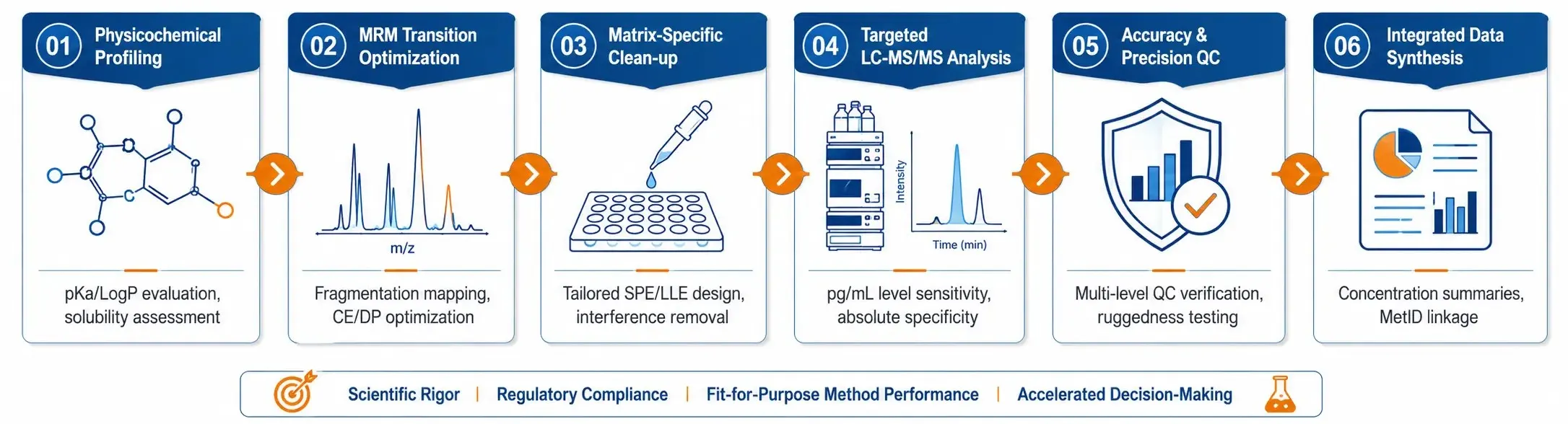
The 6-Step De Novo Workflow: From Molecular Structure to Validated Insight

We manage the entire analytical lifecycle of your custom panel, ensuring transparent communication and rigorous scientific checkpoints at every stage of the project.

6-Step de novo method development workflow for custom multi-analyte drug panels

  1. Physicochemical Profiling & Feasibility: Analysis of analyte structures to predict solubility, stability, and potential Drug-Drug Interaction (DDI) risks.
  2. MRM Transition Engineering: Exhaustive fragmentation mapping to select the most stable precursor-to-product ion pairs, optimizing signal-to-noise ratios.
  3. Bespoke Extraction Design: Development of tailored sample preparation protocols (SPE, LLE) to achieve maximum recovery (>85%), providing the foundation for reliable Single Drug Quantification.
  4. High-Resolution LC-MS/MS Execution: Execution on premium Triple Quadrupole or Orbitrap platforms, ensuring pg/mL sensitivity.
  5. Stringent Accuracy & Precision QC: Validation through intra- and inter-day precision checks using matrix-matched Quality Control (QC) samples.
  6. Integrated Scientific Reporting: Delivery of comprehensive data packages linked with Metabolite Identification (MetID) data where applicable.

Demo Results: Technical Excellence & Benchmarking

Our de novo approach is engineered to solve the failures inherent in standardized, "black-box" catalog assays. We benchmark our methods against the highest industry standards for analytical rigor.

Performance Dimension CP Bespoke De Novo Panels Standard Reseller/Catalog Kits
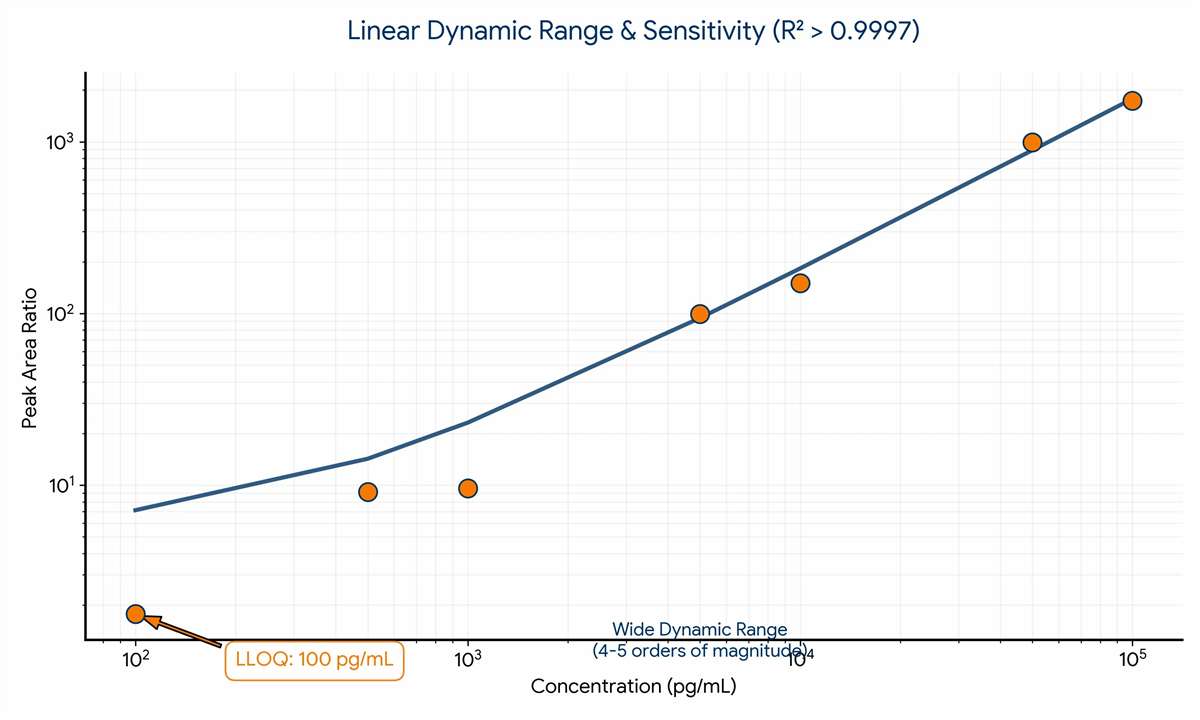
Analytical Sensitivity pg/mL to ng/mL (Tailored) Fixed (often misses low-level exposure)
Chemical Versatility Parent + Metabolites + Probes Limited to parent drugs only
Matrix Adaptability Tissues, CSF, Ocular, Lysates Optimized primarily for Plasma/Serum
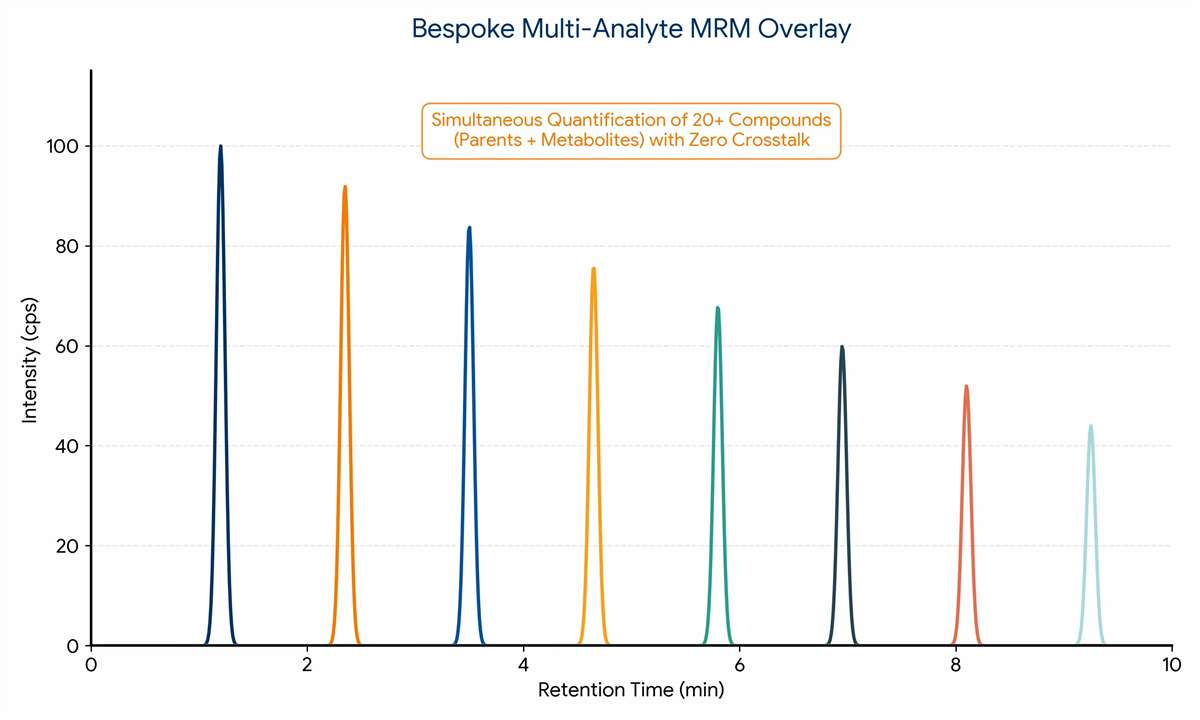
Data Specificity Scheduled MRM (Zero Crosstalk) Prone to interference in complex mixes
Demo Results: Representative LC-MS/MS chromatogram and calibration curve for a 20-analyte bespoke drug panel

Sample Submission Requirements for High-Complexity Panels

To ensure the success of de novo development, we provide highly specific sample handling guidelines. For more details, consult our Tissue Bioanalysis Protocol Guide.

Matrix Category Recommended Input Stabilization Requirement Shipping Protocol
Plasma / Serum 150 – 200 μL EDTA or Heparin; add inhibitors if required. Frozen (Dry Ice)
Solid Tissues 50 – 100 mg Snap-freeze in LN2 immediately after collection. Frozen (Dry Ice)
Cell Lysates 1 x 10⁶ cells Specify lysis buffer; avoid SDS. Frozen (Dry Ice)
Rare Fluids (CSF/Bile) 100 μL Use low-protein binding tubes. Frozen (Dry Ice)

Research Case Study: High-Throughput Quantification of 10 Targeted Anti-Cancer Agents

Background: Oncology research often involves multiple targeted agents (e.g., TKIs) to overcome resistance. A pharmaceutical partner required a single, robust assay to simultaneously quantify 10 distinct anti-cancer drugs (including Erlotinib, Gefitinib, and Lapatinib) in a mouse plasma model.

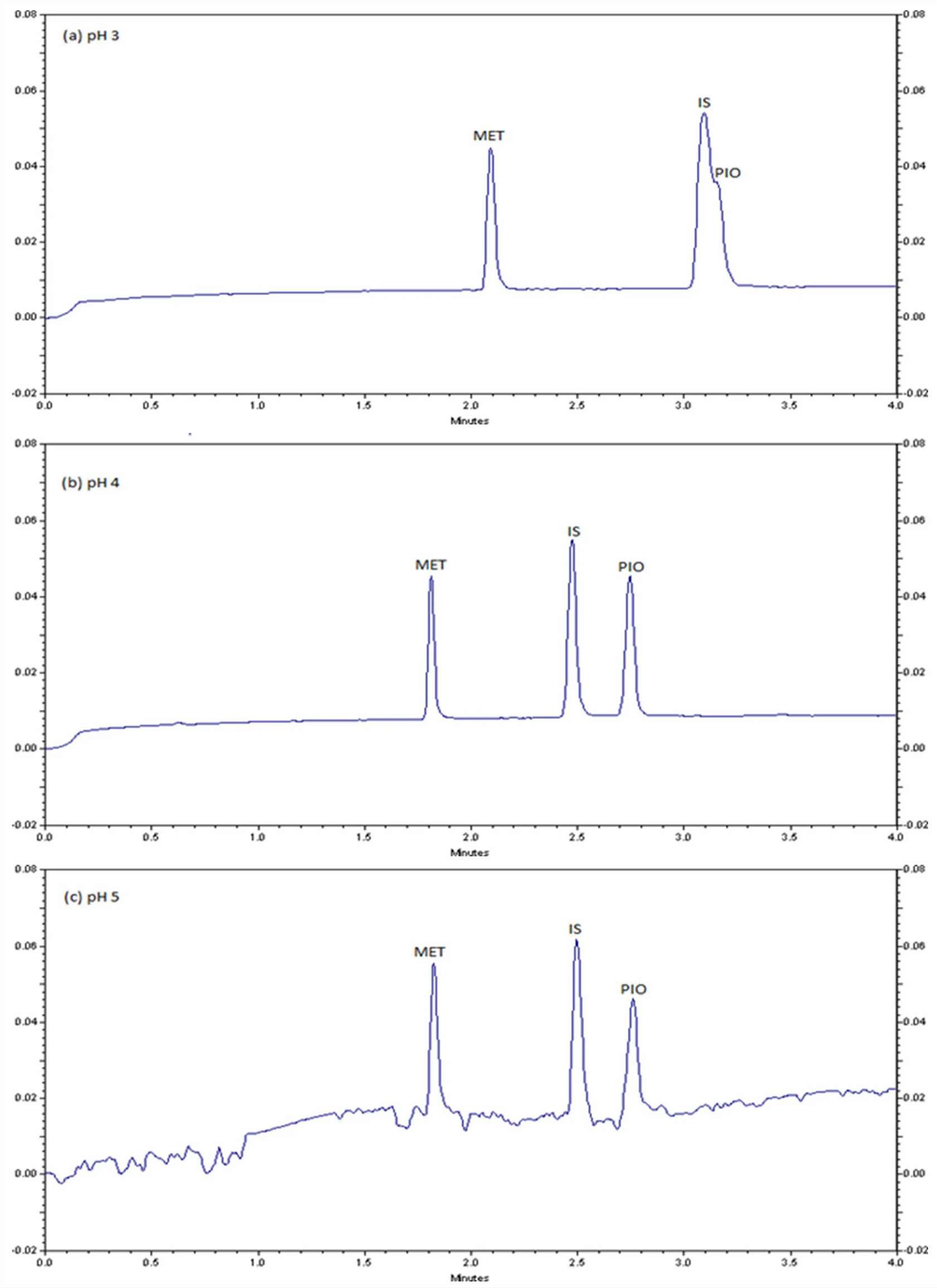
Methods: Our team developed a de novo LC-MS/MS method featuring a rapid protein precipitation (PP) workflow. We utilized a high-resolution chromatographic gradient (<10 minutes) that achieved baseline separation of all 10 compounds, effectively eliminating inter-channel crosstalk.

Results: Validation showed consistent recoveries (85%–110%) and precision (RSD < 12%). All 10 analytes achieved an LLOQ between 0.25 and 2.0 ng/mL, meeting requirements for dose-escalation studies.

Conclusion: This bespoke panel provided the exact precision and speed required for multi-drug PK/PD modeling. (Source: Based on PubMed: 36731388)

Case Study Figure: Multi-analyte drug panel chromatographic resolution

Frequently Asked Questions

How do you handle analytes with extreme polarities (LogP < 0 and LogP > 5) in one panel?

We utilize advanced mobile phase chemistry and specialized columns (e.g., HILIC or mixed-mode) combined with sophisticated gradient ramps to ensure all analytes are focused and detected in a single run without sacrificing sensitivity.

Can you develop a panel for structurally novel compounds with no existing literature?

Yes. This is a core strength of our "De Novo" service. We perform MS/MS fragmentation mapping to identify the most stable and sensitive transitions, ensuring a robust method is built specifically for your proprietary molecules.

Ready to Quantify Your Lead Compound or Metabolite?

Share your matrix type, sample count, and expected range—feasibility routing will confirm whether direct quantification is fit-for-purpose or method development is recommended.

inquiry
Online Inquiry