ISO 17025–ACCREDITED LABORATORY ENVIRONMENT

Professional CYP Inhibition Assay Services: Precision IC50 & Ki Determination

Navigate the complexities of drug-drug interaction (DDI) risks with unparalleled scientific precision. Our CYP inhibition assays deliver high-resolution IC50 and Ki data utilizing validated human liver microsomes (HLM) and recombinant enzymes. By implementing rigorous non-specific binding mitigation and high-sensitivity LC-MS/MS quantification, we provide the definitive metabolic clarity required for early-stage discovery, lead optimization, and IND-enabling support.

Non-Specific Binding Mitigation

Optimized protein concentrations and low-adsorption labware to ensure accurate free-fraction kinetics.

Ultra-Sensitive LC-MS/MS

Sub-nanogram quantification of probe metabolites, enabling assays at or below Km concentrations.

Expert De Novo Development

Rapid methodology establishment for novel chemical entities (NCEs) with challenging solubility or stability profiles.

Comprehensive Isoform Coverage Technical Advantages Standardized Workflow Demo Results Case Study Selection Strategy Sample Requirements FAQ

Cytochrome P450 (CYP) inhibition remains one of the most significant hurdles in modern drug development, often serving as a primary cause of adverse drug reactions and clinical trial failures. Identifying whether a candidate molecule acts as a potent inhibitor of major CYP enzymes is not merely a regulatory checkbox; it is a critical strategic decision point in predicting a molecule's safety profile and its potential for metabolic interference in polypharmacy scenarios.

At Creative Proteomics DMPK, we move beyond the industry-standard "pass/fail" screening. Our high-resolution CYP inhibition assay services are specifically engineered for researchers dealing with complex scaffolds, poorly soluble compounds, or molecules requiring deep mechanistic elucidation. By leveraging our state-of-the-art ISO 17025 certified laboratory, we provide traceable, high-fidelity data—from precise IC50 values to definitive Ki constants. These insights are designed to be seamlessly integrated with our Drug-Drug Interaction (DDI) Support and Metabolite Identification (MetID) Services, offering a multi-dimensional view of your compound’s biotransformation and safety landscape.

Comprehensive CYP Isoform Coverage and Validated Probe Substrates

Achieving a robust DDI risk assessment requires a deep dive into the enzymes responsible for over 90% of oxidative drug metabolism. Our platform provides standardized and customized evaluations of the seven major CYP isoforms, ensuring that no potential metabolic bottleneck is overlooked.

Unmatched Professionalism in Isoform Profiling:

  • CYP3A4 Dual-Substrate Strategy: Since CYP3A4 possesses multiple distinct binding sites, we offer dual-substrate validation using both Midazolam (1'-hydroxylation) and Testosterone (6β-hydroxylation) to capture site-specific inhibition kinetics.
  • High-Fidelity Test Systems: We utilize premium-grade, pooled Human Liver Microsomes (HLM) characterized for all major activities, or recombinant human CYP enzymes for precise, isoform-specific mechanistic deconvolution.
  • Specificity & Signal Integrity: Every assay is optimized to eliminate cross-reactivity. By monitoring specific metabolite biomarkers via LC-MS/MS, we ensure that the data reflects the true activity of the target enzyme—a precision standard we uphold across all our Metabolite Quantification Services.
Target Isoform Primary Probe Substrate Measured Metabolite Standard Inhibitor (Positive Control)
CYP1A2 Phenacetin Acetaminophen α-Naphthoflavone
CYP2B6 Bupropion Hydroxybupropion Ticlopidine
CYP2C8 Amodiaquine N-desethylamodiaquine Montelukast
CYP2C9 Diclofenac 4'-Hydroxydiclofenac Sulfaphenazole
CYP2C19 S-Mephenytoin 4'-Hydroxymephenytoin N-3-benzylnirvanol
CYP2D6 Dextromethorphan Dextrorphan Quinidine
CYP3A4/5 Midazolam / Testosterone 1'-OH Midazolam / 6β-OH Testosterone Ketoconazole

Analytical Platform and Technical Advantages for Challenging Assays

Creative Proteomics DMPK excels in de novo method development, transforming analytical challenges into actionable data. Our approach ensures that even compounds with high protein binding or complex metabolic pathways are accurately characterized.

  • Advanced Non-Specific Binding (NSB) Management: Lipophilic compounds often stick to plastic surfaces. We mitigate this by utilizing specialized low-binding materials and maintaining ultra-low microsomal protein concentrations (≤ 0.1 mg/mL) to ensure accurate free-fraction kinetics.
  • Sub-Km Sensitivity via QqQ Mass Spectrometry: Our Triple Quadrupole (QqQ) platforms provide the dynamic range needed to quantify trace metabolites. This allows us to perform assays at or below the substrate Km, essential for accurate Ki and IC50 calculations.
  • Robotic Liquid Handling & Reproducibility: To eliminate human error in complex serial dilutions, we employ high-precision liquid handling systems. This ensures the batch-to-batch consistency required for LC-MS/MS Drug Quantification in Tissue and Cell Lysates.
  • Time-Dependent Inhibition (TDI) Expertise: We provide deep-dive TDI assessments, moving from simple IC50 shifts to complex kinact/KI kinetic modeling, a vital companion to our Stability and Forced Degradation Profiling.

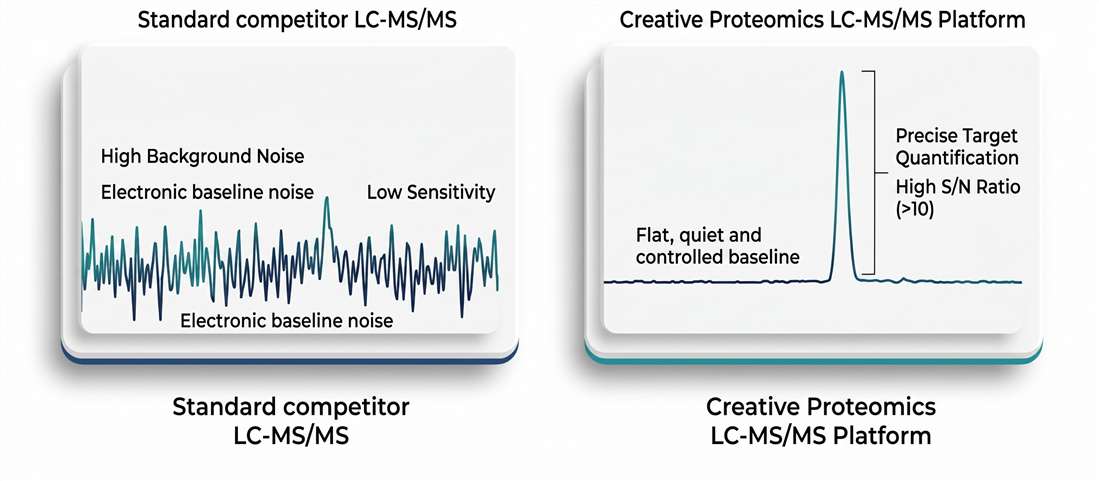
High-sensitivity LC-MS/MS platform for precise CYP inhibition capture

Standardized Workflow and Rigorous QC Checkpoints

Our laboratory operations follow a structured, logic-driven workflow to ensure the highest data integrity for your PK/PD reports, following the standards applied to our Single Drug Quantification Services.

  1. Consultation & Protocol Customization: Analysis of pKa, LogP, and solubility to design custom incubation buffers and LC-MS/MS methods.
  2. De Novo Method Validation: Establishment of a specific, sensitive analytical method using stable-isotope labeled internal standards.
  3. Enzymatic Incubation: Controlled incubation in a 37°C environment with NADPH-generating systems.
  4. Reaction Termination & Extraction: Precise quenching with ice-cold organic solvents and protein precipitation.
  5. High-Resolution Quantification: Direct analysis via LC-MS/MS, ensuring high throughput and peak resolution.
  6. Mechanistic Data Interpretation: Automated data fitting using validated non-linear regression software to calculate IC50 and Ki.
QC Metric Standard Requirement Purpose
Precision Replicate CV < 15% Ensures repeatability of results
Assay Robustness Positive Control within 2-fold of mean Validates enzymatic system activity
S/N Ratio > 10 at LLOQ Ensures sensitivity for trace metabolites

Demo Results: High-Quality Data Packages

We provide high-granularity data packages that enable immediate scientific interpretation. Our standard reports include professional 8-point inhibition plots, mechanistic kinetic models, and comparative shift visualizations for TDI assessment.

  • High-Resolution IC50 Curves: Professional plots featuring 8 concentration points with standard error analysis.
  • Ki Kinetic Plots: Lineweaver-Burk or Michaelis-Menten plots visualizing the type of inhibition (Competitive/Non-competitive).
  • TDI Visualization: Comparative plots showing IC50 shifts following pre-incubation.
  • Detailed Parameter Summary: A consolidated table of all kinetic constants and slope factors for regulatory filings.
Comprehensive CYP inhibition data package including IC50 and Ki plots

Case Study: De-risking a Novel CNS Lead via Ki Mechanistic Elucidation

Research Context

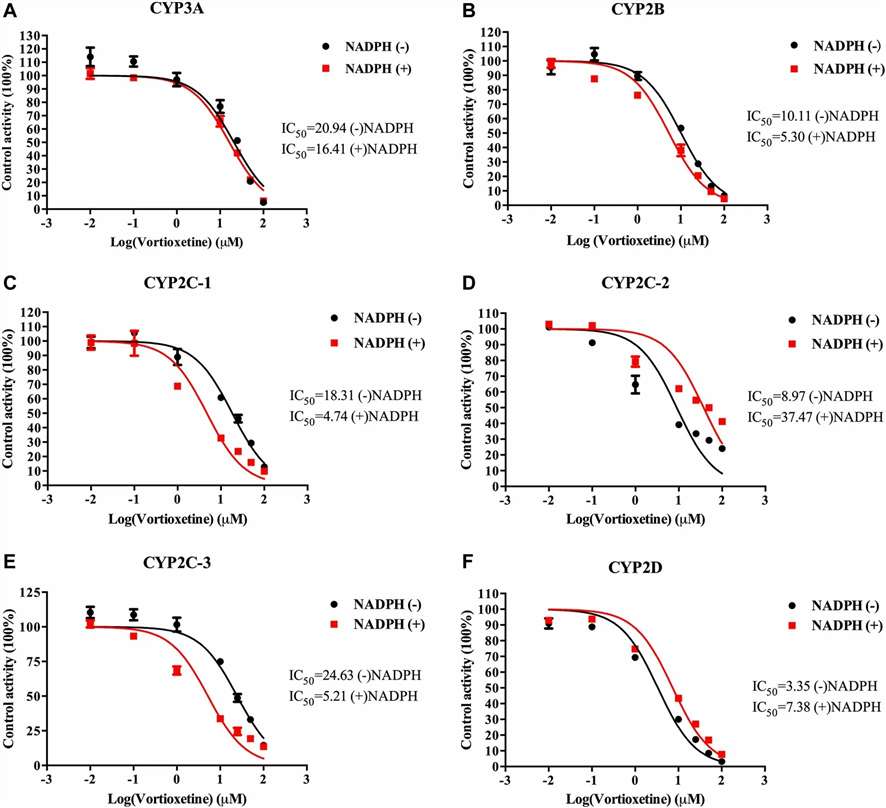
A client’s CNS-targeted small molecule (Vortioxetine analog) showed moderate inhibition of CYP2D6 and CYP3A4 during initial screening. Definitive kinetic constants were required to predict clinical DDI risk via PBPK modeling.

Strategic Approach

Creative Proteomics DMPK performed a definitive Ki study, evaluating the compound at concentrations from 0.01 to 100 μM across a range of Dextromethorphan concentrations in human liver microsomes (HLM).

Analytical Observations

The study identified Competitive Inhibition for CYP2C19 (Ki = 2.17 μM) and Non-competitive Inhibition for CYP3A4 (Ki = 7.26 μM). Crucially, TDI assays showed no significant IC50 shift, indicating a low risk of mechanism-based inactivation.

Outcome

The precise Ki values enabled high-fidelity PBPK modeling, predicting minimal clinical DDI risk at therapeutic doses and supporting the compound's safety profile in IND-enabling reports.

Source: Zhang et al. (2023), Frontiers in Pharmacology.

Mechanistic CYP inhibition case study data from Zhang et al. 2023

Technical Selection Strategy: Matching Assay Depth to Research Stage

Selecting the appropriate assay depth is critical for cost-effective R&D. Our CYP Induction Services and inhibition assays can be combined to meet different stage-specific needs.

Tier Service Type Best For... Key Deliverable
Tier 1 Cocktail Screening Early hit-to-lead; broad profiling Single-point % inhibition
Tier 2 Definitive IC50 Lead optimization; SAR support Full 8-point IC50 curves
Tier 3 Ki & MOI Study Candidate selection; IND support Absolute Ki constant & Mechanism
Tier 4 TDI Assessment Reactive metabolite risk mitigation Inactivation kinetics (kinact/KI)

Scientific Sample Requirements and Logistics

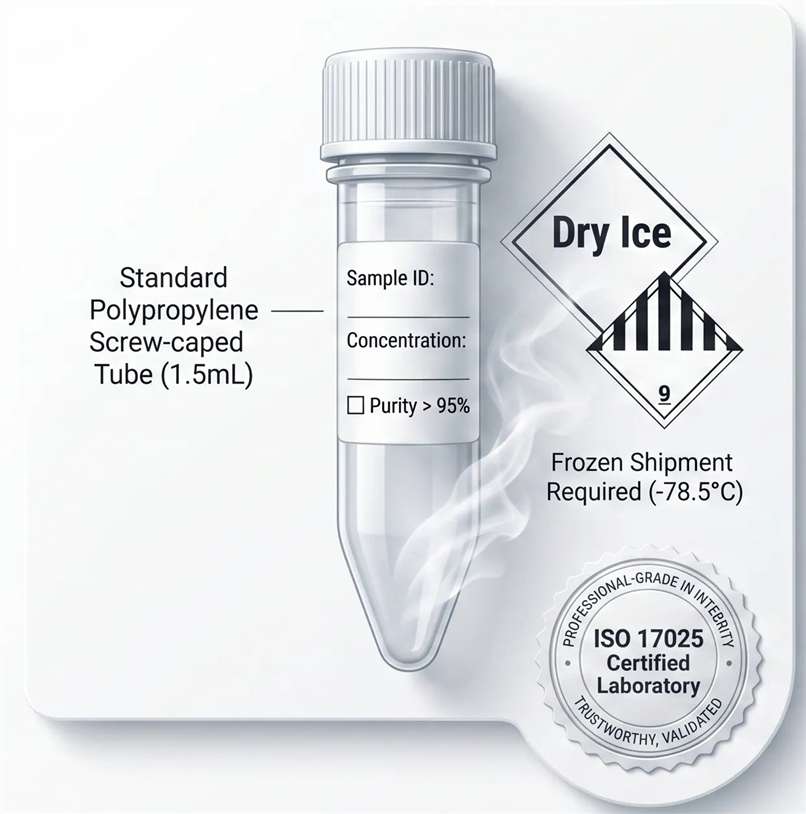
To ensure high accuracy for high-end mechanistic studies, we adhere to strict sample intake guidelines. Purity > 95% is highly recommended for Ki determination to ensure results are not skewed by impurities.

Feature Requirement
Sample Form Powder (preferred) or DMSO Stock (≥10 mM)
Quantity 5–10 mg (Screening) to 20 mg (Definitive Ki)
Technical Info Molecular weight, solubility data, and pKa/LogP
Shipping Powder (Ambient); Stocks/Biologicals (Dry Ice)

Standardized shipping and logistics for DMPK metabolic samples

Frequently Asked Questions

Why should I invest in Ki determination instead of just IC50?

Unlike IC50, which varies depending on the substrate concentration used in the experiment, Ki is a fundamental affinity constant. It provides an absolute value that is required for accurate PBPK modeling and is the gold standard for regulatory discussions.

How do you handle poorly soluble compounds in CYP inhibition assays?

We utilize de novo method optimization, adjusting organic solvent percentages or using specialized surfactants and protein-free systems to ensure compound availability during incubation without compromising enzyme activity.

Does a high IC50 shift always mean a drug is a mechanism-based inactivator?

A shift > 1.5-fold is a strong indicator of Time-Dependent Inhibition (TDI). It usually warrants follow-up kinact/KI studies to confirm if the inhibition is truly irreversible, which could have serious clinical implications.

Ready to Quantify Your Lead Compound or Metabolite?

Share your matrix type, sample count, and expected range—feasibility routing will confirm whether direct quantification is fit-for-purpose or method development is recommended.

inquiry
Online Inquiry