ISO 17025–ACCREDITED LABORATORY ENVIRONMENT

Short-Term and Long-Term Stability Studies in Bioanalysis

Evaluating compound stability represents a critical pillar in the architecture of early-stage drug discovery. To accurately assess the systemic viability of a novel chemical entity, researchers must rigorously map how it degrades over time within target biological fluids. We provide specialized short-term and long-term stability tracking services tailored for the high-sensitivity requirements of biotech R&D.

By leveraging advanced LC-MS/MS platforms within an ISO 17025 certified laboratory, we help researchers overcome severe analytical bottlenecks, delivering robust, highly reproducible concentration and half-life data for complex preclinical matrices.

High-Throughput Degradation Tracking

Robust infrastructural capacity designed to process large-scale stability screening batches across multiple time points with stable, batch-to-batch consistency and precision.

De Novo Method Development

Expert design of customized extraction, chromatography, and mass spectrometry protocols to successfully distinguish intact parent drugs from structurally similar degradation products.

ISO 17025 Traceability

All quantitative data is generated within a rigorously certified quality management system, ensuring unparalleled documentation and analytical precision for fundamental scientific research.

Matrix Complexity Workflow & QC Demo Results ISO 17025 Advantage Sample Requirements Related Services Case Study FAQ

In the critical phases of early drug discovery, transitioning a promising lead compound into a viable developmental candidate requires an in-depth understanding of its chemical and enzymatic resilience. Unlike testing compounds in pure buffer solutions, evaluating stability in complex biological systems introduces profound analytical hurdles that can derail a project if not managed correctly.

Compounds are highly susceptible to multiple degradation pathways once introduced into biological matrices. Enzymatic instability is a primary concern, where endogenous esterases, amidases, or proteases in the blood and tissue can rapidly cleave the molecule's functional groups. Simultaneously, chemical instability driven by pH-driven hydrolysis, oxidation, or photolysis can occur during sample handling or storage.

These factors result in rapidly declining concentrations of the parent drug and the simultaneous emergence of degradants that often share extreme structural similarities with the original molecule. For instance, a single deamidation or oxidation event may only slightly change the molecular weight, making it nearly impossible to distinguish using basic UV detection. Furthermore, massive ion suppression from endogenous matrix proteins and lipids can completely mask the target analyte or produce false-positive quantitative readouts.

Our platform addresses these specific chemical challenges through inquiry-driven custom delivery. We reject "one-size-fits-all" methodologies. Instead, our bioanalytical scientific team meticulously evaluates the unique physicochemical properties of your target analytes—such as pKa, lipophilicity (LogP), and molecular weight—alongside the specific biochemical challenges of your biological matrix. Whether you are tracking degradation in enzyme-rich liver microsomes, protein-heavy plasma, or customized cell lysates, we engineer a bespoke quantification strategy that ensures absolute accuracy, baseline stability, and reproducibility across hours, days, or months.

Robust Analytical Workflow & QC Checkpoints

To ensure batch-to-batch consistency and accurate data delivery for complex stability time-course studies, our bioanalytical workflow incorporates stringent quality control checkpoints at every critical juncture. This process is optimized to handle hundreds of samples without compromising data integrity.

Step 1: Specialized Sample Preparation & Precise Incubation

Process: We implement highly controlled incubation protocols. Pure compounds are spiked into the selected biological matrices (e.g., human, rat, or dog plasma) and incubated in a strictly regulated thermal environment (typically 37°C). To capture the full kinetic profile, samples are taken at precise intervals. At each time point, the reaction must be "snap-frozen" or chemically quenched. We utilize targeted solvent systems or pH modifiers that instantly denature enzymes, effectively "freezing" the compound's state at that exact microsecond.

QC Checkpoint: Utilization of blank matrix controls and zero-minute (T0) reference samples. We perform visual confirmation of homogenate clarity and, where required, total protein normalization to ensure concentration data is representative across varying sample volumes.

Step 2: De Novo Method Development & Extraction Optimization

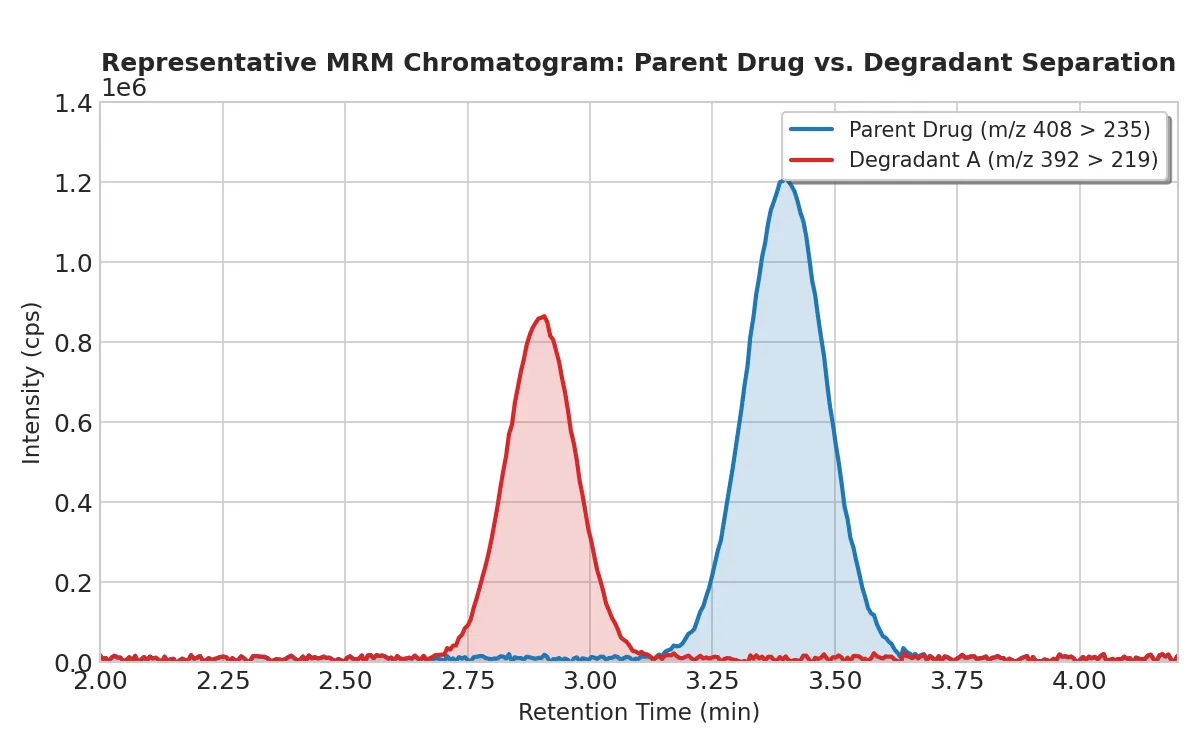
Process: For novel chemical entities (NCEs) lacking established literature, we develop customized LC-MS/MS methods from the ground up. A critical part of this is choosing the right extraction technique. We may employ Liquid-Liquid Extraction (LLE) to achieve high purity or Solid-Phase Extraction (SPE) to eliminate phospholipids that cause ion suppression. The chromatography is then tuned to effectively separate the target parent drug from newly formed degradants and interfering background signals.

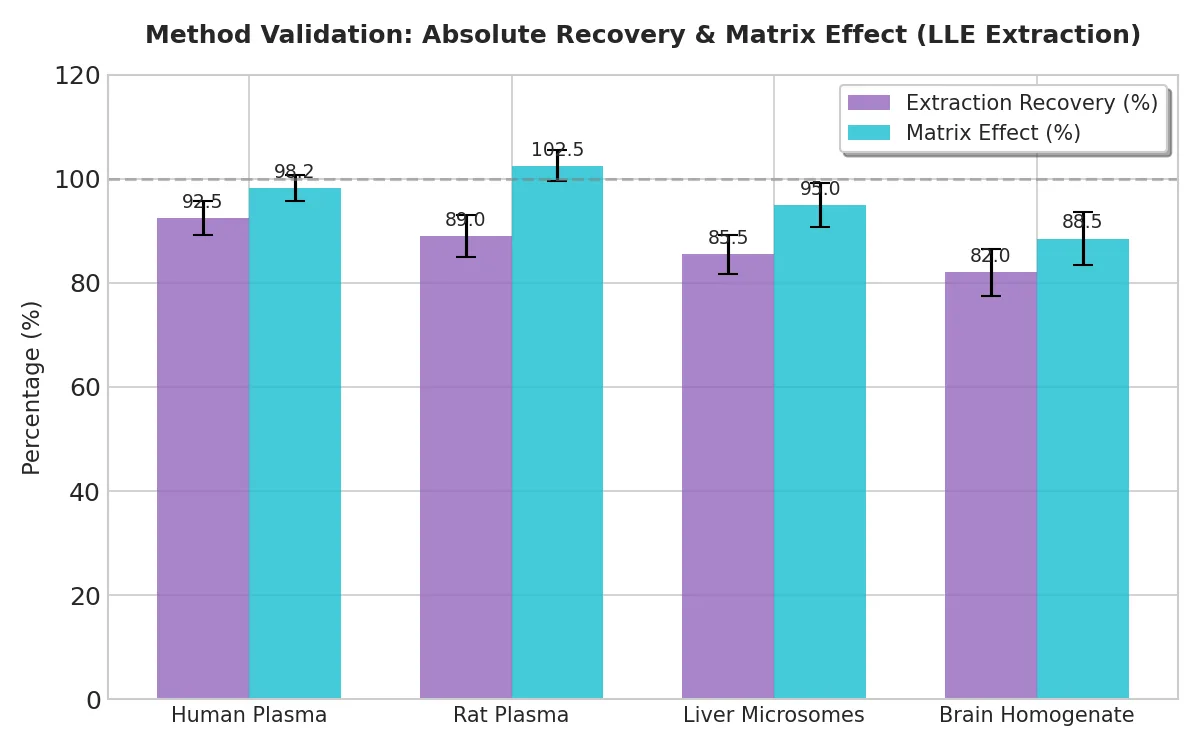
QC Checkpoint: Rigorous evaluation of the Matrix Effect (ME%) and absolute Extraction Recovery rates using surrogate matrices. We ensure the customized method remains highly stable across different biological batches, maintaining a matrix factor close to 1.0.

Step 3: High-Sensitivity LC-MS/MS Analysis

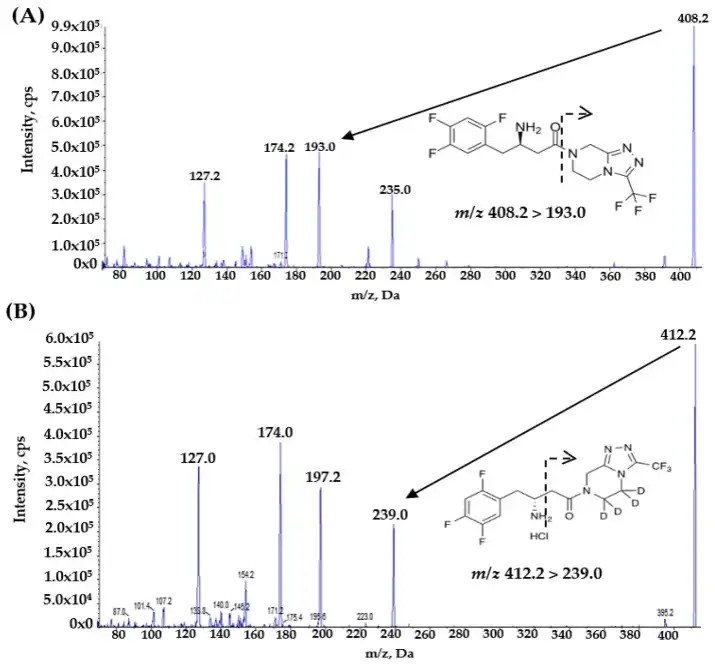
Process: We utilize a highly adaptable, dual-track instrumental approach. Triple Quadrupole (QQQ) systems are aggressively deployed for targeted, high-sensitivity quantification using Multiple Reaction Monitoring (MRM). By selecting unique precursor-to-product ion mass transitions, we can filter out the complex matrix noise. This ensures we can accurately track the parent compound even as its concentration drops to extreme lows during long-term stability testing.

QC Checkpoint: Validation of calibration curve linearity (strictly maintaining R2 > 0.99) and establishing a Lower Limit of Quantification (LLOQ) explicitly tailored to capture deep degradation phases without losing signal-to-noise ratio.

Step 4: Data Interpretation & PK Parameter Reporting

Process: Processing of raw mass spectrometry data using industry-validated software for precise peak integration and regression analysis. We calculate final concentrations and derive kinetic parameters, most importantly the biological half-life (t1/2) and the rate constant (k).

QC Checkpoint: Comprehensive verification of intra-day and inter-day precision using matrix-matched Quality Control (QC) samples (Low, Mid, and High QC levels) to guarantee longitudinal data stability across multi-week or multi-month studies.

High-Resolution Demo Results Showcase

We provide objective experimental evidence of our analytical rigor. Our standard data packages include the exact quantitative and qualitative metrics required by advanced researchers to verify the success of a complex stability study:

  • Representative MRM Chromatograms: Visual proof demonstrating clear baseline separation of the parent drug from its degradants and dense endogenous background noise. This proves the specificity of the chromatography and ensures no "ghost peaks" are interfering with your results.
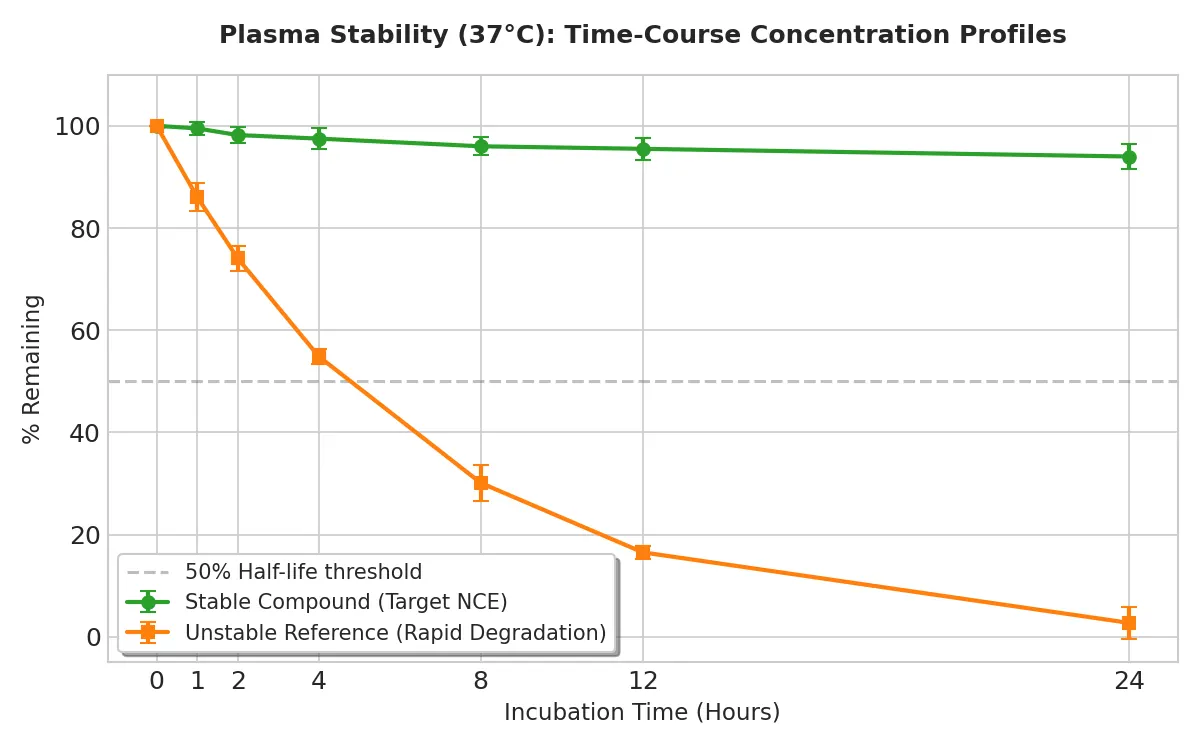
  • Time-Course Concentration Profiles: Detailed visual plots mapping the precise decline of the compound's concentration. We provide both linear and semi-logarithmic plots to help you visualize the degradation kinetics clearly.
  • Calculated Half-Life (t1/2) Metrics: Robust kinetic calculations demonstrating exactly how long the compound remains viable within the specific biological environment, essential for dose-ranging and PK modeling.
  • Accuracy & Precision Data Tables: Quantitative summaries of the intra-day and inter-day Coefficient of Variation (CV%), proving the reproducibility of the assay even across different laboratory sessions.
  • Matrix Effect & Recovery Evaluations: Empirical scientific data showing how our extraction process effectively mitigated ion suppression from the target tissue or fluid matrix.
  • Summary Spreadsheet: Final calculated concentration data rigorously formatted for immediate integration into your internal research reports, grant applications, or scientific publications.
Representative MRM Chromatograms showing parent drug and degradant separation
Time-Course Concentration Profiles
Matrix Effect & Recovery Evaluations

Technical Strengths: The ISO 17025 Advantage

When evaluating the stability of early-stage candidates, researchers frequently face a critical decision: relying on resource-strained internal laboratories or investing in an advanced, dedicated LC-MS/MS CRO platform. Operating within an ISO 17025 certified laboratory environment provides our platform with decisive, verifiable technical advantages over standard uncertified methodologies.

While standard in-house setups may offer convenience, they often lack the dedicated high-throughput capacity and specialized extraction expertise required to handle extreme matrix interference. A generic lab may use a "universal" protein crash method that fails to completely stop enzymatic activity, leading to "artificial" degradation and false data. Furthermore, our ISO 17025 framework ensures that every pipette used is calibrated, every instrument undergoes strict preventative maintenance, and every data point is fully traceable over the course of long-term stability studies spanning several months.

Dimension ISO 17025 LC-MS/MS Platform Standard Uncertified / In-House Labs
Analytical Specificity Absolute structural identification and degradant separation via exact m/z transitions. High risk of cross-reactivity or co-eluting degradants inflating parent readings.
Platform Customization Fully adaptable de novo extraction and quenching protocols for proprietary NCEs. Often restricted to fixed protocols that cannot adapt to highly unstable or novel structures.
Throughput & Speed Dedicated instrumental arrays designed to process massive multi-timepoint batches rapidly. Prone to instrument queues, risking sample degradation while samples wait in the autosampler.
Data Depth & Traceability Provides absolute concentration, kinetic parameters, and rigorous longitudinal QC documentation. Often provides only relative data with minimal mechanistic insight or audit trails.

Selection Strategy: Choose our high-resolution LC-MS/MS platform when tracking novel molecules that are highly susceptible to rapid enzymatic degradation, or when extreme molecular specificity is required to successfully distinguish between a parent drug and its structurally similar breakdown products in complex, dense biological matrices like brain tissue or liver homogenates.

Sample Submission Requirements

Compounds are frequently unstable outside of their native biological environment, and even more so during transit. To maintain the structural integrity of your target analytes and ensure highly accurate baseline quantification, we enforce specific guidelines for sample preparation and shipping.

Matrix Type Minimum Volume/Weight Preparation Instruction Shipping Condition
Plasma / Serum 50 – 100 µL Use EDTA or Heparin as anticoagulant. Centrifuge promptly and aliquot the supernatant. Ship on Dry Ice (-70°C)
Tissue Homogenates 20 – 50 mg Rinse in cold saline to remove surface blood. Snap-freeze in liquid nitrogen immediately. Ship on Dry Ice (-70°C)
Microsomes / S9 1 – 2 mg protein Ensure suspensions are tightly sealed in low-binding tubes. Avoid freeze-thaw cycles. Ship on Dry Ice (-70°C)
Pure Compound 1 – 5 mg Provide in light-protected amber vials if photosensitive. Specify precise solubility. Ship on Ice Pack or Room Temp

Comprehensive early discovery research requires meticulously tracking compound viability across multiple distinct biological compartments and stress conditions. Expand your analytical strategy by exploring our integrated, specialized testing capabilities:

Proven Success: Stability Evaluation of Sitagliptin in Human Plasma

Background

In early-stage Central Nervous System (CNS) and metabolic research, understanding the baseline stability of a small molecule in human plasma is paramount. A research team investigating novel DPP-4 inhibitors needed to accurately track the concentration of Sitagliptin over an extended period to ensure that downstream pharmacokinetic readouts were not skewed by ex vivo sample degradation. Plasma is notoriously difficult due to active endogenous enzymes that can rapidly degrade unsupported compounds if quenching protocols are flawed.

Methods

To overcome the inherent chemical hurdles of the plasma matrix, a highly customized, rapid UHPLC-MS/MS method was developed. The analytical team bypassed standard protein precipitation, instead implementing a targeted Liquid-Liquid Extraction (LLE) strategy using minimal sample volumes (100 µL). This specific extraction chemistry was carefully tuned to achieve high absolute recovery of Sitagliptin while selectively washing away the interfering lipid background. The subsequent instrumental analysis utilized high-resolution chromatography gradients to ensure baseline separation from potential degradants within a highly efficient analytical run time.

Results

The de novo method successfully validated the simultaneous quantification and stability tracking of Sitagliptin across the plasma matrix, achieving an exceptionally tight Matrix Effect (ME%) window and demonstrating absolute linearity (R2 > 0.99). The testing proved that the compound maintained its structural integrity without significant degradation under the tested storage conditions.

Conclusion

This application clearly demonstrates the immense value of customized LC-MS/MS methodology in resolving severe matrix interference. By delivering precise, highly specific concentration data, the quantification directly enabled the research team to confidently optimize their formulation strategies and deeply understand the compound's localized distribution profile during the critical early discovery phases.

For definitive visual verification of the method's quantitative reliability, chromatography, and peak separation, please refer to Figure 1 of the peer-reviewed study on the Quantification of Sitagliptin in Human Plasma.

Stability Evaluation of Sitagliptin in Human Plasma

Frequently Asked Questions

1. Can you develop a stability indicating method if my compound is highly prone to enzymatic degradation?

Yes. Unstable analytes require specialized stabilization strategies implemented at the very moment of sample collection and homogenization. Depending on the molecule's specific degradation pathway (e.g., oxidation or enzymatic cleavage), we utilize targeted chemical derivatization, precise pH adjustment buffers, or the strategic addition of specific enzyme inhibitors directly into the homogenization matrix. This ensures the transient compound remains entirely intact for subsequent LC-MS/MS analysis.

2. How do you distinguish between the parent drug and structurally similar degradation products during analysis?

Degradation products often exhibit similar polarities and masses to the parent drug, risking co-elution. We solve this by rigorously optimizing the chromatographic stationary phase (such as using specialized HILIC or high-resolution C18 columns) and gradients to force baseline separation. Because degradants can undergo in-source fragmentation inside the mass spectrometer, strict chromatographic separation prior to ionization is absolutely essential to prevent false parent-drug readings.

3. What specific lysis buffers are compatible with your downstream LC-MS/MS analytical systems?

Mass spectrometers are highly sensitive to strong ionic detergents. We strongly recommend avoiding high concentrations of reagents like SDS or Triton X-100, as these agents cause massive ion suppression. If a buffer must be utilized for cellular extraction, we prefer mild, mass-spec compatible options, volatile buffers like ammonium acetate, or simple mechanical cell lysis in purely aqueous solutions to maintain the integrity of the stability study.

4. What is the typical turnaround time for a custom stability study on a novel chemical entity?

While turnaround times vary based on the specific incubation periods required (e.g., 24-hour short-term vs. 6-month long-term tracking), the initial de novo method development phase is highly accelerated. Thanks to our extensive pre-validated assay library and specialized analytical expertise, custom LC-MS/MS protocols for novel compounds can typically be established rapidly prior to commencing the official incubation cycles.


Disclaimer: All products, protocols, and bioanalytical services provided by Creative Proteomics DMPK are strictly for Research Use Only (RUO). They are not intended for, nor validated for, use in diagnostic procedures, clinical trials, or direct therapeutic decision-making. The quantitative data and scientific information presented herein are intended exclusively to support fundamental scientific research and early-stage laboratory discovery.

Ready to Quantify Your Lead Compound or Metabolite?

Share your matrix type, sample count, and expected range—feasibility routing will confirm whether direct quantification is fit-for-purpose or method development is recommended.

inquiry
Online Inquiry