ISO 17025–ACCREDITED LABORATORY ENVIRONMENT

Robust Autosampler Stability Testing Services for Reliable LC-MS/MS Bioanalysis

In early-stage bioanalysis, an autosampler stability testing service evaluates whether extracted and processed sample concentrations remain completely intact while queued in the instrument's compartment for LC-MS/MS injection. Essential for labile compounds, this rigorous assessment prevents batch-to-batch variations caused by in-vial chemical degradation or physical adsorption, ensuring your high-throughput pharmacokinetic (DMPK) data is exceptionally robust, reproducible, and fully optimized for your internal discovery milestones.

Temperature-Controlled Queuing

Precise thermal regulation (down to 4°C) within the autosampler compartment to aggressively halt in-vial hydrolysis and solvent-mediated chemical degradation.

Vial-Adsorption Mitigation

De novo optimization of reconstitution solvents and autosampler vial materials (e.g., deactivated glass vs. polypropylene) to prevent non-specific binding of highly lipophilic compounds.

High-Throughput Fidelity

Strict validation protocols ensuring the 1000th sample in a large bioanalytical run is as quantitatively accurate and scientifically reliable as the very first injection.

Critical Role Degradation Pathways Workflow Demo Results Technical Strengths Sample Requirements Related Services Case Study FAQ

The Critical Role of Autosampler Stability in High-Throughput Bioanalysis

With the widespread adoption of high-throughput screening in early drug discovery, efficiency in sample processing has dramatically increased. However, this high-throughput capability introduces a unique analytical bottleneck: hundreds of extracted biological samples often need to sit in autosampler queues for 24 to 48 hours before mass spectrometric analysis.

Unlike bench-top stability—which deals with raw plasma and endogenous enzymes—autosampler stability focuses entirely on the processed extract. During this prolonged waiting period, the chemical integrity of the analyte becomes highly vulnerable to its new micro-environment. If drug candidates—particularly ester prodrugs, N-oxides, or fragile phase II metabolites—undergo hydrolysis in the aqueous-organic reconstitution solvent, or if they physically adsorb to the walls of the autosampler vial, significant batch-to-batch variations will occur. Consequently, the first injection and the 500th injection of the exact same concentration would yield drastically different mass spectrometric responses, fatally compromising the accuracy of the pharmacokinetic profile.

Comprehensively evaluating the autosampler stability of processed samples is a foundational scientific necessity that validates the entire high-throughput analytical run and supports confident pipeline decision-making.

Overcoming Specific In-Vial Degradation Pathways

Understanding the molecular mechanisms of in-vial degradation is crucial for developing robust bioanalytical methods. Our specialized analytical team actively identifies and mitigates several major pathways that commonly occur specifically within the autosampler environment:

1. Solvent-Mediated Chemical Hydrolysis

Once a compound is extracted from plasma and reconstituted in a mobile phase-compatible solvent (often a mixture of water and organic solvents like acetonitrile or methanol), it is exposed to entirely new chemical stresses. Ester and amide linkages can rapidly hydrolyze depending on the pH of the reconstitution solvent. By optimizing the solvent's buffer capacity and utilizing actively chilled autosamplers (4°C), we significantly suppress hydrolytic cleavage during the multi-day analytical run.

2. Non-Specific Adsorption to Vial Surfaces

Highly lipophilic compounds, hydrophobic peptides, or large molecules frequently exhibit non-specific adsorption to the inner surfaces of glass or plastic autosampler vials and inserts. This physical phenomenon causes a time-dependent decrease in the detectable concentration in the solution, mimicking chemical degradation. We troubleshoot this by evaluating alternative vial materials (e.g., silanized glass), adjusting the organic solvent ratio, or incorporating specific mass-spec-compatible additives to block adsorption sites.

3. Solvent Evaporation in the Compartment

During long analytical batches, highly volatile extraction solvents can slowly evaporate through the septa of the autosampler vials, especially if the compartment is not properly temperature-controlled. This evaporation artificially concentrates the sample, leading to a false-positive increase in the calculated drug concentration over time. Our rigorous sealing protocols and continuous temperature monitoring completely eliminate this physical artifact.

Standardized LC-MS/MS Workflow for Autosampler Validation

To ensure batch-to-batch consistency and accurate data delivery for complex high-throughput studies, our bioanalytical workflow incorporates stringent quality control checkpoints tailored specifically for the autosampler queuing phase.

Step 1: Processed Sample Queuing & Incubation

Process: Extracted Quality Control (QC) samples are placed in the LC-MS/MS autosampler under the exact proposed operational conditions (e.g., room temperature or chilled to 4°C). The samples are queued to simulate the maximum anticipated runtime of the largest planned analytical batch (typically 24, 48, or 72 hours).

QC Checkpoint: Strict verification of initial (T0) baseline concentrations to ensure the extraction process itself yielded 100% baseline recovery before the queuing phase begins.

Step 2: Consecutive Analytical Injections

Process: The system automatically executes injections from the queued vials at predefined, critical time intervals. We utilize highly efficient chromatographic gradients to ensure rapid separation of the target analyte from the solvent front.

QC Checkpoint: Continuous monitoring of Internal Standard (IS) response stability across all time points. A stable IS area proves that the mass spectrometer's sensitivity remains constant, isolating any observed signal drop entirely to in-vial degradation.

Step 3: High-Sensitivity Detection

Process: Targeted quantification of the parent compound is executed via highly sensitive Multiple Reaction Monitoring (MRM) using advanced Triple Quadrupole (QQQ) systems, achieving sub-ng/mL detection limits.

QC Checkpoint: Validation of ultra-low carryover. We inject blank solvent immediately following the High QC (HQC) sample to prove that residual drug from previous injections is not contaminating subsequent queued samples.

Step 4: Data Interpretation & Acceptance Criteria

Process: Raw data is processed using industry-validated software for precise peak integration. We calculate the percentage deviation of the aged samples against the freshly prepared or T0 baseline samples.

QC Checkpoint: Based on rigorous scientific standards, the accuracy deviation of aged LQC and HQC samples is strictly monitored, proving absolute stability within the compartment across the entire batch runtime.

High-Fidelity Demo Results Showcase

We provide objective experimental evidence of our analytical rigor. Our standard data packages include the exact quantitative and qualitative metrics required by advanced researchers to verify the success of a high-throughput quantification study:

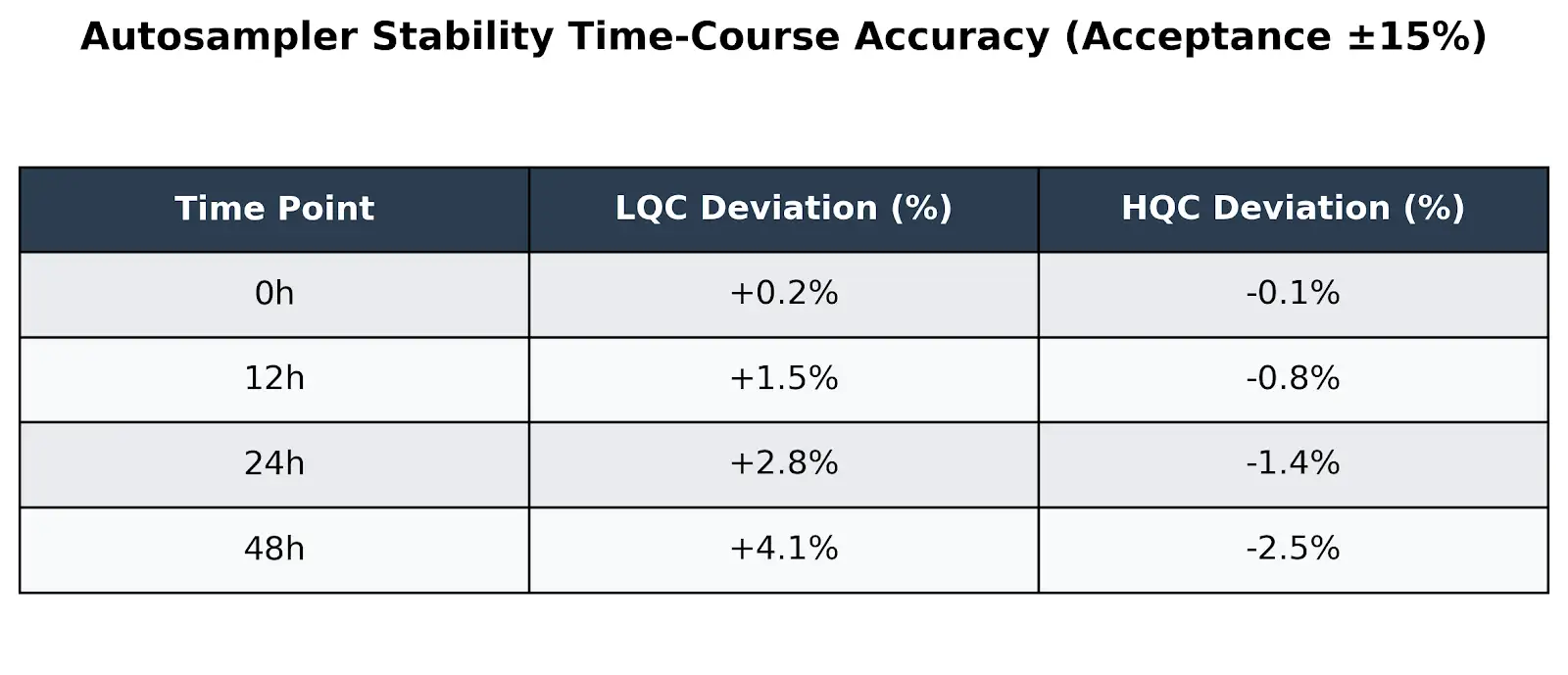
  • Stability Time-Course Accuracy Table: Details the accuracy deviation of LQC and HQC at 0h, 12h, 24h, and 48h. This table serves as direct quantitative evidence that processed extracts do not degrade over extended in-vial storage.
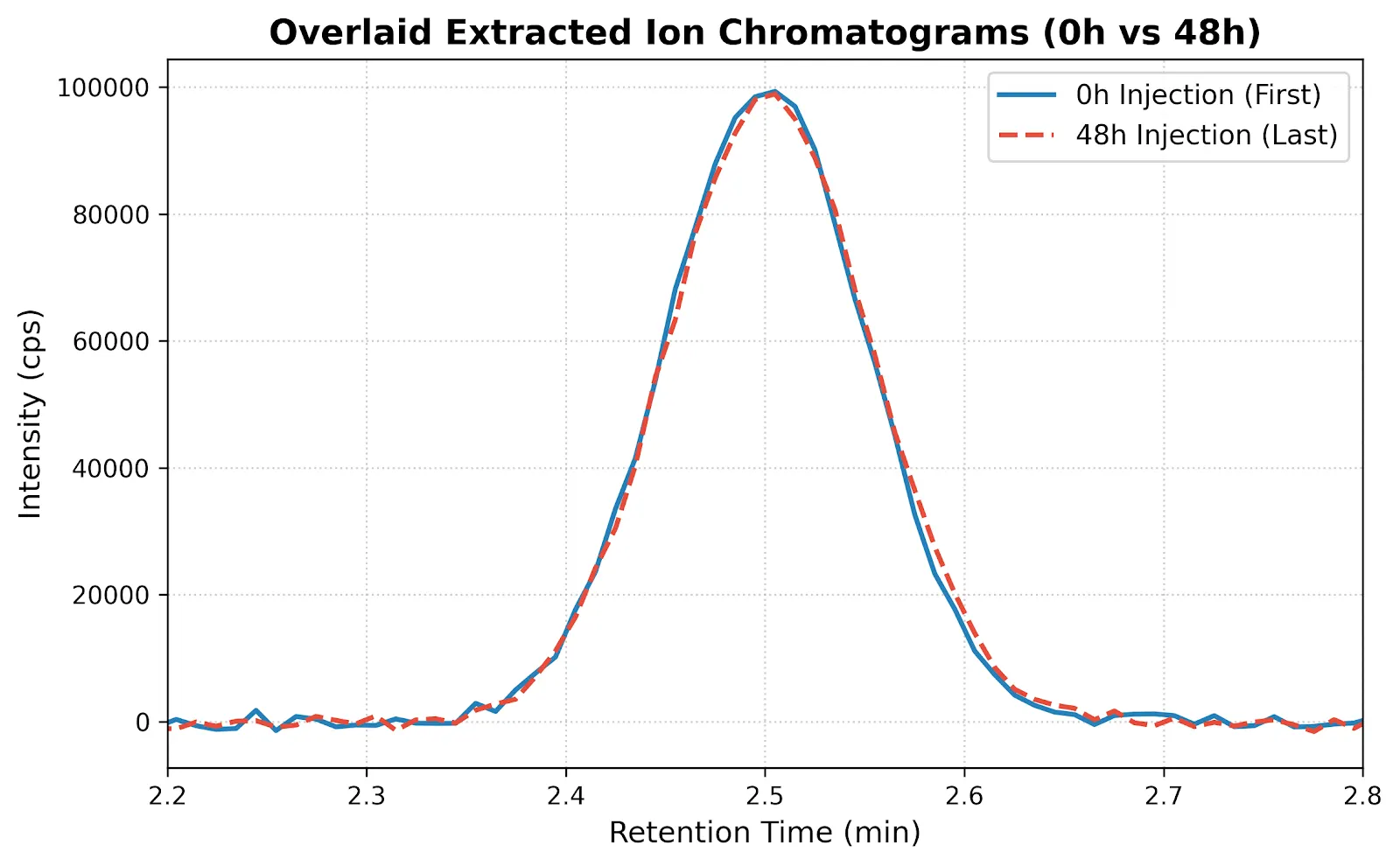
  • Overlaid Extracted Ion Chromatograms (EIC): Intuitively compares the chromatographic peaks of the first injection (0h) and the last injection (48h). By demonstrating highly consistent peak areas, symmetrical peak shapes, and identical retention times, we prove the compound remains structurally intact.
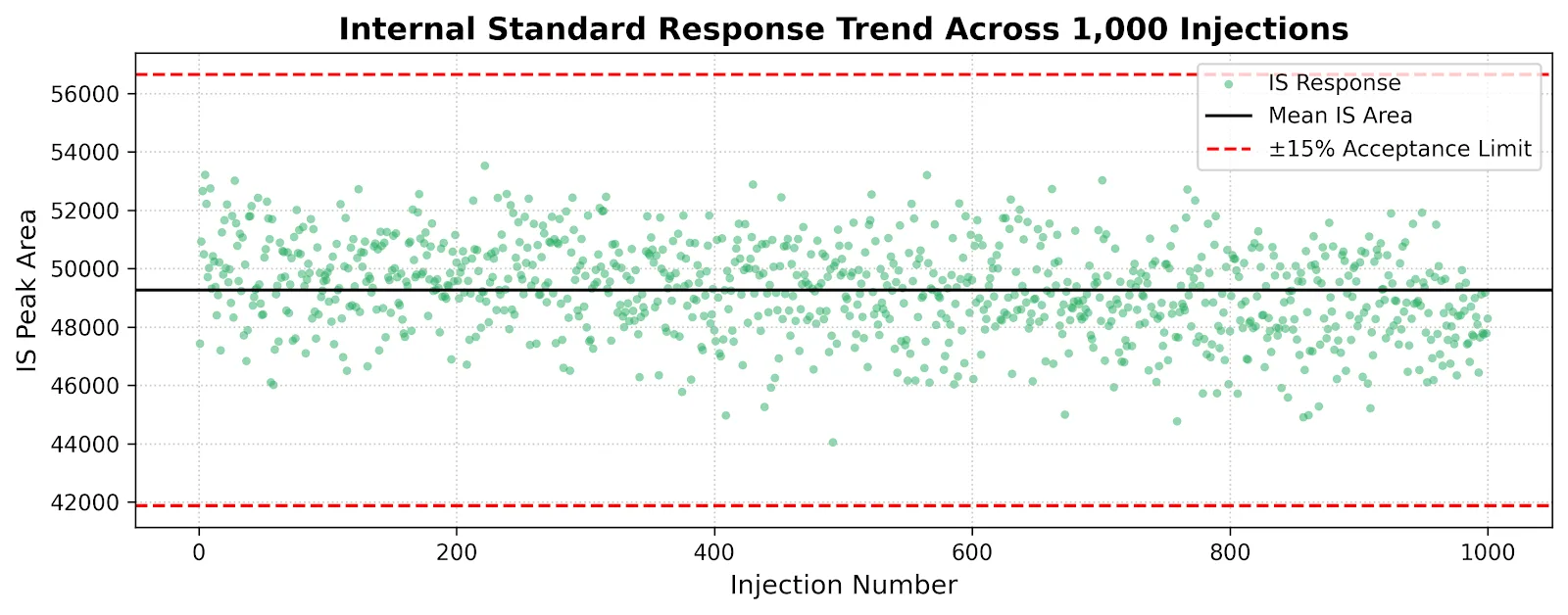
  • Internal Standard (IS) Response Trend: Displays the stable fluctuation of IS response areas across a high-throughput analytical batch containing hundreds of samples. This proves the system's extremely low carryover and rules out non-specific adsorption issues.
LC-MS/MS autosampler stability time-course accuracy table showing LQC and HQC deviations strictly within ±15% over 48 hours.
Overlaid Extracted Ion Chromatograms (EIC) demonstrating perfectly consistent peak areas and retention times after 48 hours of in-vial queuing.
Internal Standard (IS) response trend plot proving ultra-low carryover and zero non-specific vial adsorption across a high-throughput LC-MS/MS batch.

Technical Strengths: Advanced Chemical Stabilization & Platform Expertise

When analyzing the stability of critical processed samples, relying on standard high-throughput screening labs often leads to unresolved matrix effects and unexplained sample loss. Our platform is defined by our proactive problem-solving capabilities, transforming autosampler queues from a vulnerability into a tightly controlled analytical environment.

Dimension Our Dedicated LC-MS/MS Platform Standard / Generic Analytical Labs
Active Chemical Stabilization Proactive de novo optimization of reconstitution solvents, pH buffers, and chilling protocols to actively halt degradation. Passive observation of degradation; lacks the targeted chemical expertise to engineer a stabilization solution.
Ultra-Low Carryover Fluidics Multi-solvent robotic needle-wash protocols tailored specifically to the compound's polarity, ensuring zero cross-contamination. Basic single-solvent washes leading to severe carryover, falsely inflating the concentration of later samples in the queue.
Anti-Adsorption Optimization Utilization of silanized glass inserts, specialized carrier proteins, and organic modifiers to completely block vial-wall binding. Unrecognized sample loss due to non-specific adsorption, often misdiagnosed as chemical instability.
High-Throughput Fidelity Absolute baseline stability and identical precision between the 1st and the 1000th injection in a continuous screening run. Drifting baselines and shifting retention times over long queues due to solvent evaporation and unmonitored instrument conditions.

Selection Strategy: Choose our specialized LC-MS/MS platform when your high-throughput discovery project involves labile metabolites, prodrugs, or highly lipophilic compounds that are notoriously difficult to keep stable in solution during extensive, multi-day analytical runs.

Sample Submission Requirements

To maintain sample integrity during transit and secure optimal analytical performance, please adhere to our detailed submission specifications. For autosampler stability, we primarily work with raw biological samples which our scientists will extract in-house to establish the true T0 baseline.

Matrix Type Minimum Volume Preparation Instruction Shipping Condition
Plasma / Serum 50 – 100 µL Use EDTA or Heparin as anticoagulant. Centrifuge promptly and aliquot the supernatant. Avoid hemolysis. Ship on Dry Ice (-70°C)
Pure Compound / NCE 1 – 5 mg Provide in light-protected amber vials. Specify precise solubility limits and known pKa/LogP values. Room Temp or Dry Ice
Highly Labile Metabolites Dependent on protocol Advanced Requirement: Pre-addition of specific stabilizers or acidification immediately during plasma collection is mandatory. Strictly on Dry Ice

A comprehensive understanding of a molecule requires integrating autosampler stability data with broader environmental and systemic stability metrics. Explore our specialized stability ecosystem:

Proven Success: Evaluating Autosampler Stability for Labile Busulfan Intermediates

Background: In complex bioanalytical workflows, certain therapeutic agents and their processed intermediates exhibit extreme vulnerability when queued in the mass spectrometer. A research team required the absolute quantification of Busulfan, a compound frequently subject to degradation and matrix-induced volatility once extracted into the autosampler vial. Ensuring that the processed extract remained chemically identical from the first to the last injection of a 24-hour batch was an absolute prerequisite for accurate PK evaluation.

Methods: To overcome this, our analytical scientists evaluated the impact of autosampler queue conditions. Instead of relying on ambient room temperature, the LC-MS/MS method was rigorously optimized to include a continuous 4°C autosampler compartment environment. A deuterated internal standard was spiked into the matrix prior to extraction to meticulously track any variations in ionization efficiency or potential sample loss during the prolonged in-vial storage period.

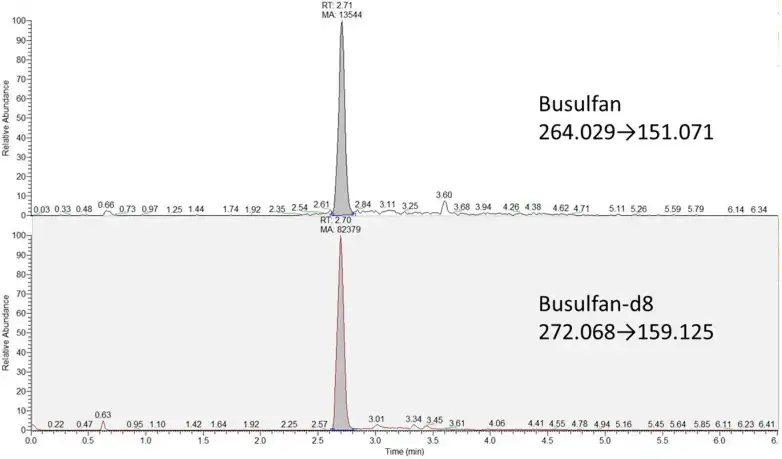
Results: The application of the optimized chilling conditions successfully inhibited any chemical degradation of the processed analyte. The method achieved pristine baseline stability and high specificity at the lower limit of quantification (LLOQ). As demonstrated in the baseline chromatograms in Figure 1 of the study by Hashem et al., the LC-MS/MS analysis maintained a perfect peak shape and zero baseline interference even after being queued in the autosampler for 24 hours. The QC accuracy charts confirmed that deviations remained tightly stabilized.

Conclusion: This proactive thermal and solvent optimization effectively prevented false quantification deviations in high-throughput analytical batches. By locking in the compound's stability inside the autosampler, researchers were provided with solid, reliable data support, proving the absolute necessity of rigorous in-vial stability evaluations for labile discovery compounds.

Evaluating Autosampler Stability for Labile Busulfan Intermediates

Frequently Asked Questions (FAQ)

1. What is the fundamental difference between bench-top stability and autosampler stability?

Bench-top stability evaluates the degradation risk of unprocessed biological samples (e.g., raw plasma containing active endogenous enzymes) during thawing and handling at room temperature on the laboratory bench. Autosampler stability assesses the concentration retention of the final extracted and processed samples (where enzymes are mostly precipitated out) while they wait for injection inside the instrument's vial, focusing on chemical hydrolysis, volatility, and adsorption risks.

2. How long should a standard autosampler stability test last?

The test duration must mathematically cover, or slightly exceed, the maximum runtime of your actual high-throughput analytical batch. For extensive discovery screening projects, this stability window is commonly set and validated between 24 to 48 hours to safely accommodate hundreds of sequential LC-MS/MS injections.

3. What specific actions are taken if my target compound degrades inside the autosampler vial?

If in-vial degradation is observed, our expert analytical team will immediately intervene. Mitigation strategies include lowering the autosampler tray temperature (down to 4°C), altering the reconstitution organic-to-aqueous solvent ratio to prevent hydrolysis, adding specific buffers to adjust the pH, or changing the vial material (e.g., using silanized glass inserts) to prevent physical adsorption.

4. How does autosampler stability impact the Internal Standard (IS)?

The internal standard is also subject to the same autosampler environment. If the IS is chemically unstable or adsorbs to the vial over 48 hours, the entire quantification ratio becomes invalid, even if the parent drug is stable. We rigorously evaluate the absolute peak area of the IS across the entire queued batch to guarantee its independent stability.

Ready to Quantify Your Lead Compound or Metabolite?

Share your matrix type, sample count, and expected range—feasibility routing will confirm whether direct quantification is fit-for-purpose or method development is recommended.

inquiry
Online Inquiry