ISO 17025–ACCREDITED LABORATORY ENVIRONMENT

Therapeutic Class-Based Panels: High-Throughput LC-MS/MS Analytical Services

Accelerate your early-stage drug discovery with high-precision, multi-analyte quantification. Creative Proteomics DMPK delivers specialized analytical panels across major therapeutic classes, leveraging advanced Triple Quadrupole (QqQ) LC-MS/MS to provide absolute concentration data for parent drugs and active metabolites in complex biological matrices.

100+ Pre-validated Assays

Immediate deployment for major therapeutic areas.

De Novo Customization

Bespoke method development for proprietary novel scaffolds.

Matrix Expertise

Optimized protocols for plasma, serum, and heterogeneous tissue lysates.

Scientific Rigor

Data generated in an ISO 17025 certified laboratory environment.

Comprehensive Panels Technical Capability Advanced Workflow Demo Results Selection Strategy Sample Requirements Case Study FAQ

In the competitive landscape of early drug discovery and preclinical development, the ability to rapidly assess a candidate compound against its therapeutic peers or within the context of a specific disease pathway is a strategic necessity. Creative Proteomics DMPK provides specialized Therapeutic Class-Based Panels, a high-throughput analytical solution designed for the simultaneous, absolute quantification of multiple drugs and their active metabolites within a single, validated analytical run.

Our expertise extends beyond simple concentration reporting. We bridge the gap between high-volume screening and expert bioanalytical method development, supporting researchers in the pharmaceutical and biotechnology sectors who require rigorous, high-resolution data to drive PK/PD modeling and lead optimization. By integrating our ISO 17025-certified laboratory environment with deep scientific knowledge in plasma and serum drug quantification, we deliver the technical depth needed for high-stakes R&D decisions.

Comprehensive Panels Across Major Therapeutic Areas

Our therapeutic panels are structured to cover the most critical areas of modern drug research. Each section below represents a specialized analytical module optimized to resolve class-specific challenges.
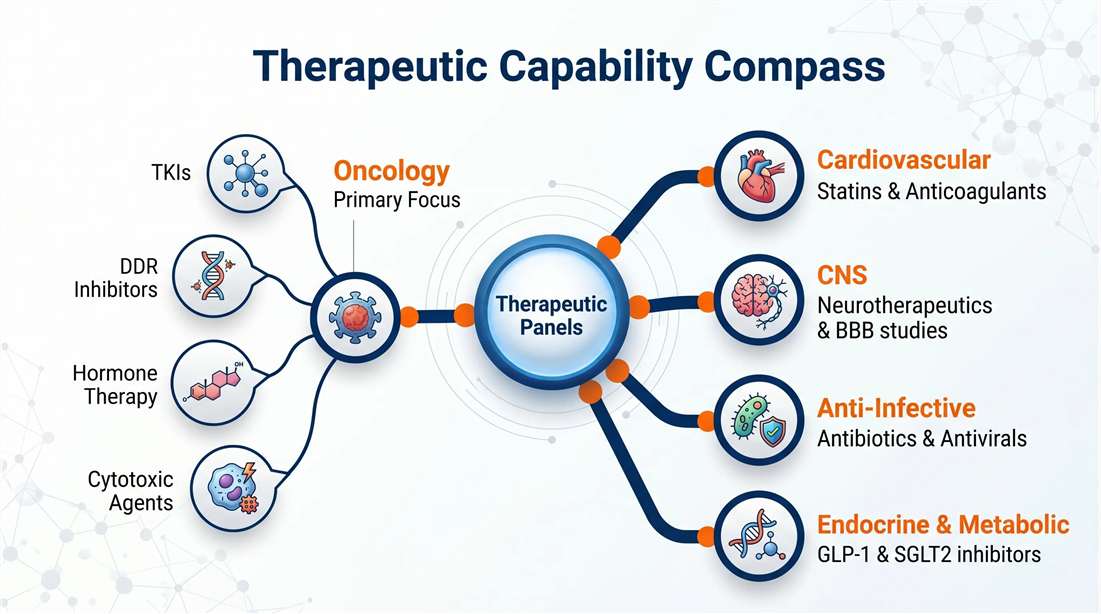
Therapeutic Capability Compass for DMPK Panels

Oncology Drug Panels

The oncology pipeline is increasingly focused on targeted therapies and complex combination regimens. We provide robust quantification across the four foundational pillars of modern cancer treatment:

  • Tyrosine Kinase Inhibitors (TKIs): Encompassing over 40 clinically relevant TKIs (e.g., Imatinib, Gefitinib). We utilize advanced extraction to overcome intracellular accumulation and high protein binding in tissue and cell lysates.
  • DNA Damage Response (DDR) Inhibitors: Specifically for PARP, ATR, and ATM inhibitors. Our assays achieve sub-ng/mL LLOQs, critical for minimal tumor biopsy samples.
  • Hormone Therapy Agents: Optimized for ARPIs (e.g., Enzalutamide) and SERMs. We emphasize resolution of circulating active metabolites.
  • Cytotoxic Chemotherapeutics: Accurate monitoring of taxanes and antimetabolites (e.g., Gemcitabine) with high matrix effect resolution in liver and kidney tissues.

Cardiovascular Drug Panels

Supporting the quantification of wide structural diversity including statins, lipid-regulators, anticoagulants (DOACs), and antihypertensives (ACE inhibitors, ARBs), often utilized in drug-drug interaction (DDI) screening.

Anti-Infective Drug Panels

Providing high-throughput screening for broad-spectrum antibiotics (beta-lactams, fluoroquinolones), antiviral agents (novel combination therapies), and lipophilic antifungals.

CNS Drug Panels

Specialized for neurotherapeutics including antipsychotics and antidepressants. We employ specialized homogenization and tissue drug quantification to evaluate blood-brain barrier (BBB) penetration.

Endocrine & Metabolic Drug Panels

Quantification of GLP-1 receptor agonists, SGLT2 inhibitors, DPP-4 inhibitors, and hormonal regulators to support metabolic stability and early PK studies.

Technical Capability: Overcoming Matrix Interferences

The primary technical bottleneck in multi-analyte panel development is the "Matrix Effect"—the suppression or enhancement of ionization caused by co-eluting components from biological samples. Creative Proteomics DMPK utilizes a rigorous scientific approach to ensure data precision:

  • QqQ LC-MS/MS Excellence: Utilizing industry-standard systems such as Sciex 6500+ and Waters Xevo TQ-XS for exceptional dynamic range and sensitivity.
  • UPLC Chromatography: Sub-2µm particle columns achieve superior resolution, critical for separating structural isomers and metabolites.
  • Phospholipid Removal: Integration of specialized cleanup steps (e.g., hybrid SPE) to eliminate interferences that compromise sensitivity in early PK studies.

Advanced Technical Workflow for Therapeutic Panels

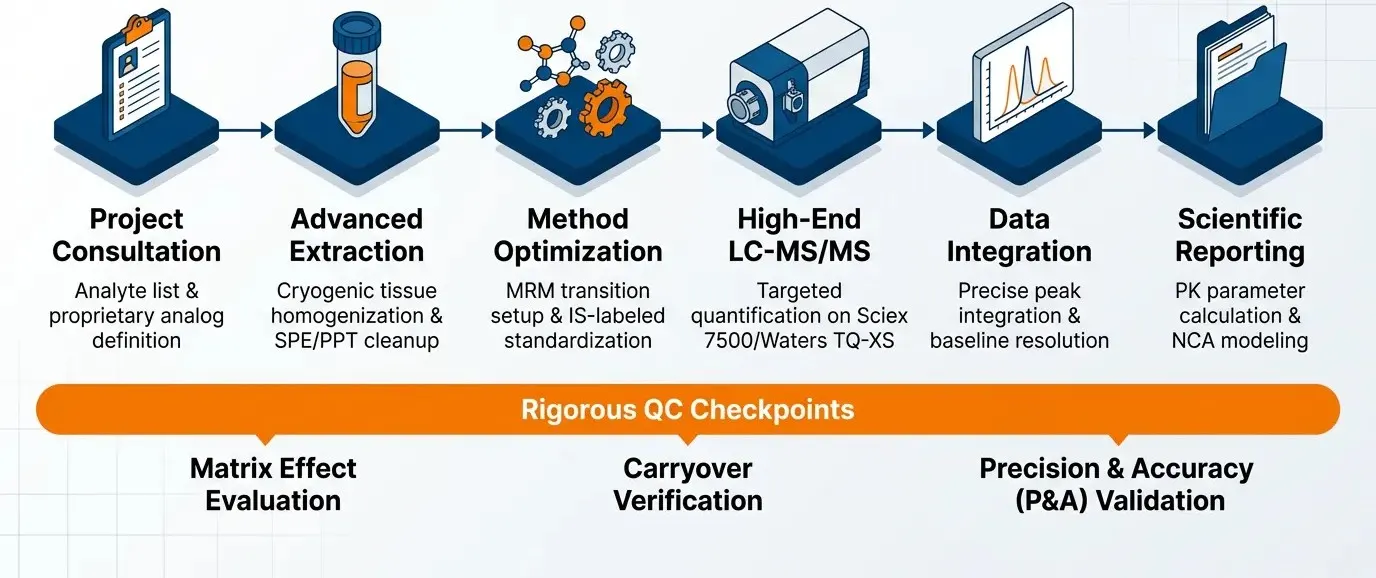
Our standardized yet flexible workflow ensures that each therapeutic panel project is executed with maximum accuracy:

Therapeutic Class-Based Panel Analysis Workflow with QC Checkpoints

  • Custom Assay Design: Consultation to determine the specific drug list and proprietary analogs.
  • Optimized Sample Preparation: Cryogenic bead-beating for tissue lysates and automated PPT/SPE for plasma.
  • Methodological Calibration: Multi-point curves using stable-isotope labeled internal standards.
  • MRM Optimization: Searching for the most sensitive transitions for every analyte.
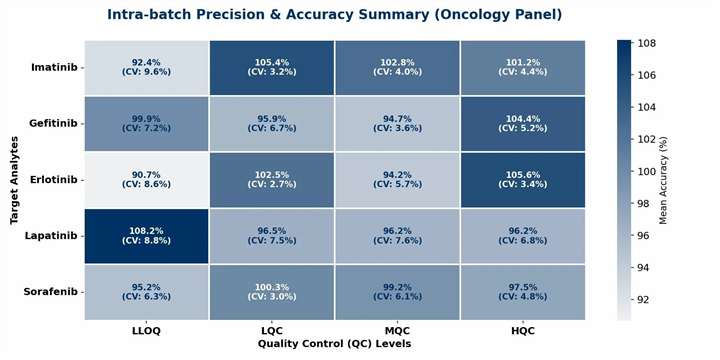
  • Quality Control (QC) Integrity: Incorporation of Low, Mid, and High QC samples with CV < 15%.
  • Bioinformatic Integration: Post-analytical calculation and correlation with metabolic profiling.

Data Deliverables & Demo Results Showcase

Creative Proteomics DMPK provides transparency through comprehensive data packages. Our standard deliverables include:

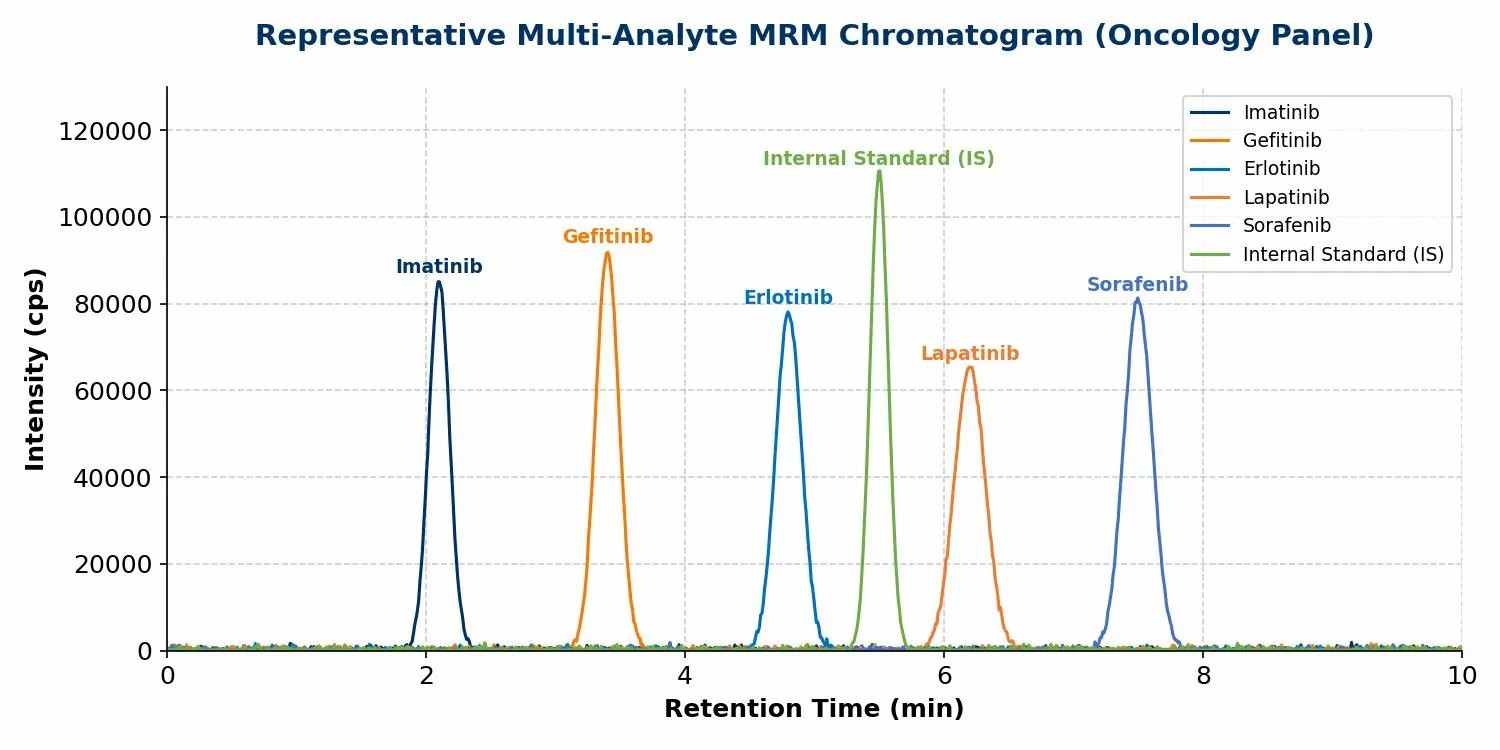
  • Overlaid Chromatograms: High-resolution traces demonstrating clear separation of all panel components.
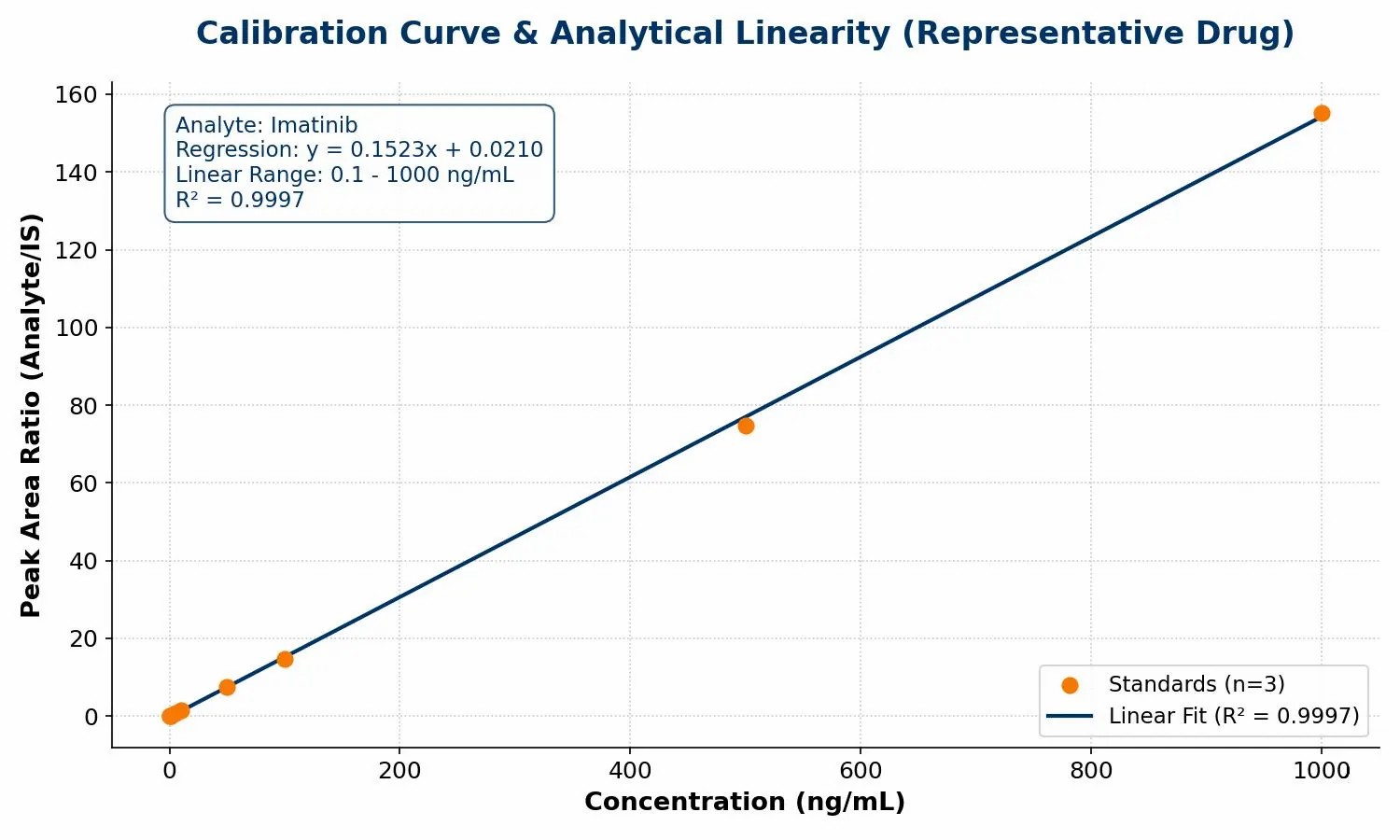
  • Linearity & Dynamic Range Graphs: R² values >0.99 confirming reliable quantification.
  • Matrix Effect & Recovery Assessment: Evidence of assay robustness in diverse biological backgrounds.
  • Precision & Accuracy Summary: Verification that all runs meet technical requirements.
  • Calculated Pharmacokinetic Profiles: NCA data for immediate R&D utility.
Representative Multi-Analyte MRM Chromatogram
Calibration Curve & Analytical Linearity
Intra-batch Precision & Accuracy Summary Heatmap

Scientific Selection Strategy: Standard Panels vs. De Novo Customization

Feature Pre-Validated Therapeutic Panels De Novo Method Development
Best Used For Rapid benchmarking, high-volume screening. Proprietary novel scaffolds, rare metabolites.
Library Scope Access to 100+ established therapeutic agents. Fully customized to your specific entity.
Matrix Compatibility Plasma, Serum, and Liver Tissue. Cell lysates and heterogeneous tissues.
Technical Readiness Immediate project initiation. Consultation-driven establishment (1-2 weeks).

Sample Requirements & Handling

Ensuring sample stability is paramount for stability and forced degradation studies. Proper sample collection and transit are critical for bioanalysis.

Matrix Typical Minimum Volume/Weight Handling & Shipping
Plasma / Serum 50 – 100 μL Collected with anticoagulants; ship on dry ice.
Biological Tissues 20 – 50 mg Flash-frozen in liquid nitrogen; ship on dry ice.
Cell Lysates 1 x 10^6 cells Prepared in non-interfering buffers; ship on dry ice.
Bile / Urine 50 μL Ship on dry ice; stability verification recommended.

Case Study: Simultaneous Monitoring of Prostate Cancer ARPI Panels

Background

Prostate cancer therapy frequently involves co-administration of multiple Androgen Receptor Pathway Inhibitors (ARPIs). Understanding PK variability and drug-drug interactions is critical in early discovery.

Methods

A high-precision LC-MS/MS panel was developed to quantify Abiraterone, Darolutamide, Apalutamide, Enzalutamide, and their primary active metabolites. Human research plasma underwent PPT extraction and analysis on a QqQ LC-MS/MS platform using time-scheduled MRM.

Results

The panel achieved an LLOQ of 0.1 ng/mL for all analytes. Method validation demonstrated precision (CV < 8.2%) and accuracy (96–105%). The assay resolved structural similarities, ensuring metabolites did not interfere with parent drugs.

Conclusion

This multi-analyte approach provided a significant throughput advantage, enabling monitoring of an entire therapeutic class within a single run.

Source: Adapted from MDPI, 2024.

Simultaneous Quantification MRM Chromatogram Adapted from MDPI

Frequently Asked Questions

How do you ensure no cross-interference between multiple analytes and their metabolites in a single panel?

We employ high-resolution UPLC to achieve baseline separation and utilize highly specific MRM transitions. During development, we perform exhaustive cross-interference testing, injecting high concentrations of each analyte to monitor for signal crosstalk.

Can your therapeutic panels monitor both parent drugs and metabolites?

Yes. We specialize in metabolite characterization and quantification, monitoring both parent compounds and their major active or toxic metabolites simultaneously.

How do you handle de novo method development for new therapeutic classes?

We have a robust method development pipeline. If your class is not in our library, our team will establish MRM transitions, optimize extraction, and validate the assay specifically for your goals.

Are your services compliant with regulatory standards?

Our laboratory operates strictly within an ISO 17025-certified quality management system, ensuring technical rigor and traceability for preclinical research applications.

Ready to Quantify Your Lead Compound or Metabolite?

Share your matrix type, sample count, and expected range—feasibility routing will confirm whether direct quantification is fit-for-purpose or method development is recommended.

inquiry
Online Inquiry