ISO 17025–ACCREDITED LABORATORY ENVIRONMENT

LC-MS/MS Plasma & Serum Drug Quantification Services

Precise quantification of active pharmaceutical ingredients in systemic circulation is foundational for early pharmacokinetic profiling. We offer ISO 17025-accredited bioanalysis, utilizing advanced sample preparation for robust plasma matrix effect removal LC-MS/MS to deliver high-sensitivity, reliable data for your drug discovery milestones.

Phospholipid Depletion

Advanced SPE and LLE protocols to eliminate ion suppression.

Sub-ng/mL Sensitivity

High-resolution MRM tracking for trace-level quantification.

Strict QC Checkpoints

Verified extraction recovery and batch-to-batch consistency.

Matrix Effects Workflow & QC Demo Results Extraction Chemistry Sample Requirements Related Services Case Study FAQ

Overcoming Matrix Effects in Systemic Circulation Bioanalysis

Quantifying target analytes in blood-derived matrices presents severe analytical hurdles. Endogenous components—primarily proteins, lipids, and highly abundant phospholipids—frequently co-elute with the target compound. This phenomenon causes critical ion suppression or enhancement in the mass spectrometer source, compromising the lower limit of quantification (LLOQ) and overall data integrity.

As a specialized partner in bioanalysis, our platform addresses these challenges through authoritative de novo method development. We evaluate the unique physicochemical properties of your candidate molecule to engineer targeted clean-up protocols. By utilizing Stable Isotope-Labeled Internal Standards (SIL-IS) alongside optimized chromatographic gradients, we guarantee that matrix effects are accurately compensated for, resulting in a true, reproducible representation of the drug's concentration in systemic circulation.

Standardized LC-MS/MS Workflow for Blood-Derived Matrices

To ensure absolute batch-to-batch consistency across high-throughput sample cohorts, our analytical processes are governed by a stringent quality control framework tailored specifically for complex plasma and serum samples.

Step 1: Advanced Sample Preparation & Extraction

Process: Implementation of Solid-Phase Extraction (SPE), Liquid-Liquid Extraction (LLE), or targeted protein precipitation tailored to compound polarity.

QC Checkpoint: Rigorous matrix effect (ME%) assessment and absolute extraction recovery evaluation prior to full batch processing.

Step 2: De Novo Method Development

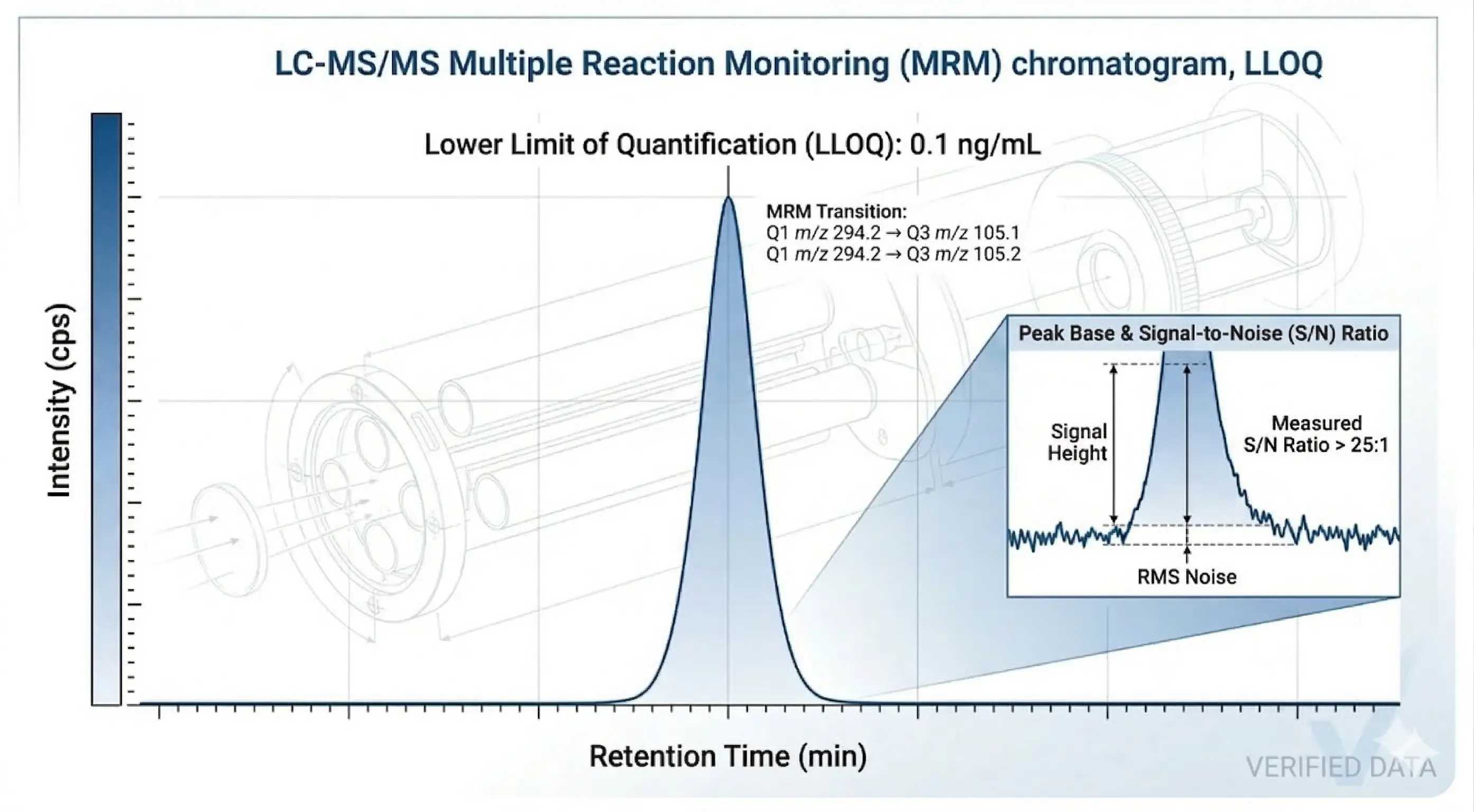
Process: Fine-tuning precursor-to-product ion transitions in Multiple Reaction Monitoring (MRM) mode to maximize signal-to-noise ratios.

QC Checkpoint: Verification of analytical specificity against blank matrices to eliminate isobaric interference and cross-talk.

Step 3: High-Throughput LC-MS/MS Analysis

Process: Rapid chromatographic separation coupled with highly sensitive mass spectrometric detection, optimized for both novel molecules and compounds from our pre-validated assay library.

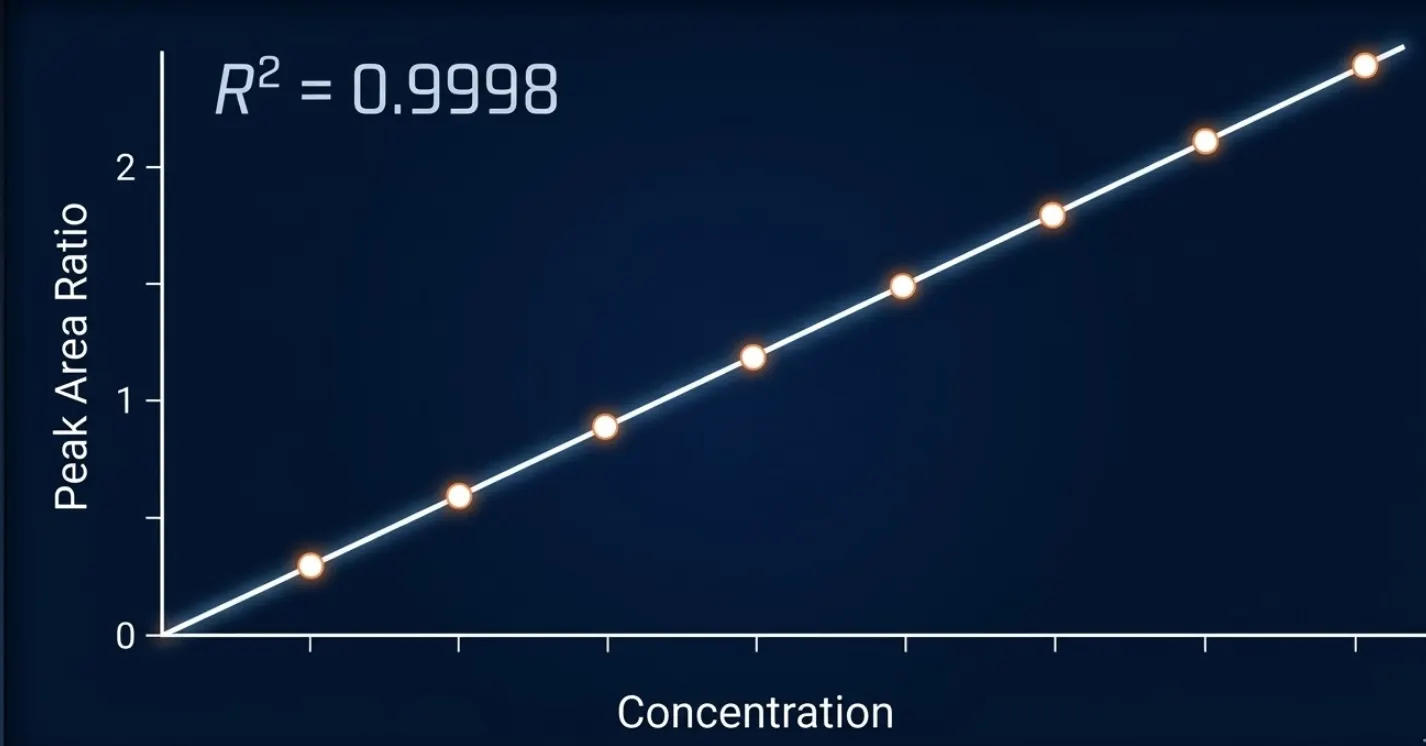
QC Checkpoint: Validation of calibration curve linearity (R² > 0.99) and continuous monitoring of internal standard response stability.

Step 4: Data Interpretation & Reporting

Process: Chromatographic peak integration and exact calculation of unknown sample concentrations against the established curve.

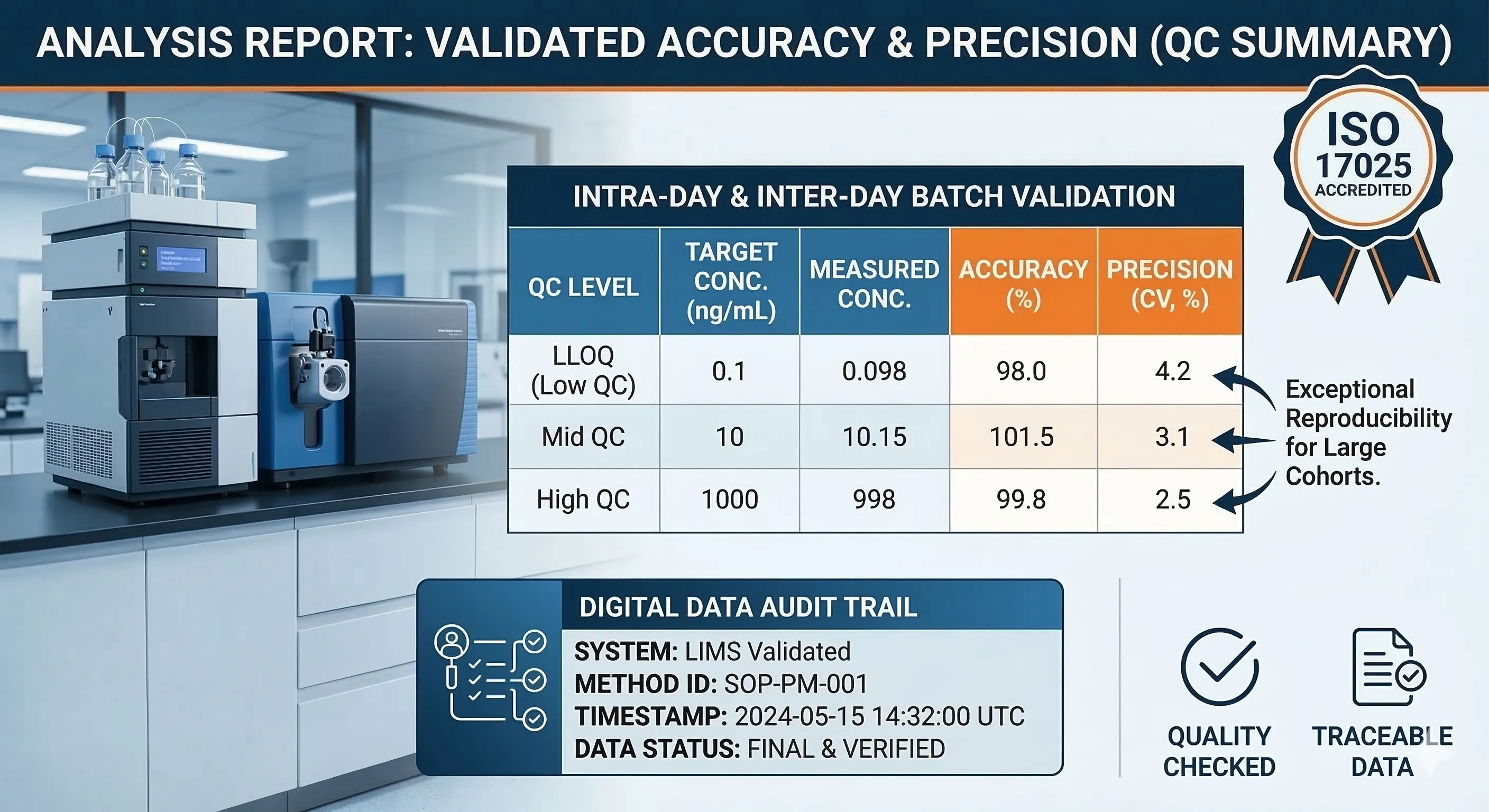
QC Checkpoint: Comprehensive intra- and inter-batch precision and accuracy verification using low, medium, and high QC samples.

Typical Analytical Deliverables (Demo Results)

We prioritize transparency and precision in our scientific reporting. Our standard analytical data package provides the demonstrative evidence required to support your internal evaluations:

  • MRM Chromatogram Overlays: Visual confirmation demonstrating baseline separation of the analyte and internal standard from endogenous plasma background noise.
  • Linear Calibration Curves: Detailed regression equations showcasing the broad linear dynamic range validated for your specific assay.
  • Accuracy & Precision Data: Tabulated intra-assay and inter-assay reproducibility metrics.
  • Carryover Assessment: Analytical proof of zero cross-contamination between high and low-concentration injections.
MRM Chromatogram Overlays
Linear Calibration Curves
Accuracy & Precision Data
Carryover Assessment

Sample Extraction Selection: The Chemistry of Matrix Effect Removal

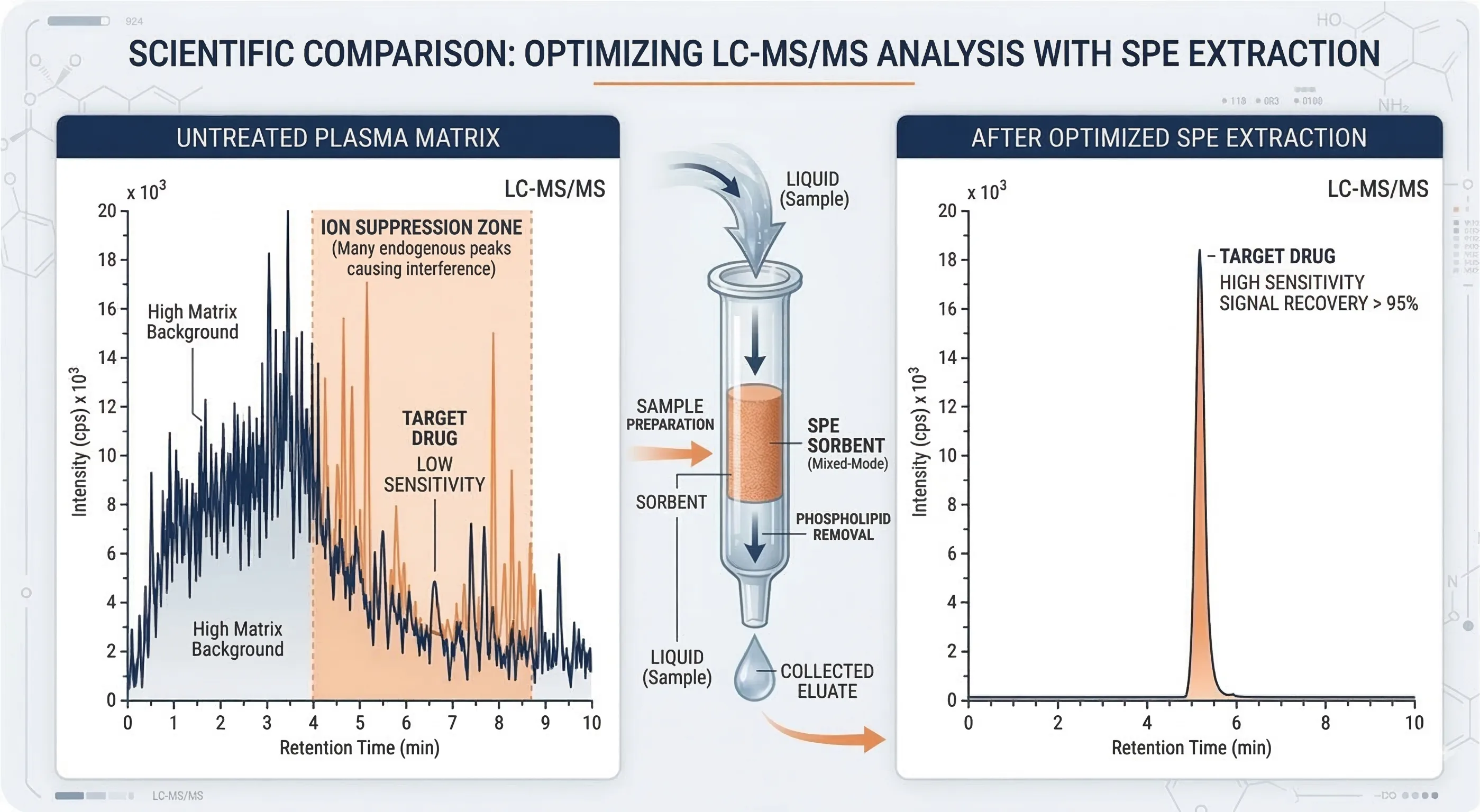
Selecting the correct sample preparation technique is the most critical factor in mitigating matrix effects. Blood-derived matrices are highly complex, containing thousands of endogenous proteins, salts, and glycerophosphocholines (phospholipids). If not properly removed, these phospholipids co-elute with target analytes and compete for charge in the mass spectrometer's electrospray ionization (ESI) source, leading to severe signal quenching (ion suppression).

Our scientific team evaluates the specific physicochemical properties of your candidate molecule—such as its polarity (LogP), acid dissociation constant (pKa), and plasma protein binding affinity—to engineer the optimal extraction strategy.

Protein Precipitation (PPT)

PPT utilizes organic solvents (typically acetonitrile or methanol) to denature and precipitate endogenous proteins. While it provides the highest throughput for early-stage screening, it is a non-selective process. PPT effectively removes large proteins but leaves a significant concentration of soluble phospholipids in the supernatant.

  • Best Used For: High-concentration in vitro screening, structurally stable, and easily ionizable compounds where absolute LLOQ is not the primary constraint.

Liquid-Liquid Extraction (LLE)

LLE relies on the chemical principle of partitioning. By introducing an immiscible organic solvent (such as ethyl acetate or hexane) to the aqueous plasma sample, we can selectively extract the target analyte based on its hydrophobicity. Adjusting the pH of the plasma to ensure the drug is in its un-ionized state maximizes its transfer into the organic layer, effectively leaving polar interferences behind.

  • Best Used For: Highly lipophilic compounds and assays requiring significant sample concentration (evaporation and reconstitution) to achieve lower detection limits.

Solid-Phase Extraction (SPE)

SPE represents the gold standard for plasma matrix effect removal LC-MS/MS. This technique utilizes functionalized stationary phase cartridges to capture the analyte while washing away interferences. We frequently employ Mixed-Mode SPE (e.g., combining reversed-phase hydrophobicity with strong cation or anion exchange). This dual-retention mechanism allows us to execute aggressive organic washes that thoroughly deplete phospholipids before selectively eluting the target drug.

  • Best Used For: Highly complex novel molecules, polar compounds that perform poorly in LLE, and any project demanding sub-ng/mL sensitivity and an exceptionally clean chromatographic baseline.
Extraction Technique Phospholipid Depletion Matrix Effect Control Throughput Efficiency Relative Cost
Protein Precipitation (PPT) Low Moderate Very High Low
Liquid-Liquid Extraction (LLE) High Excellent Moderate Medium
Solid-Phase Extraction (SPE) Exceptional Exceptional Moderate to High High

Selection Strategy: Our laboratory strongly recommends custom LLE or SPE method development for novel therapeutic structures or low-dose pharmacokinetic profiling to secure robust, publication-quality data without analytical compromise.

Plasma & Serum Sample Submission Requirements

To maintain sample integrity during transit and secure optimal analytical performance, please adhere to our detailed submission specifications. Matrix degradation directly impacts quantitative accuracy.

Sample Type Minimum Volume Collection Tube & Additives Centrifugation & Processing Guidelines Storage & Shipping
Plasma (Standard Range) 50 - 100 µL K2-EDTA or Sodium Heparin tubes Centrifuge at 2,000 × g for 10-15 min (4°C) promptly after collection. Avoid hemolysis. Store at -80°C. Ship on Dry Ice.
Plasma (Trace-Level LLOQ) 150 - 200 µL K2-EDTA or Sodium Heparin tubes Centrifuge promptly. Strict avoidance of hemolysis is required, as larger volumes are needed for extensive SPE/LLE concentration steps. Store at -80°C. Ship on Dry Ice.
Serum 50 - 100 µL Red-top (no additive) or SST (Serum Separator Tubes) Allow blood to clot undisturbed at room temperature for 30–60 minutes prior to centrifugation. Store at -80°C. Ship on Dry Ice.

Comprehensive pharmacokinetic profiling often requires investigating beyond systemic blood levels. We offer a tightly integrated suite of bioanalytical capabilities:

Tissue & Cell Lysate Quantification

Specialized extraction workflows overcoming severe tissue matrix effects to map localized drug distribution and intracellular uptake.

Metabolite Quantification

Advanced methodologies designed to accurately trace downstream biotransformation and clearance pathways.

Single Drug Quantification

Explore our overarching platform capabilities across all biological matrices and highly complex targeted assays.

Case Study: Validated LC-MS/MS Method Development for Plasma Quantification

Background

Quantifying trace levels of target analytes in systemic circulation frequently fails due to severe ion suppression caused by endogenous plasma phospholipids. Establishing a reliable, high-sensitivity method is an absolute prerequisite for accurate PK evaluation.

Methods

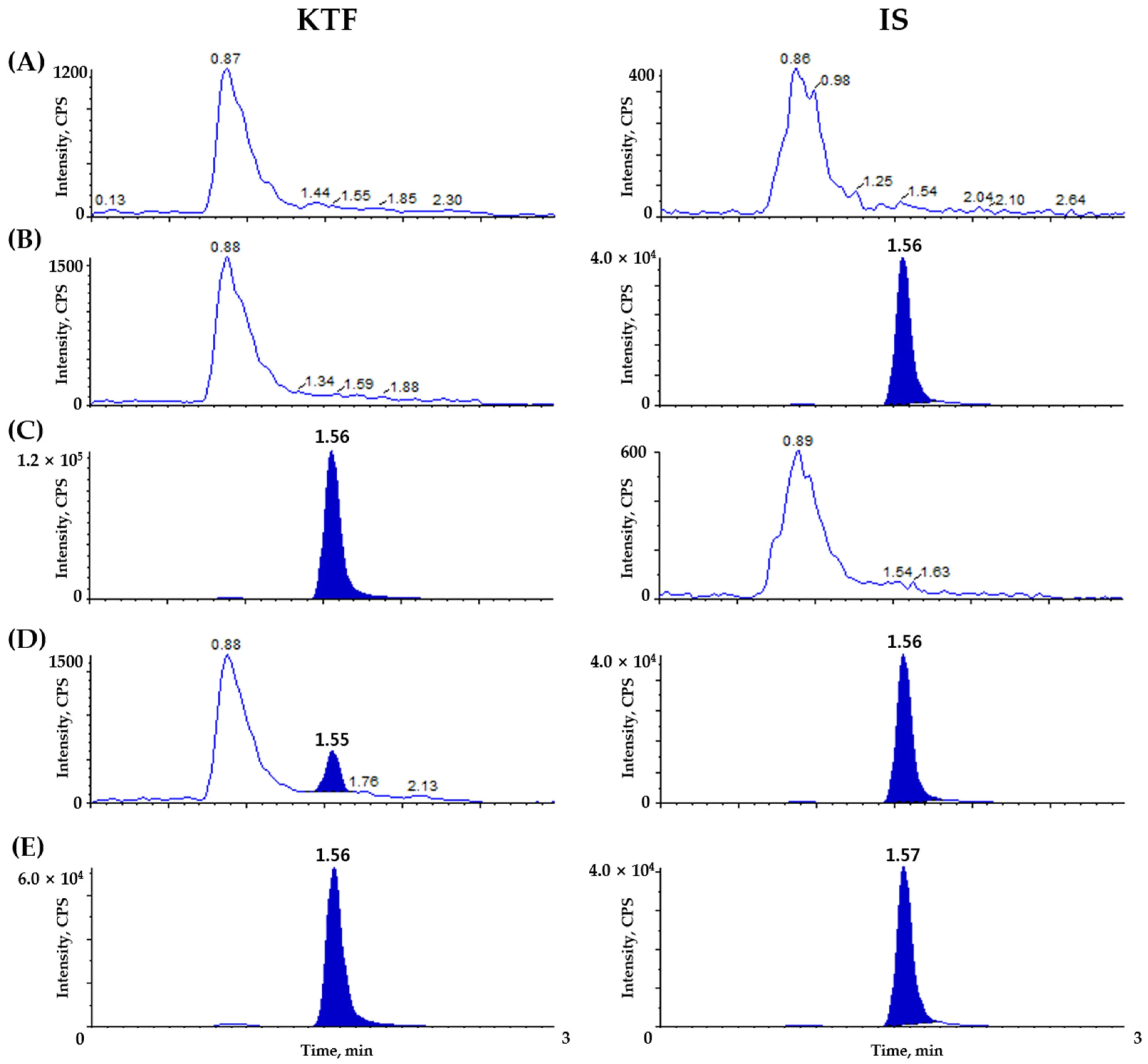
In a representative bioanalytical framework, researchers established a de novo LC-MS/MS method focusing on rigorous sample clean-up. A precise Liquid-Liquid Extraction (LLE) protocol was developed to actively strip away the complex plasma matrix while preserving the target analyte. Following extraction, chromatographic separation was optimized on a high-resolution column, paired with positive electrospray ionization (ESI+) and precise MRM tracking.

Results & Conclusion

The targeted LLE approach successfully eliminated the anticipated matrix effects. The assay demonstrated exceptional linearity, precision, and a robust lower limit of quantification, effectively bypassing phospholipid interference zones. For a peer-reviewed visualization of this analytical methodology, refer to the Representative MRM chromatograms demonstrating plasma quantification (Figure 2) from the associated MDPI open-access study.

Validated LC-MS/MS Method Development for Plasma Quantification

Frequently Asked Questions (FAQ)

1. How does hemolysis affect plasma drug quantification?

Severe hemolysis releases intracellular components (such as hemoglobin and enzymes) into the plasma, drastically altering the matrix composition. This exacerbates ion suppression in the mass spectrometer and can cause ex vivo degradation of the target compound. Careful sample collection is mandatory to minimize red blood cell lysis.

2. Which anticoagulants do you recommend for plasma collection?

For general small molecule quantification via LC-MS/MS, K2-EDTA or Sodium Heparin are standard and widely compatible. We strictly require maintaining the same anticoagulant across all study samples to prevent variable matrix effects during analysis.

3. What information is required to initiate a de novo method development project?

To accurately assess feasibility and design the optimal extraction strategy, we require the chemical structure of your compound, the expected biological concentration range, the specific matrix species (e.g., rat plasma, human serum), and a small aliquot of the pure reference standard to optimize mass transitions.

Ready to Quantify Your Lead Compound or Metabolite?

Share your matrix type, sample count, and expected range—feasibility routing will confirm whether direct quantification is fit-for-purpose or method development is recommended.

inquiry
Online Inquiry