De Novo Method Engineering Workflow
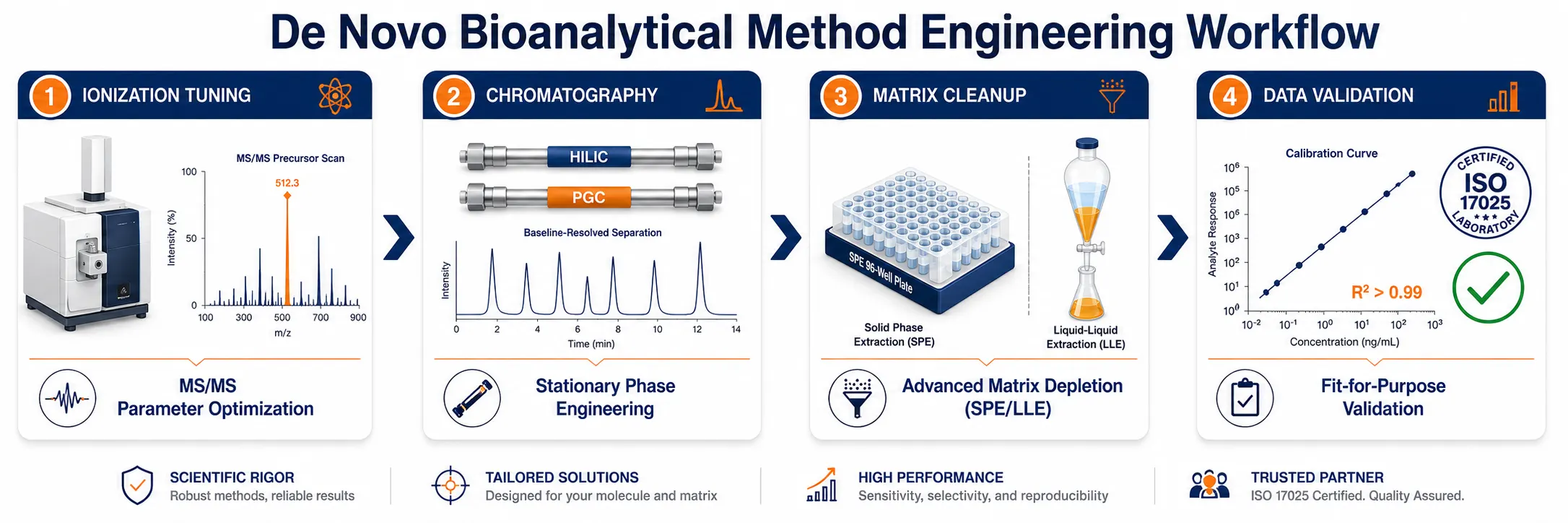
Our scientific team approaches method development not as a routine trial-and-error process, but as a systematic engineering challenge. We align our development and validation phases with international regulatory standards, adhering to the scientific principles of ICH M10 guidelines for fit-for-purpose preclinical applications.
1. Structural Evaluation & Ionization Screening
Before any sample enters the instrument, our team evaluates the physicochemical properties of your compound, including pKa, LogP, and anticipated metabolic liability. We perform comprehensive ionization screening, comparing Electrospray Ionization (ESI) against Atmospheric Pressure Chemical Ionization (APCI) in both positive and negative polarities. For extremely non-polar compounds or those prone to severe thermal degradation during ionization, optimal source selection is critical to achieving a stable, high-abundance molecular ion.
2. Chromatographic Resolution Strategy
Retaining challenging compounds requires advanced column chemistry. For highly polar molecules that exhibit zero retention on standard C18 columns, we abandon traditional reverse-phase methods. Instead, we implement Hydrophilic Interaction Liquid Chromatography (HILIC) or Porous Graphitic Carbon (PGC) strategies. By meticulously tuning mobile phase pH, buffering agents (e.g., ammonium formate), and organic modifiers, we achieve baseline resolution even for closely related stereoisomers and isobaric interferences.
3. Advanced Matrix Cleanup
Biological matrices are the enemy of assay sensitivity. Simple protein precipitation (PPT) is often inadequate for complex tissues. For robust quantification in tissue and cell lysates or heavily lipidemic plasma, we deploy advanced sample cleanup protocols. This includes automated 96-well Solid-Phase Extraction (SPE), Liquid-Liquid Extraction (LLE), and specialized hybrid phospholipid-removal plates. This aggressive cleanup eliminates endogenous phospholipids, completely preventing the ion suppression zones that cause data irreproducibility.
4. Preclinical Fit-for-Purpose Validation
Once the method is established, we subject it to rigorous fit-for-purpose validation to guarantee data integrity. We evaluate a comprehensive suite of parameters including intra- and inter-day accuracy and precision (CV < 15%), calibration curve linearity across 3 to 4 orders of magnitude (R² > 0.99), extraction recovery, and matrix effect (ME%). We also conduct extensive bench-top and freeze-thaw stability testing to ensure your compounds remain intact throughout the analytical queue.

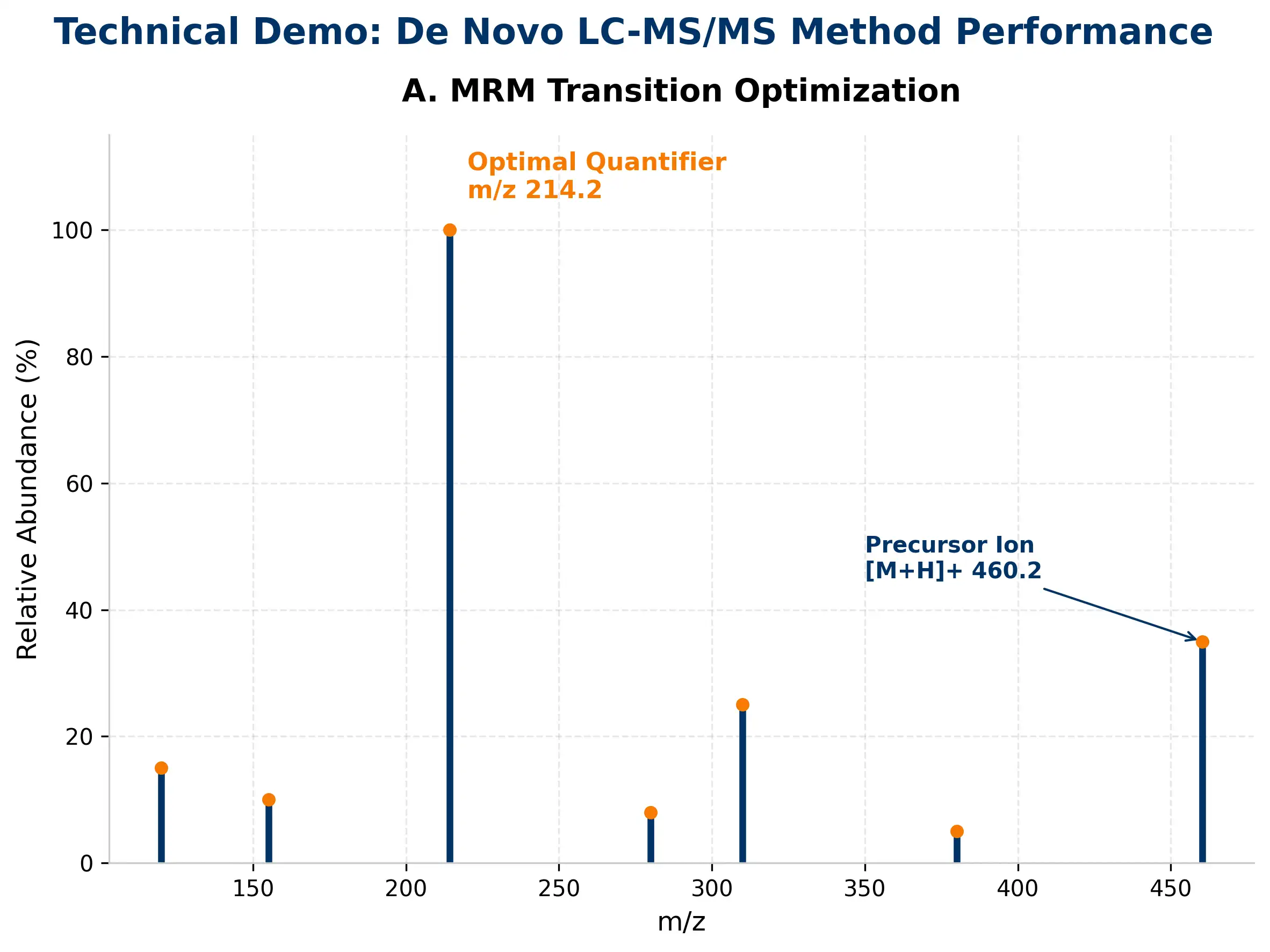
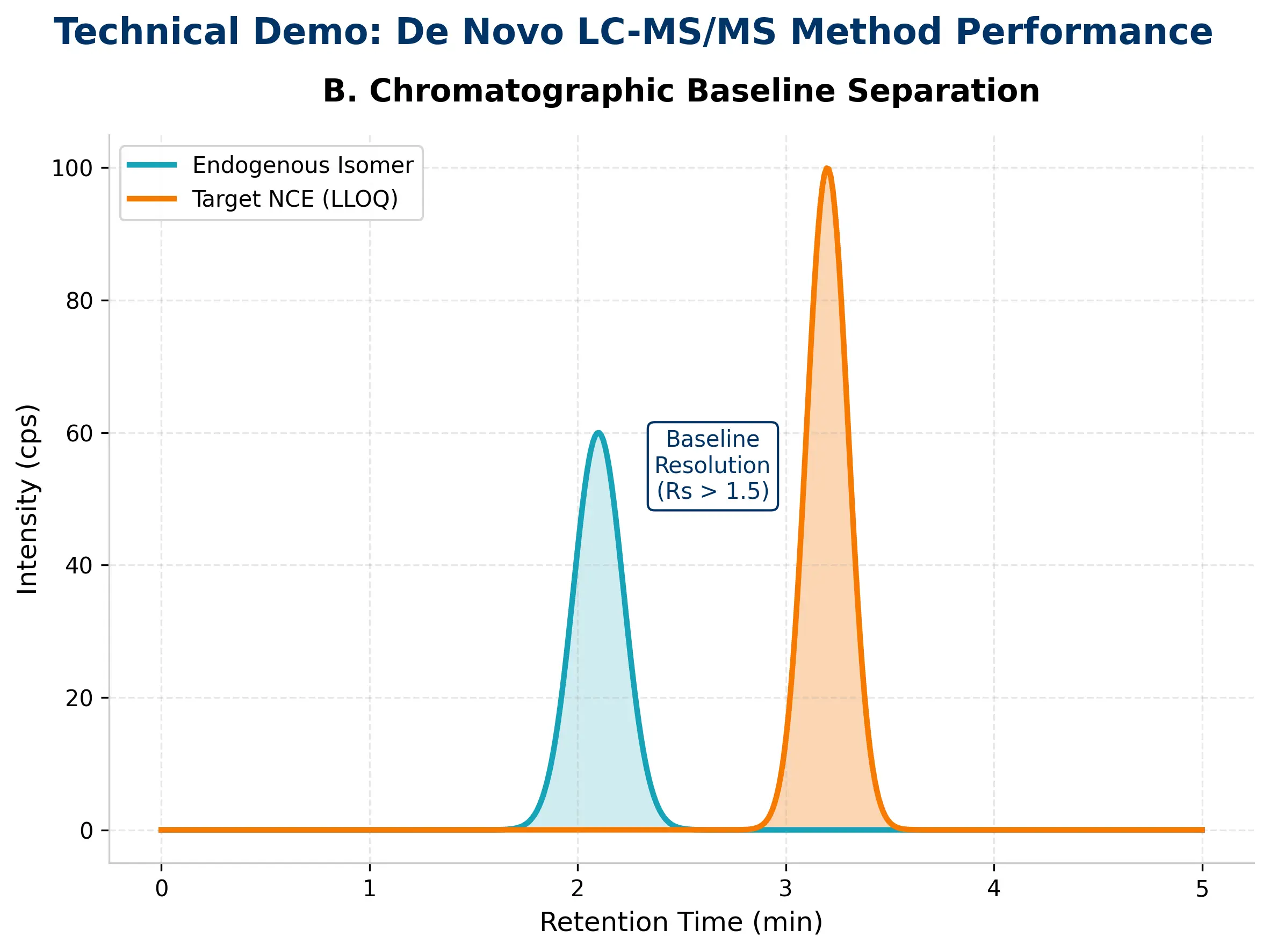
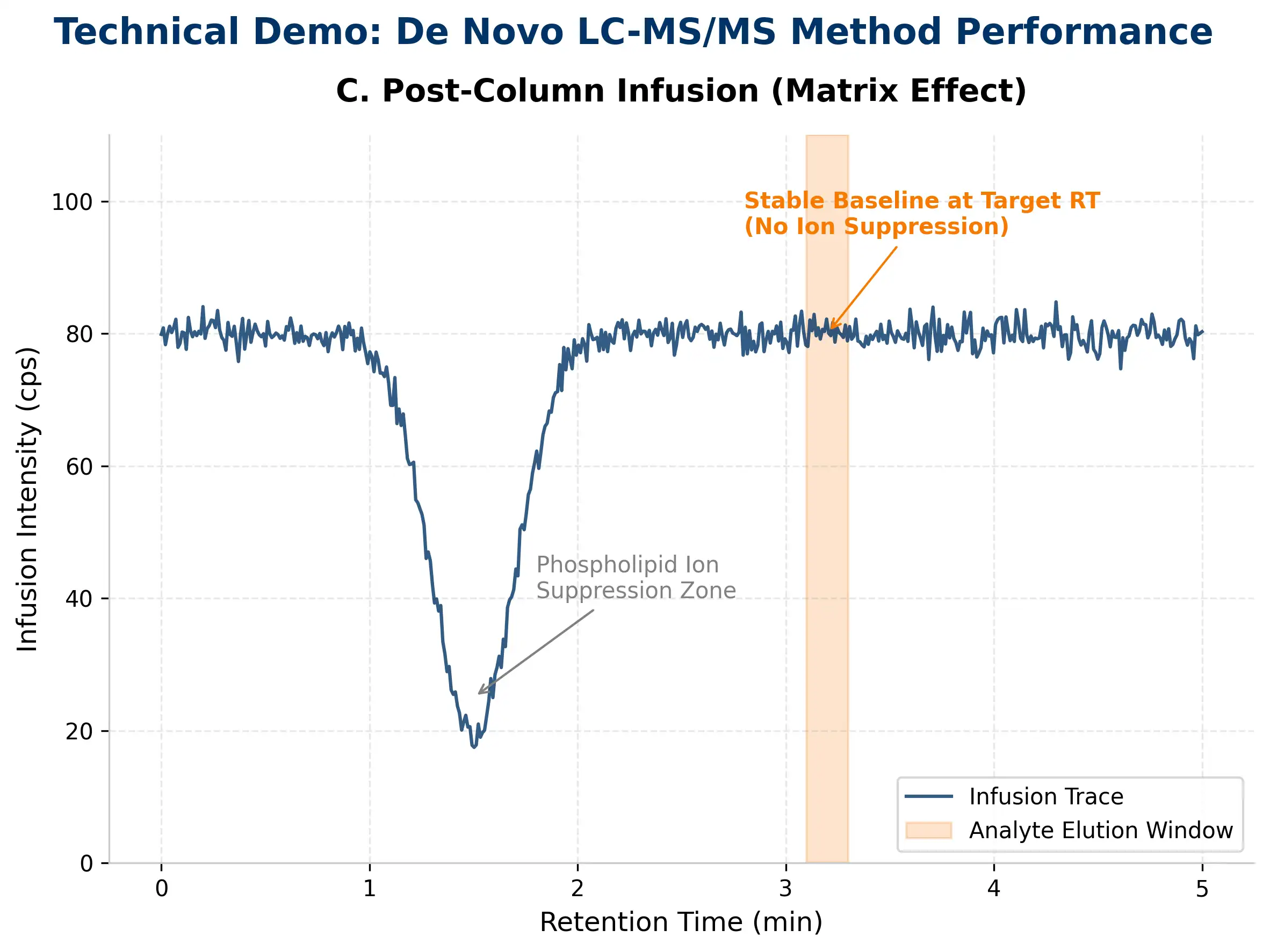
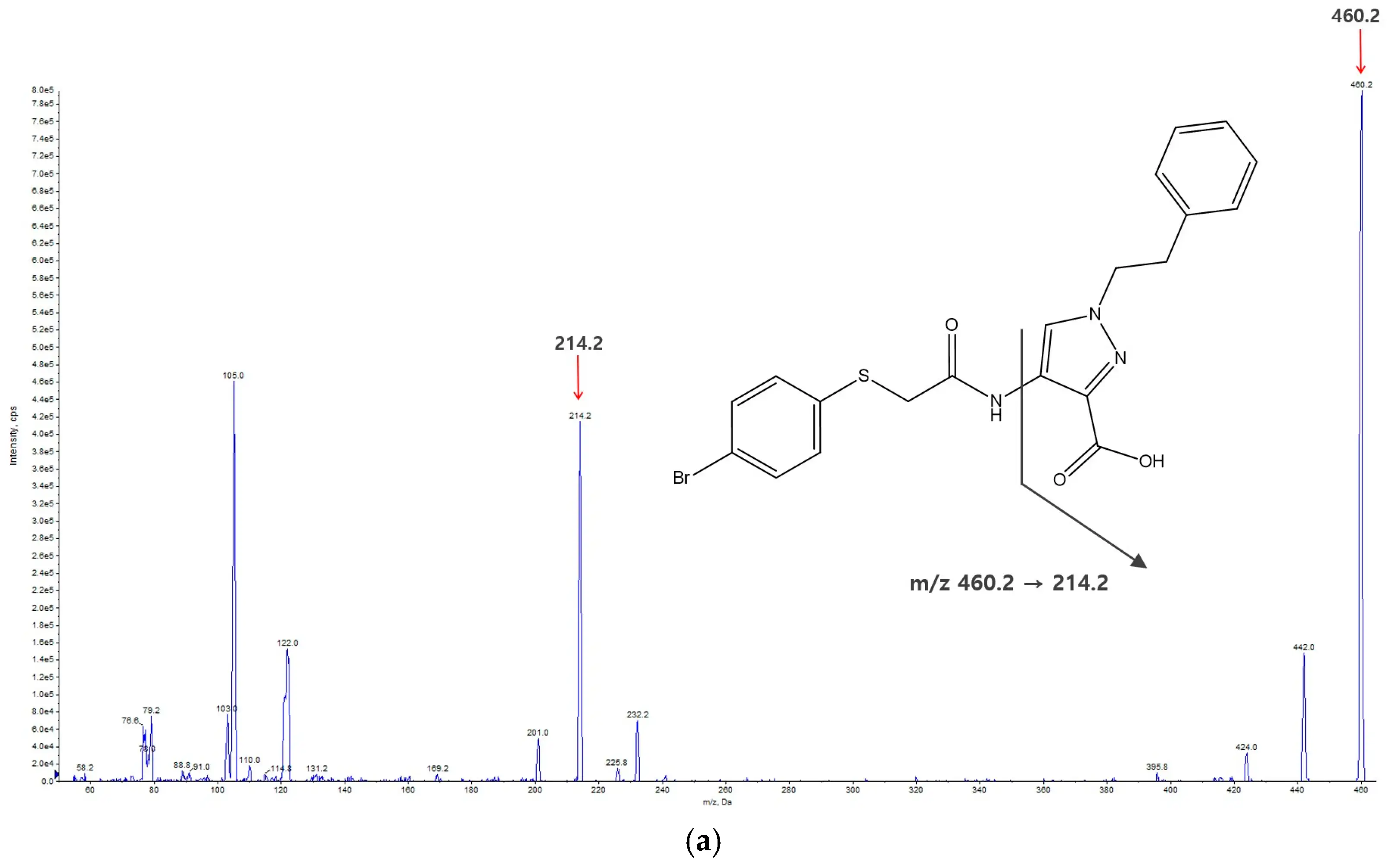 Source Verification: Rat Pharmacokinetics and In Vitro Metabolite Identification of KM-819, a Parkinson's Disease Candidate, Using LC-MS/MS and LC-HRMS (MDPI Molecules, 2024).