Why Stability Testing Matters: The Regulatory and Scientific Rationale
Stability testing is not a single experiment — it is the central evidence package that defines a drug product's shelf life, storage instructions, and supply chain tolerances in every regulatory market worldwide. When a patient picks up a prescription, the expiration date on the label is the visible endpoint of a stability program that began years earlier in the analytical development laboratory. The Code of Federal Regulations (21 CFR 211.166) mandates that every drug product bear an expiration date supported by "appropriate stability testing," and the same requirement echoes through the FDA, EMA, PMDA, and WHO regulatory frameworks. Without a defensible stability program, there is no approved shelf life — and without an approved shelf life, there is no commercial product.
The practical stakes extend beyond compliance. Stability failures discovered late in development — a formulation that degrades 15% in 3 months at accelerated conditions, a polymorphic conversion triggered by humidity, an impurity that exceeds the ICH Q3B qualification threshold at the 18-month time point — are among the most expensive and timeline-destructive events in pharmaceutical development. A stability failure at Phase III or NDA can reset years of formulation work, force a manufacturing site change, or require additional clinical bridging studies. The cost of a single stability-related clinical hold or CRL (Complete Response Letter) routinely exceeds the total investment in a well-designed, prospectively planned stability program.
The Core Distinction. Short-term stability studies — typically the 6-month accelerated program at 40°C/75%RH — answer the question "will this formulation survive stress?" and provide the data for initial shelf-life projection. Long-term stability studies — the 12-, 24-, and 36-month real-time program at the intended storage condition — answer the question "how long can patients and pharmacists safely keep this product on the shelf?" Both are required. Neither substitutes for the other. The relationship between them — how accelerated data informs, but does not replace, long-term data — is the organizing principle of ICH Q1A(R2) and the foundation of every stability section in every IND, NDA, and ANDA filed with a major regulatory agency.
ICH Q1A(R2) Framework: Long-Term, Intermediate, and Accelerated Conditions
ICH Q1A(R2), "Stability Testing of New Drug Substances and Products," is the parent guideline in the ICH stability series and the reference standard for stability program design in ICH-member jurisdictions. While the 2025 consolidated ICH Q1 draft (Step 2) brings Q1A through Q1F and Q5C into a single document with expanded scope covering biologics, ATMPs, and stability modelling, the core three-condition framework has remained stable since the original Q1A publication in 1993 and the R2 revision in 2003. The 2025 draft does not replace this framework; it enriches it with science- and risk-based flexibility.
Long-Term (Real-Time) Stability. The definitive condition. Drug substance and drug product are stored at the intended commercial storage temperature and humidity — typically 25°C ± 2°C / 60% RH ± 5% RH for ICH Zone II markets (US, EU, Japan) or 30°C ± 2°C / 65% RH ± 5% RH for ICH Zone IVa markets (Southeast Asia, much of Africa, parts of Latin America). Testing frequency is every 3 months for the first year, every 6 months for the second year, and annually thereafter through the proposed shelf life. The long-term study runs to the full proposed shelf life — usually 24 or 36 months — and provides the primary data for shelf-life estimation. At NDA filing, a minimum of 12 months of long-term data from 3 primary batches must be available. If the product is intended for storage under refrigeration (2-8°C), the long-term condition is 5°C ± 3°C. For frozen storage (-20°C ± 5°C), the long-term condition is that temperature, and accelerated testing is conducted at 5°C ± 3°C.
Intermediate Stability. The fallback condition — 30°C ± 2°C / 65% RH ± 5% RH — is tested on all 3 primary batches for a minimum of 12 months. Intermediate data serves two purposes: it becomes the primary basis for shelf-life extrapolation when accelerated conditions produce a "significant change" (defined as a 5% potency loss from initial, any degradation product exceeding its acceptance criterion, failure to meet pH/dissolution/appearance criteria, or a specified physical change), and it provides a moderate-stress dataset that bridges the gap between accelerated and long-term for products that are marginally stable. If the drug product is packaged in a semi-permeable container, the intermediate condition may include a lower relative humidity specification (e.g., 30°C/50%RH) to account for water vapor transmission.
Accelerated Stability. 40°C ± 2°C / 75% RH ± 5% RH for a minimum of 6 months on all 3 primary batches. Accelerated testing is a stress challenge, not a real-time predictor — it increases the rate of chemical degradation (typically 2- to 4-fold per the Arrhenius equation) and physical instability to produce a conservative shelf-life projection before long-term data is available. For products intended for refrigerated storage, the accelerated condition is 25°C ± 2°C / 60% RH ± 5% RH. The key regulatory decision point is at 6 months: if no significant change is observed, shelf-life extrapolation of up to 1.5× the long-term data (capped at 6 additional months beyond real-time) is permitted per ICH Q1E.
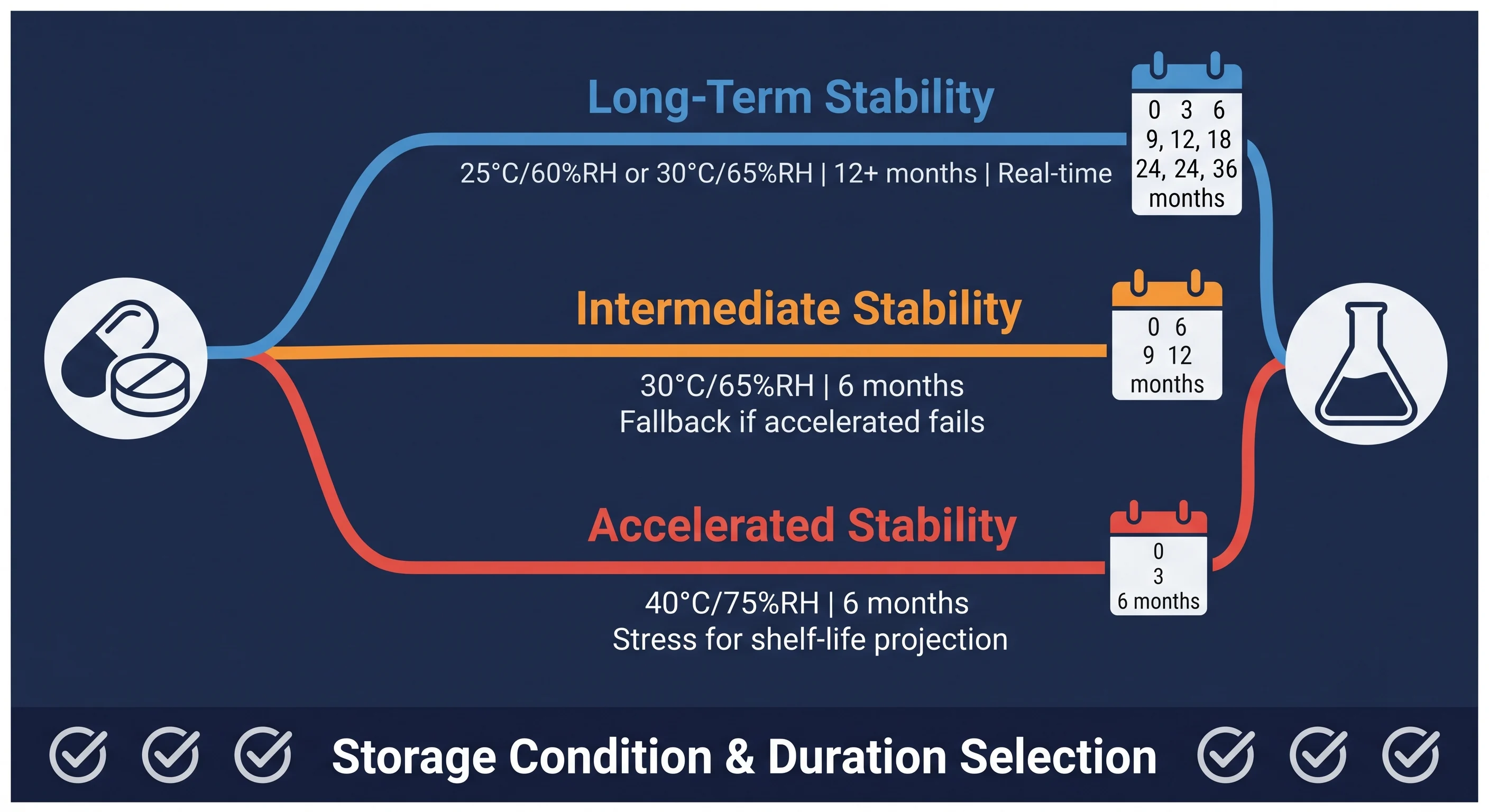 Figure 1: ICH Q1A(R2) Stability Study Design — The Three-Condition Framework
The relationship between these three conditions is not symmetrical. Long-term data is always the arbiter — if long-term data shows a trend toward failure before the accelerated-based projection, the long-term data governs. The regulatory expectation is that accelerated testing tells you what might happen; long-term testing tells you what does happen. The 2025 consolidated ICH Q1 draft expands this framework to include stability modelling (mixed-effects models, Bayesian approaches) as a supplementary tool for predicting what accelerated and intermediate data imply about long-term outcomes, but the models do not replace the requirement to generate the actual long-term data.
Climatic Zones I-IVb: Selecting Storage Conditions for Global Markets
The ICH climatic zone system, originally defined by WHO and adopted into ICH Q1F (now integrated into the 2025 consolidated draft), divides the world into five zones based on long-term temperature and humidity averages. The zone determines which long-term storage condition applies to a product registered in a given country — and therefore how many stability programs a company must run to cover its target markets.
Zone I (Temperate): 21°C/45%RH. Northern Europe (UK, Scandinavia, Germany), Russia, Canada, and parts of the northern United States. Long-term condition: 21°C ± 2°C / 45% RH ± 5% RH. Zone I is rarely the sole target for new drug applications — most companies targeting the EU select Zone II (25°C/60%RH) as a more broadly acceptable standard that covers both northern and southern European markets.
Zone II (Subtropical/Mediterranean): 25°C/60%RH. This is the default for the US, EU, and Japan — the three largest pharmaceutical markets — and is therefore the most common long-term condition for global registration programs. Most INDs and NDAs filed in ICH countries use Zone II as the primary long-term condition. Zone II is also acceptable to WHO for prequalification applications.
Zone III (Hot/Dry): 30°C/35%RH. Middle East, North Africa, inland Australia. The low humidity (35% RH) is the distinguishing feature — products tested at Zone II conditions do not necessarily represent Zone III stability because the temperature is higher but the humidity is lower, which can either stabilize or destabilize depending on the degradation mechanism.
Zone IVa (Hot/Humid): 30°C/65%RH. Most of Southeast Asia, equatorial Africa, northern South America, and parts of Central America. Zone IVa is the most practical choice for a single global stability program: the 30°C/65%RH condition is accepted by both ICH and WHO, covers the largest geographic footprint of emerging pharmaceutical markets, and satisfies the condition for Zone IVb by equivalence (30°C/65%RH is within 5% RH of 30°C/75%RH).
Zone IVb (Hot/Very Humid): 30°C/75%RH. ASEAN coastal regions, equatorial zones with sustained high humidity. This is the most demanding zone, and products that fail at Zone IVb but pass at Zone IVa may require a zone-restricted label. A company pursuing a truly global filing strategy has two choices: run a single Zone IVa program (30°C/65%RH) and accept that Zone IVb markets may impose a shorter shelf life, or run two parallel long-term programs — Zone II (25°C/60%RH) for US/EU/Japan and Zone IVb (30°C/75%RH) for the rest of the world — which doubles the stability chamber capacity requirement but eliminates the risk of shelf-life restriction in tropical markets.
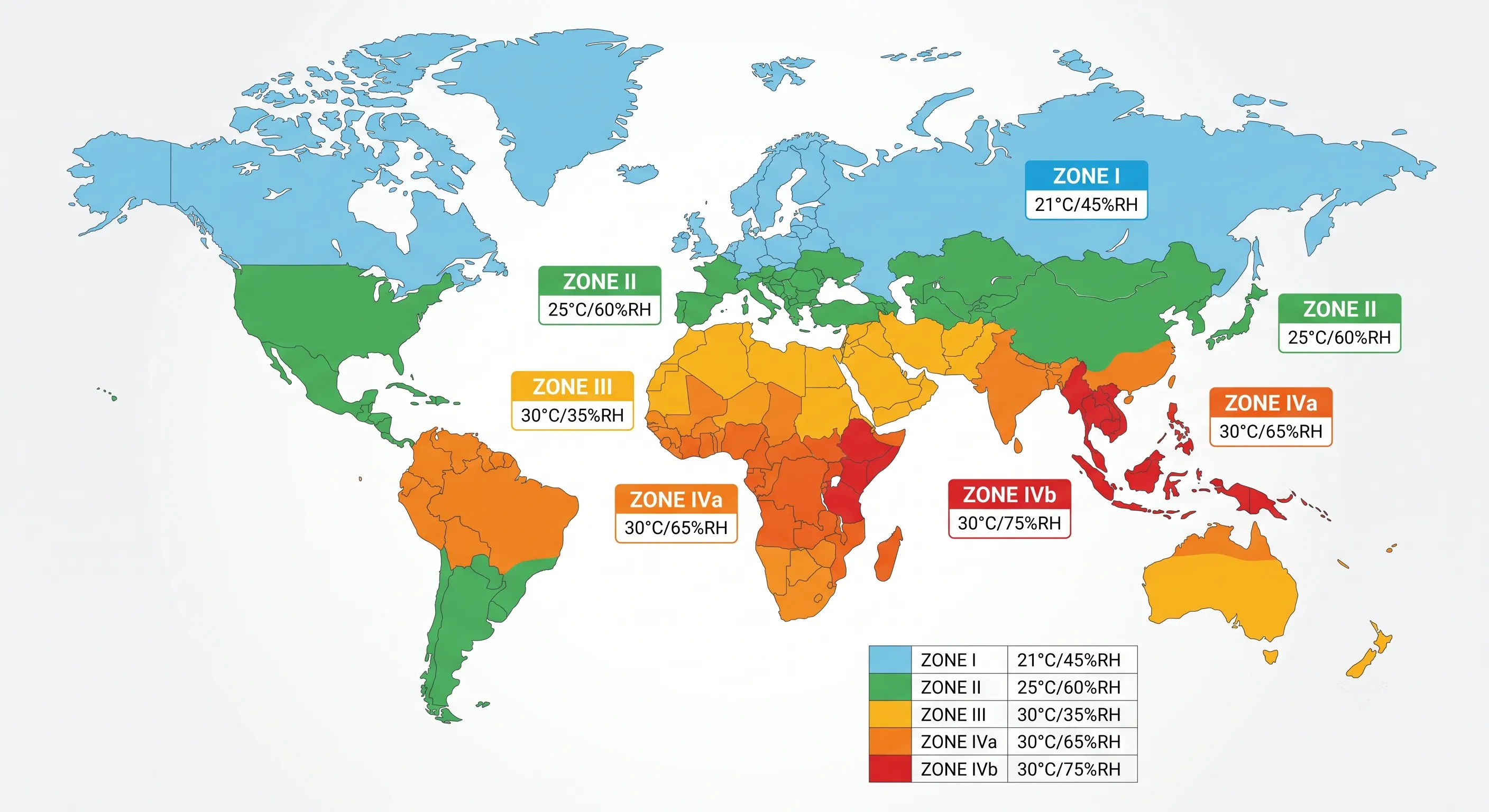 Figure 2: Climatic Zones I-IVb Global Map with Storage Conditions
The practical choice should be driven by the commercial target product profile (TPP), not regulatory minimalism. Selecting Zone II alone and later needing Zone IVa data for a partnership in Southeast Asia is a far more expensive correction than running Zone IVa from the start. The incremental cost of an additional climatic condition in the stability chamber is a fraction of the cost of repeating a 24-month stability program.
Stability Study Design: Bracketing and Matrixing per ICH Q1D
ICH Q1D, "Bracketing and Matrixing Designs for Stability Testing of New Drug Substances and Products," provides the regulatory framework for reducing the testing burden of a full stability program without compromising the reliability of shelf-life estimation. Full-design stability testing — every batch × every strength × every container-closure size × every time point — is mathematically complete but resource-intensive. For a drug product with 3 strengths, 2 container sizes, and 3 primary batches, a full 24-month stability program generates approximately 360 sample pull points (3 × 3 × 2 × ~6 time points × multiple tests per pull). Bracketing and matrixing reduce this to 150-250 pull points — a 30-60% reduction — without sacrificing the statistical validity of the shelf-life estimate, provided the design is scientifically justified.
Bracketing. The principle of bracketing is that stability of intermediate strengths is represented by stability of the extremes. If a drug product is manufactured at 25 mg, 50 mg, and 100 mg strengths, and the 50 mg tablet has the same qualitative formulation (same excipients in proportional amounts), same manufacturing process, and same container-closure system as the 25 mg and 100 mg tablets, then only the 25 mg and 100 mg strengths need to be tested at all time points on all batches. The 50 mg is "bracketed." Bracketing works when there is a monotonic relationship between strength and stability — it fails when the intermediate strength has a different degradation profile because of a non-proportional excipient effect, a different drug-to-excipient ratio that affects moisture uptake, or potency-dependent polymorphism. Bracketing cannot be applied to drug substance (no "strengths" to bracket) and generally should not be applied when different manufacturing sites or processes are used for different strengths.
Matrixing. Matrixing is the more aggressive reduction: instead of testing all factor combinations at every time point, a subset of the full factorial is tested according to a pre-specified matrix. The most common matrixing design tests every batch-strength-container combination at the start (0 month) and end (24 month) time points, but only a rotating subset at intermediate time points (3, 6, 9, 12, 18 months). A 1/2 matrixing design reduces testing to 50% of full; a 1/3 design to 33%. The risk of matrixing is that if a stability failure occurs at a time point that was matrixed out for a particular batch-strength combination, it may go undetected until the next tested time point — by which time the out-of-specification result may have been generated up to 6 months earlier. Matrixing is contraindicated for products with known or suspected non-linear degradation kinetics, for products where degradation is batch-dependent (e.g., biologics with variable post-translational modification profiles), and for any product with a regulatory history of stability failures.
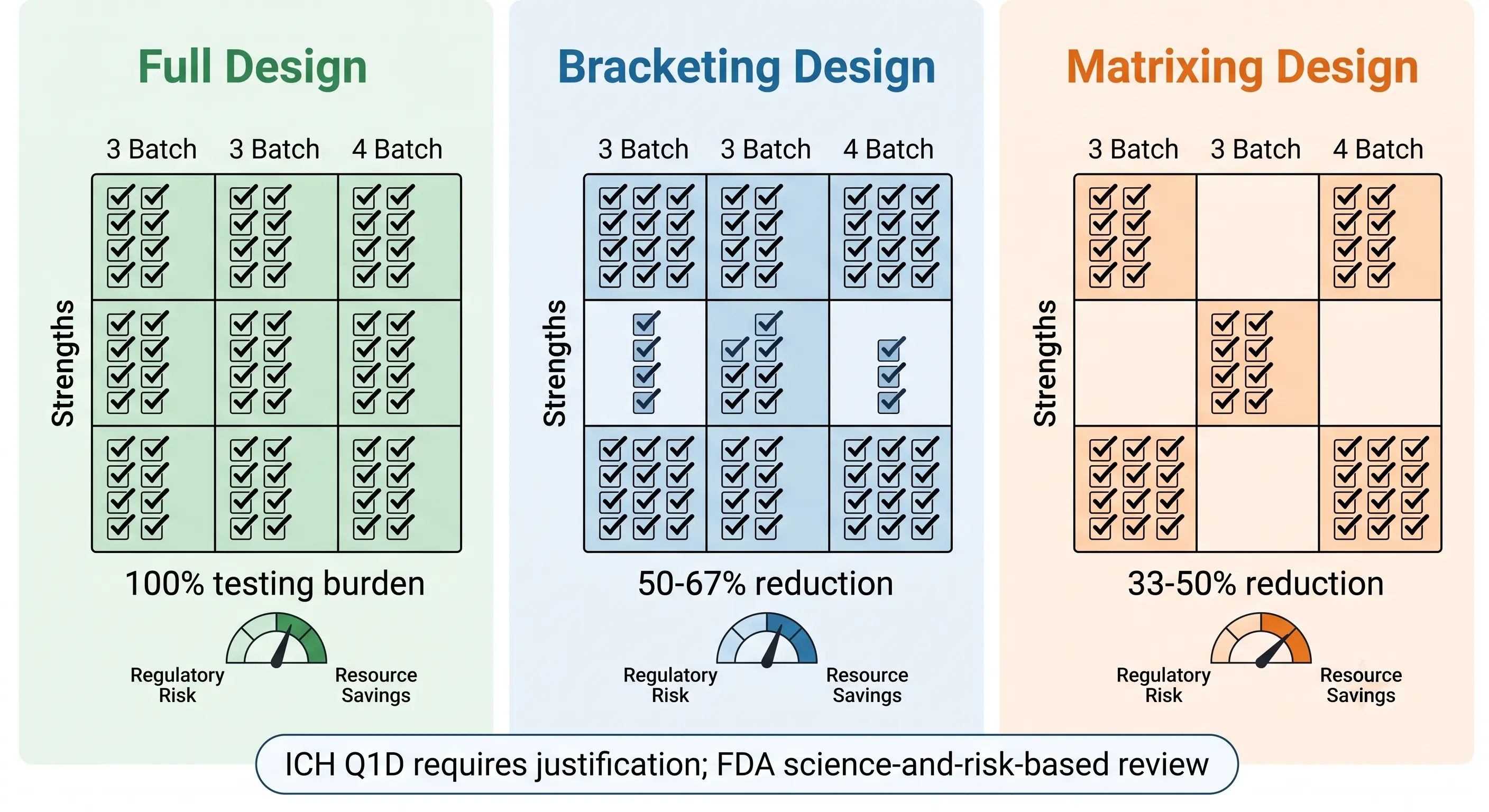 Figure 3: Bracketing and Matrixing Design Schematics — Full vs. Reduced Stability Testing
The 2024 Pavčnik et al. study, evaluating 28 different matrixing designs against full designs for parenteral drug products, demonstrated that a reduction of two time points per batch (for example, eliminating the 9-month and 18-month pulls) maintained shelf-life estimation accuracy within acceptable statistical parameters (RMSE < 2%, R² > 0.95), while more aggressive reductions (three or more time points) led to unacceptable shelf-life bias for products with non-linear degradation profiles. The practical implication: a well-justified, moderately reduced matrixing design is regulatory acceptable and statistically valid; an aggressively reduced design that saves another ~15% in testing burden introduces regulatory risk disproportionate to the savings.
A robust stability-indicating method is the analytical prerequisite for any stability study. The method must be validated per ICH Q2(R2) — accuracy, precision, specificity, linearity, range — and its forced degradation history must demonstrate resolution between the API and all known degradation products. Without a proven stability-indicating method, every time point is a measurement of uncertain specificity, and the stability data package is vulnerable to a regulatory deficiency finding. The method must also be stability-indicating under the exact conditions (temperature, humidity, light exposure) of the stability study it supports.
Stability Protocols for IND, NDA, and ANDA Submissions
The stability data package required for regulatory submission scales with the maturity of the development program. An IND-phase stability commitment is minimal and phase-appropriate; an NDA stability package is the complete registration-quality submission; an ANDA stability package adds the dimension of comparative stability versus the reference listed drug (RLD).
IND (Investigational New Drug). The FDA expects phase-appropriate stability support — not a full ICH Q1A(R2) program. For a Phase 1 IND, stability data on a single representative batch under accelerated conditions (40°C/75%RH, 1-3 months) plus concurrent long-term data at the intended clinical storage condition is generally sufficient to support clinical trial material labeling through the Phase 1 duration. As the program advances through Phase 2 and Phase 3, the stability commitment expands: additional batches are placed on stability, long-term data accumulates, and the stability protocol begins to converge on the full ICH Q1A(R2) design that will ultimately support the NDA. The IND stability section should also describe the planned NDA stability program — regulators review the IND stability commitment in light of what will eventually be needed at the time of marketing application.
NDA (New Drug Application). This is the full program. Three primary batches of drug substance and three primary batches of drug product, manufactured at a minimum of 1/10th of the proposed commercial scale (pilot scale is acceptable), placed on stability under all three ICH Q1A(R2) conditions — long-term, intermediate, and accelerated. At the time of NDA filing, a minimum of 12 months of long-term data from all 3 batches must be available. The stability protocol must specify the storage orientation (upright vs. inverted for liquid products), container-closure system details (including desiccant, if used), testing frequency, acceptance criteria for each test attribute, and the statistical method for shelf-life estimation. The drug product must also be tested in the proposed commercial packaging — the same vial, blister, bottle, or pre-filled syringe that will appear on the pharmacy shelf. A photostability study per ICH Q1B is submitted as a separate report. One of the most common NDA stability deficiencies: submitting 12-month data on 3 batches of drug product but discovering at the 18-month time point (during the NDA review cycle) that one batch is trending toward failure, triggering a review-cycle amendment, a potential CRL, and a shorter approved shelf life than was included in the proposed labeling.
ANDA (Abbreviated New Drug Application). The ANDA stability requirement mirrors the NDA in structure but adds the comparative stability dimension. Three exhibit batches of the generic drug product must be placed on long-term (12 months minimum at filing) and accelerated (6 months minimum) stability, in the proposed commercial container-closure system. The generic product's stability profile does not need to be identical to the RLD — different degradation products at different rates are acceptable — but the proposed shelf life and storage conditions must be supported by the generic product's own stability data, not the RLD's. The FDA ANDA stability guidance also explicitly addresses situations where the proposed generic product has a different container-closure system from the RLD (e.g., the RLD is packaged in a glass vial and the generic proposes a plastic bottle), in which case additional comparative stability data or a justification of container-closure equivalence must be provided.
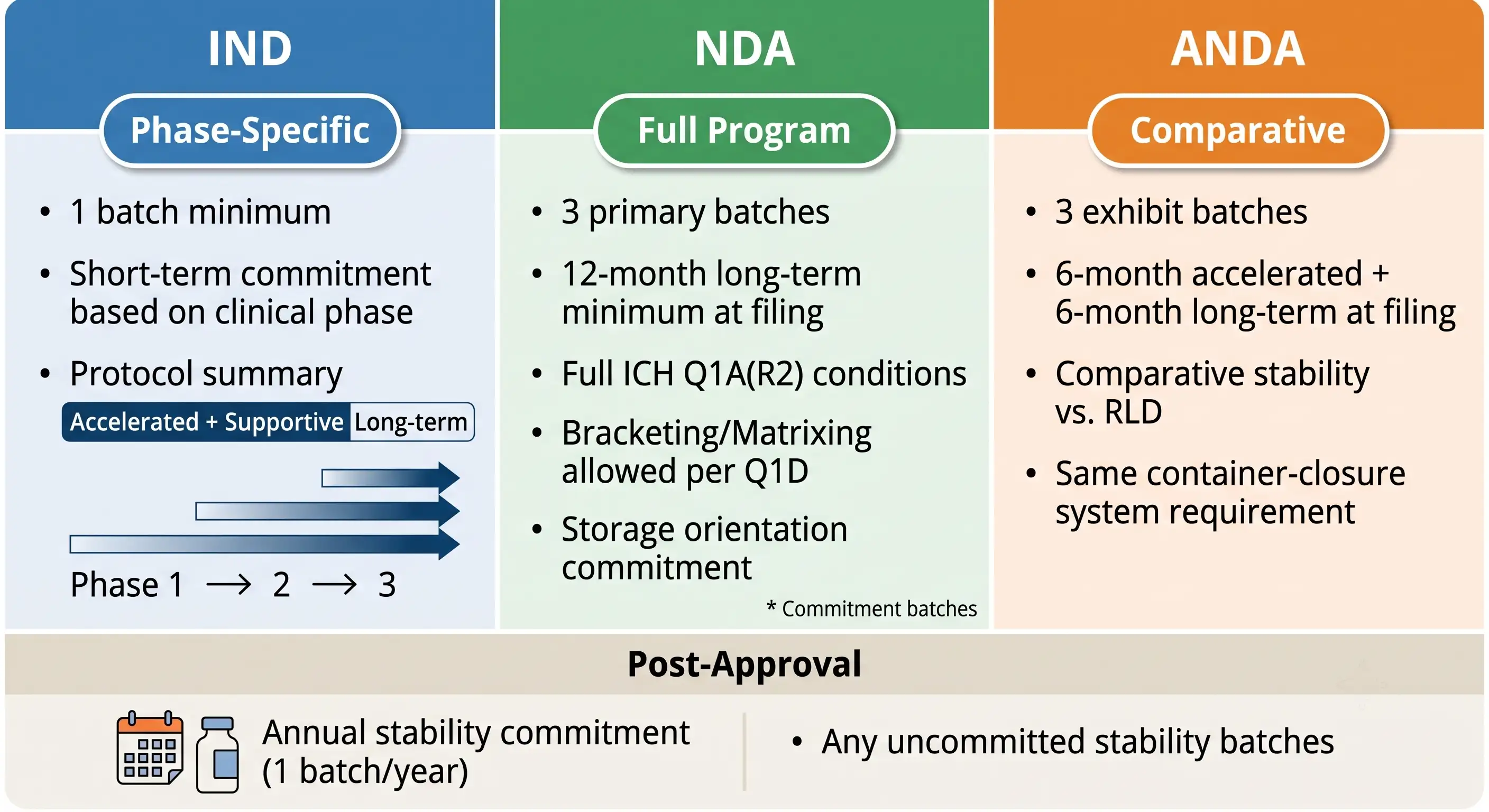 Figure 4: IND, NDA, and ANDA Stability Protocol Comparison
Post-Approval Stability Commitments and Annual Requirements
Stability testing does not end at approval. The post-approval stability commitment — described in the NDA/ANDA submission and agreed upon at the time of approval — extends the stability program into commercial manufacturing. Three categories of post-approval stability obligation exist, and confusing them is a common source of regulatory non-compliance.
Commitment Batches. The first three commercial production batches manufactured after approval must be placed on long-term stability and monitored through the approved shelf life. This is in addition to, not instead of, the primary stability batches from the registration program. The commitment batches bridge the gap between pilot-scale registration batches and full-scale commercial manufacturing — they demonstrate that the stability profile established at pilot scale holds at commercial scale, and they serve as the sentinel for any manufacturing drift that affects product stability. If a commitment batch shows a trend toward a specification limit that was not observed in the primary batches, this triggers an out-of-trend (OOT) investigation and may require a prior approval supplement (PAS) to revise the manufacturing process, specifications, or shelf life.
Annual Stability Batches. For drug product, at least one production batch per year must be added to the long-term stability program. This annual commitment continues for the life of the product. The annual batch serves as ongoing process monitoring — if changes in raw material sourcing, equipment wear, or environmental conditions at the manufacturing site gradually shift the stability profile over years of commercial production, the annual stability batches detect this drift before it becomes a field-alert-generating event. For drug substance, while ICH Q1A(R2) does not explicitly mandate annual stability batches (the guideline focuses on product), most companies voluntarily adopt an annual stability testing program for the API as a GMP best practice and because some regulatory agencies (e.g., Health Canada, TGA Australia) do expect it.
Post-Approval Changes. Any change that could affect stability — a new manufacturing site, a new API supplier, a formulation change, a container-closure change, a manufacturing process change — requires a stability study to demonstrate that the change does not adversely affect the product's approved stability profile. The study design is typically a bracketed or reduced design comparing pre-change and post-change material under accelerated and long-term conditions, with the data submitted as a CBE-30 (Changes Being Effected in 30 Days) or PAS (Prior Approval Supplement) depending on the change's potential to adversely affect product quality. The single most expensive stability event in the post-approval phase is a container-closure change that requires repeating the full 36-month long-term stability program because insufficient comparative data existed to justify a shorter bridging study.
Stability Data Evaluation: Shelf-Life Estimation per ICH Q1E
ICH Q1E, "Evaluation of Stability Data," translates raw stability measurements — potency values, impurity levels, dissolution profiles, pH, appearance — into a single number: the approved shelf life. The methodology is statistical, hierarchical, and conservative by design. The Q1E evaluation proceeds through three sequential steps.
Step 1: Poolability Testing (ANCOVA). The core statistical question is whether multiple batches of the same product degrade at the same rate. If they do, the batches can be "pooled" — their data combined into a single regression line — increasing the degrees of freedom and narrowing the confidence interval around the shelf-life estimate. The ANCOVA (analysis of covariance) procedure tests two hypotheses sequentially: (a) are the degradation slopes equal across batches? (test for batch × time interaction at α = 0.25 — the elevated significance level is deliberate: it is conservative, erring on the side of not pooling rather than incorrectly pooling batches with different slopes); and (b) if slopes are equal, are the intercepts equal? (test for batch main effect at α = 0.25). If both tests are satisfied, all batches are pooled into a single regression. If slopes differ, each batch is evaluated individually and the shelf life is based on the worst-performing batch. This worst-case approach is the statistical safeguard that prevents a stable batch from masking an instability-prone batch.
Step 2: Confidence Interval Fit and Shelf-Life Determination. Once the model is selected (pooled vs. individual regressions), the 95% confidence interval (CI) about the mean degradation curve is computed. The shelf life is the time point at which the 95% CI lower (or upper, for impurities) bound intersects the acceptance criterion. For potency, the acceptance criterion is typically 90.0% of label claim (USP standard) or 95.0% (some EU products) — the intersection of the 95% CI lower bound with that percentage defines the shelf life. For a degradation product, the intersection of the 95% CI upper bound with the ICH Q3B qualification threshold (or specification limit) defines the shelf life. The use of the confidence interval, rather than the mean curve, is the key conservatism: it accounts for batch-to-batch and within-batch variability and ensures that at least 95% of future batches are expected to remain within specification at the labeled expiration date.
Step 3: Extrapolation. The shelf life estimated from long-term data can be extended beyond the period covered by real-time data, but only under strictly defined conditions. If no significant change is observed at accelerated conditions: the shelf life can be extrapolated to 1.5× the period covered by long-term data, capped at 6 months of extrapolation (e.g., 18 months of real-time data supports up to a 24-month shelf life; 24 months supports up to a 30-month shelf life). If significant change is observed at accelerated but not at intermediate: the 1.5× rule applies but the extrapolation is conservatively capped at 3 months beyond real-time (e.g., 18 months of long-term data supports a 21-month shelf life). If significant change is observed at both accelerated and intermediate: no extrapolation beyond real-time data; the shelf life is limited to the period covered by long-term data. Extrapolation is never permitted beyond twice the period covered by long-term data, regardless of the accelerated result.
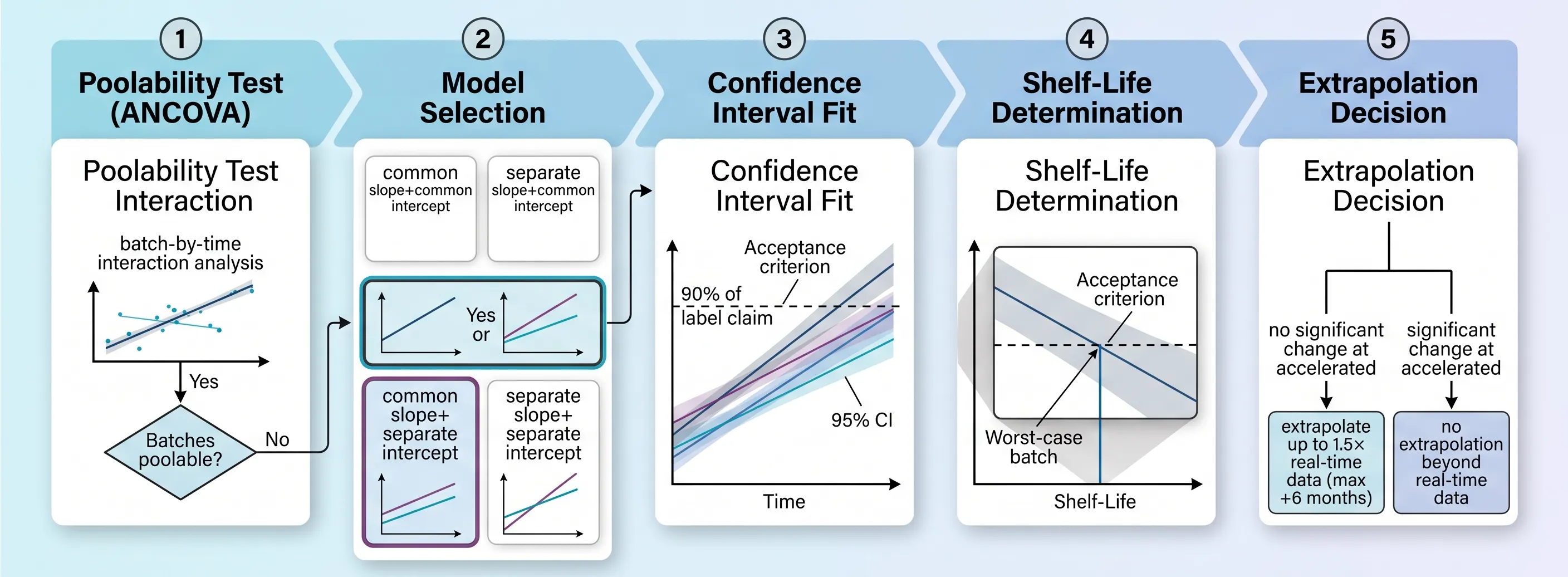 Figure 5: Shelf-Life Estimation and Extrapolation Workflow per ICH Q1E
The 2018 Capen et al. study from the PQRI Stability Shelf Life Working Group critically evaluated the ICH Q1A/Q1E methodology against a 26-batch industry dataset and found that the ICH-recommended approach — fixed batch effects, poolability tests at α = 0.25, confidence intervals on the mean — did not produce supported shelf lives that effectively manage risk from both patient and manufacturer perspectives. The authors concluded that alternative approaches incorporating random batch effects and prediction intervals for a quantile (rather than confidence intervals for the mean) provided a more robust balance between the risk of releasing a nonconforming batch and the risk of prematurely discarding conforming product. While the regulatory framework has not yet shifted to mandate random-effects models, the 2025 consolidated ICH Q1 draft explicitly introduces stability modelling (mixed-effects models, Bayesian approaches) for the first time, signaling that the statistical methodology of shelf-life estimation is moving in the direction the PQRI group advocated.
Drug Substance vs Drug Product Stability: Different Programs, Different Risks
The stability programs for drug substance (DS) and drug product (DP) are structurally similar — both follow the ICH Q1A(R2) three-condition framework — but they are operationally, scientifically, and regulatory distinct. Treating them as interchangeable leads to gaps in both.
Drug Substance Stability. The primary purpose of DS stability testing is to establish the retest period — the period after which the API must be retested before use in manufacture to confirm it still meets specifications. The retest period is NOT a shelf life; it is a quality control interval. A drug substance with a 36-month retest period is not "expired" at 36 months — it must be retested, and if it passes, it can continue to be used. The DS stability program tests the API in the proposed storage container (typically a double polyethylene bag inside a fiber drum or HDPE container), not in the commercial drug product packaging. The critical DS-specific stability risks are polymorphic conversion (which can be accelerated by temperature, humidity, or trace solvent residues), hygroscopicity-driven degradation, and photolytic sensitivity that would not be detected in the DP because the DP packaging blocks light. The DS program also establishes whether the API requires a specific storage temperature, desiccant, inert atmosphere, or light protection — all of which become part of the API specification and are referenced in the DP manufacturing instructions.
Drug Product Stability. The DP stability program establishes the expiration date — the date after which the product may not be used. This is legally binding, not a suggestion. The DP program tests the finished dosage form in the commercial container-closure system, oriented as it would be stored and dispensed. The critical DP-specific stability risks that are absent or attenuated in the DS program include: excipient interactions (the Maillard reaction between amine-containing drugs and lactose is a classic accelerated-condition specific degradation pathway), packaging leaching/extractables (plasticizer migration from container walls into the product), moisture ingress through semi-permeable packaging, and physical stability changes — tablet hardness change, capsule shell cross-linking, emulsion coalescence, suspension settling — that have no DS analogue. The DP stability program must also address in-use stability: the period after first opening of a multi-dose container (e.g., an ophthalmic solution, an injectable vial), during which microbial and chemical stability must both be maintained.
The DS-DP Handoff. The DS and DP stability programs are linked by the retest period-to-expiration date gap. If the DS retest period is 24 months and the DP is manufactured 18 months into that retest period, the DP carries forward 6 months of DS age at the time of DP manufacture — and the DP stability program must account for the fact that the starting material is not fresh. For most small-molecule products, this gap is not functionally limiting because the DS retest period is set generously relative to manufacturing lead times. For biologics and products with inherently unstable APIs, the retest period-to-expiration-date relationship must be explicitly managed to ensure that the DP expiration date does not silently depend on the DS being fresher than the retest period allows. This is one of several dimensions where the forced degradation studies performed during method development — specifically, the stress conditions described in the forced degradation studies guide — continue to inform stability program decisions years after the degradation products were first generated and characterized.
The bioanalytical dimension of stability — ensuring that drug concentrations measured in biological matrices are stable from sample collection through LC-MS/MS analysis — is an equally regulated but analytically distinct stability domain. For studies involving plasma or tissue samples, bioanalytical matrix stability testing covers benchtop stability, freeze-thaw stability, long-term frozen storage stability, and autosampler stability — every condition a study sample encounters between the patient's arm and the mass spectrometer's ion source. The bioanalytical stability requirements are specified in ICH M10, which sits alongside ICH Q1A(R2) as the two pillars of the stability evidence package in a registration dossier.
Frequently Asked Questions
How much long-term stability data must be available at the time of NDA submission?
A minimum of 12 months of long-term data from 3 primary batches at the intended storage condition (25°C/60%RH or 30°C/65%RH per climatic zone) is required at NDA filing. If less than 12 months of data is available at submission, the FDA will typically grant a shorter shelf life commensurate with the available data, and the applicant must commit to continuing the studies and providing updated data during the NDA review cycle. The full long-term program must extend through the proposed shelf life duration (typically 24 or 36 months). For ANDA submissions, the minimum is 6 months of accelerated and 6 months of long-term data on 3 exhibit batches at the time of filing.
What happens if accelerated stability testing shows a significant change?
If a significant change (5% potency loss, any degradant exceeding its specification, failure of pH/dissolution/appearance criteria) occurs at accelerated conditions, the intermediate condition (30°C/65%RH) becomes the primary basis for shelf-life extrapolation. The accelerated data cannot be used for extrapolation per ICH Q1E. The shelf life is then limited to the period supported by real-time long-term data plus a maximum of 1.5× extrapolation (capped at 6 additional months). The significant change must be investigated, documented, and included in the submission. The product labeling should reflect the storage condition restriction — for example, "Store at 25°C (77°F); excursions permitted to 15–30°C (59–86°F)."
Can bracketing or matrixing be applied to any drug product?
No. Bracketing cannot be applied when the intermediate strengths are not truly bracketed by the extremes tested — for example, if the 50 mg tablet uses a different manufacturing process or different excipient ratios than the 25 mg and 100 mg tablets. Matrixing requires that the degradation profile is predictable and reasonably linear; it is contraindicated for biologics, products with complex degradation kinetics, and any product with a regulatory history of stability failures. Both bracketing and matrixing must be scientifically justified in the submission and are reviewed on a case-by-case basis. The ICH Q1D guideline warns that overly aggressive reduction can produce data insufficient to reliably estimate shelf life, and the agency may require a full design in the post-approval commitment if it judges the reduced design inadequate.
What is the difference between stability commitment batches and primary stability batches?
Primary stability batches are the 3 batches placed on stability concurrently and used to establish the initial shelf life in the registration application. Stability commitment batches are additional batches that the applicant commits to placing on long-term stability after approval. For drug product, the commitment typically includes placing the first 3 commercial production batches on long-term stability through the approved shelf life, plus at least 1 production batch per year annually thereafter. For drug substance, if 3 primary batches have at least 12 months of data at filing, no additional commitment is strictly required, but annual testing of at least 1 production batch on long-term stability is standard post-approval practice in most companies.
How do I determine which climatic zone applies to my target market?
Map each target country to its ICH/WHO climatic zone. Zone II (25°C/60%RH, long-term) covers the US, EU, and Japan — the default for most INDs and NDAs. Zone IVa (30°C/65%RH) covers Southeast Asia, much of Africa, and parts of Latin America. Zone IVb (30°C/75%RH) is the most stringent, for ASEAN coastal and equatorial regions. For a global program covering Zones II through IVb, the most efficient strategy is a single Zone IVa (30°C/65%RH) long-term condition, which satisfies both ICH and WHO expectations. Alternatively, run two parallel programs — Zone II for US/EU/Japan and Zone IVb for tropical markets — trading additional chamber capacity for elimination of shelf-life restriction risk.
When is photostability testing per ICH Q1B required?
Photostability testing is required for new drug substances and products as part of the registration stability program, performed once on a single batch early in development. For drug product, it must be assessed in the marketed pack (immediate and secondary packaging) using the confirmatory or forced degradation approach described in ICH Q1B. It is not a routine monitoring test — photostability does not need to be repeated on every stability batch or time point. However, if the manufacturing process, formulation, or packaging changes (e.g., a new blister material or vial glass type), a new photostability assessment is expected. Photostability data is submitted as a separate module from the ICH Q1A(R2) temperature/humidity stability data.
References
Related Services